
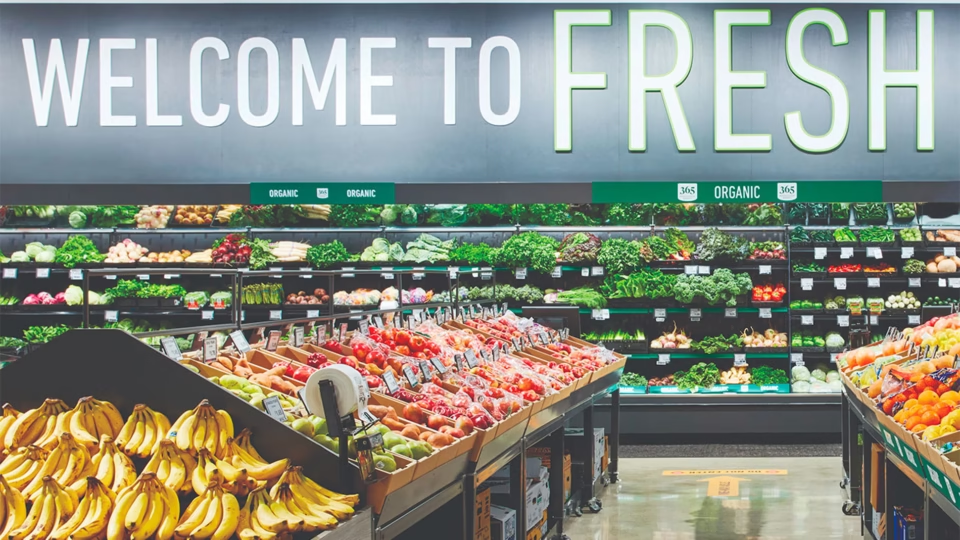
Amazon Fresh is aggressively expanding its Spanish footprint to capture a larger slice of the country’s fast-growing online grocery market. Following its latest showcase of the sprawling Coslada fulfillment center in Madrid, the e-commerce giant is solidifying a high-tech logistics framework designed to feed Spain’s increasingly digital appetite.
However, as Amazon posts record revenue in Spain, it faces deep-seated brick-and-mortar legacy giants that are fiercely defending their territory. The battlefield of Spanish food retail is no longer just on physical shelves; it has moved directly to the doorstep.
The Strategy: High Tech and Ultra-Fast Fulfillment
Amazon Fresh entered Spain targeting major hubs like Madrid and Barcelona, but its strategy has evolved into a highly optimized logistical war of attrition.
- The Assortment: Offering up to 14,000 grocery product references, Amazon targets the “full basket” shopper, blending national brands with its own private labels.
- The Logistics: Utilizing dedicated, temperature-controlled fulfillment hubs like Coslada, Amazon bypasses traditional retail supply chain bottlenecks to offer seamless, same-day delivery windows.
- The Ecosystem Leverage: By anchoring grocery delivery to its core Prime membership, Amazon reduces customer acquisition costs, capturing a captive audience that already relies on the platform for non-perishable goods.
The Competition: A Highly Fragmented, Deeply Entrenched Market
Despite Amazon’s logistical brilliance, Spain is one of Europe’s most challenging grocery landscapes. Spanish consumers are notoriously loyal to regional champions, highly selective about fresh produce, and heavily reliant on private-label lines due to persistent food inflation.
| Competitor | Market Strategy & Coverage | Technological Edge | Vulnerability vs. Amazon |
|---|---|---|---|
| Mercadona | Unrivaled market leader (~27-29.5% share); relies on massive physical network of 1,600+ stores. | Upgrading to a “Process-based Model” with dedicated e-commerce “hives” (Colmenas). | Lacks a broader digital entertainment/ecosystem hook like Amazon Prime. |
| Carrefour Spain | Aggressive omnichannel play; reached 90% nationwide digital coverage. | Adoption of the Universal Commerce Protocol (UCP) with Google for AI-driven agentic shopping. | High operational overhead maintaining physical hypermarkets. |
| DIA | Pivot to neighborhood store proximity; exited third-party delivery platforms. | Consolidated its proprietary application and loyalty channels. | Limited financial muscle compared to global tech players. |
The Hurdles: Freshness, Proximity, and the “Big Basket” Problem
Amazon’s biggest roadblock in Spain is cultural. Spanish families have increasingly shifted away from one massive weekly shop, favoring frequent, smaller trips to local supermarkets like Consum, Bon Preu, or Lidl for their daily fresh food needs.
While Amazon Fresh excels at algorithmic efficiency, local players like Mercadona have spent decades building consumer trust regarding the quality of their fresh meat, fish, and produce. Furthermore, traditional retailers are closing the tech gap rapidly. Carrefour’s recent 21% jump in online business volume, paired with its expansive fleet growth, means Amazon no longer holds a monopoly on ultra-fast delivery innovation.
Outlook for International Retailers
Amazon Fresh is proving that it has the financial stamina to scale up infrastructure in Southern Europe. However, to truly disrupt the Spanish grocery ecosystem, it must convert its image from a “convenient tech platform” to a “trusted local grocer”. Until it can successfully challenge the ultra-dominant private-label loyalty enjoyed by Mercadona, Amazon Fresh will remain a highly efficient alternative rather than the primary pantry destination for the average Spanish household.
To further refine this analysis for publication, would you like me to:
- Provide specific market share percentages for online grocery sales in Spain?
- Analyze the pricing strategies of Amazon Fresh private labels against Mercadona’s Hacendado?
- Detail the exact geographic limitations of Amazon Fresh’s current Spanish delivery zones?