
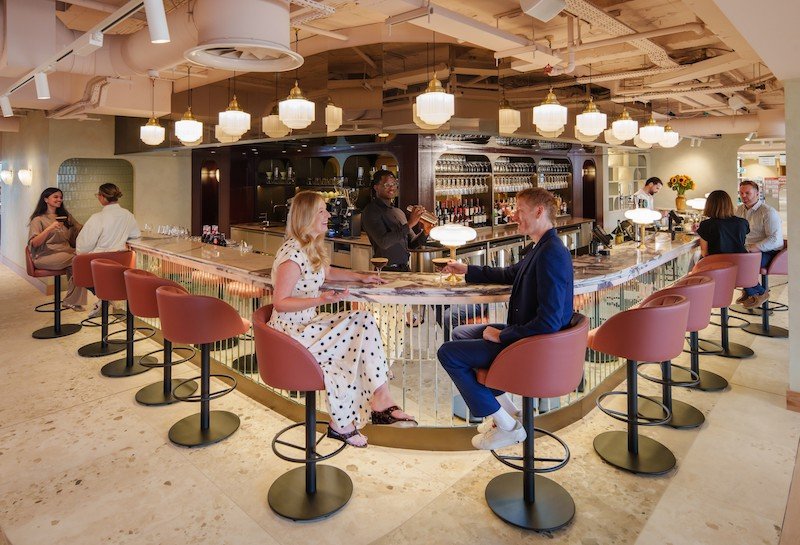
John Lewis is giving customers another reason to spend time in its stores with the launch of Platter, a new restaurant concept designed to make food, drink and hospitality a central part of the shopping experience.
The flagship Platter has opened at John Lewis Oxford Street and represents the most ambitious version of the new concept so far. John Lewis plans to introduce Platter across 32 stores, from Exeter to Edinburgh, by the end of 2027, as part of its wider £800 million multi-year investment programme. Stores including Bluewater, Chichester and Reading have already reopened with the new format.
Rather than simply providing somewhere to sit down for a coffee or lunch, Platter is designed around what John Lewis describes as a more theatrical approach to hospitality. The Oxford Street restaurant includes an open kitchen, where customers can watch pizzas being prepared from hand-stretched dough, together with a made-on-site deli, dessert parlour, bar and outdoor terrace.
With seating for around 300 people, the Oxford Street Platter is one of the largest restaurants on Oxford Street. Fifty outdoor covers are located on the fifth-floor terrace, offering customers views across the London skyline.
Coffee becomes part of the experience
One of the most distinctive elements is the new in-store coffee roastery. A Master Roaster will oversee the roasting of a single-origin Arabica bean sourced exclusively for John Lewis.
The coffee will be served in the restaurant but will also be available for customers to purchase as beans or ground coffee to enjoy at home. It is another example of the retailer turning an everyday product into part of the in-store experience.
The concept also includes The Residency, a rotating pop-up designed to bring premium food brands into the restaurant. Its first partner is London patisserie The Eclectic Collection, whose fruit-shaped desserts have built a strong following and will be available at Platter Oxford Street outside the brand’s own shops.
Shopping and hospitality increasingly connected
The investment reflects a wider change in consumer behaviour. John Lewis says hospitality now accounts for more than one in five in-store transactions, while sales have increased by almost 10% over the past year.
For retailers, this suggests that the physical store is increasingly becoming more than a place to buy products. Customers can browse, eat, drink, socialise and spend more time in the environment, creating additional opportunities for engagement.
John Lewis has a long history in this area, having opened its first café in 1965. Today, the retailer operates 62 cafés and restaurants across the country.
Platter does not attempt to impose an identical restaurant on every location. Instead, each site is being designed around the size and character of the individual John Lewis store, meaning the experience will differ from one location to another.
Katie Papakonstantinou, Director of Services and Hospitality at John Lewis, said the new concept reflects customer feedback and the growing importance of food and drink within the shopping journey.
The Oxford Street restaurant combines coffee roasted in-store with fresh pizza, deli food, patisserie, desserts and a cocktail bar. The bar itself overlooks the store’s atrium and features marble counters and dark green leather interiors, with drinks including hibiscus margaritas, negronis and champagne, alongside charcuterie, cheeseboards and truffle and Parmesan fries.
The dessert parlour offers sundaes, Belgian waffles and a chocolate tap, adding another element of theatre to the experience.
Platter will operate alongside John Lewis’ wider hospitality portfolio, which includes Benugo, Ori Caffè, Huffkins tea rooms, Jamie Oliver Café, the 1864 Rooftop and Kamakura at Oxford Street. The restaurants continue to be operated in partnership with Benugo, extending a relationship that has lasted for a decade.
For John Lewis, the Platter rollout represents a significant shift in how the department store can use hospitality to bring customers through its doors and encourage them to stay longer.
In an increasingly competitive retail environment, the message is clear: the future of the department store may be as much about the experience as the products on its shelves.
