
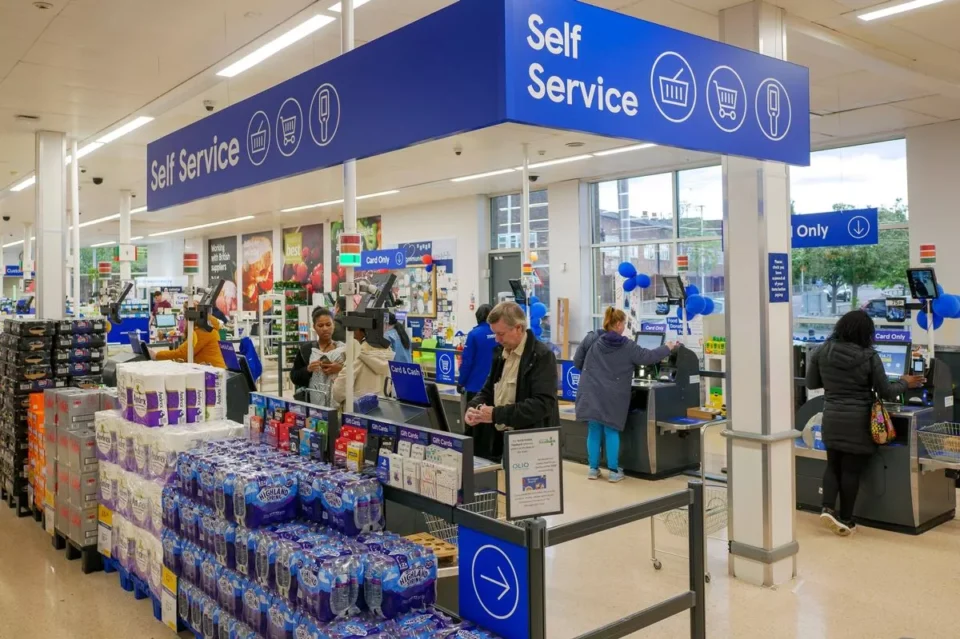
Tesco continues to reinforce its position as the UK’s largest food retailer by increasing investment in its domestic operations while adapting to changing consumer habits and stronger competition across the grocery sector. The company’s strategy remains centred on improving stores, expanding digital services and maintaining competitive prices as shoppers continue to seek value without compromising on quality.
Over the past few years, Tesco has simplified its business, allowing management to focus more closely on its strongest market. Rather than pursuing rapid international expansion, the retailer has concentrated on building a more efficient business in the United Kingdom, where grocery competition has become fiercer than ever.
The UK supermarket sector is experiencing significant change. Aldi and Lidl continue to expand, attracting customers through low prices and efficient store formats. At the same time, Asda is investing heavily to regain market share, while Sainsbury’s continues improving its value proposition. Tesco’s response has been to strengthen every part of its operation instead of relying solely on price promotions.
One of Tesco’s greatest advantages remains its ability to combine physical stores with digital shopping. Millions of customers now move seamlessly between visiting stores, ordering groceries online and using click-and-collect services. This integrated shopping model has become increasingly important as consumers demand greater flexibility in how they purchase food.
Technology also continues to reshape Tesco’s operations behind the scenes. The retailer has invested heavily in warehouse automation, inventory management systems and demand forecasting. These improvements help stores maintain better stock availability while reducing waste throughout the supply chain. Better forecasting also enables Tesco to respond more quickly to seasonal demand and changing shopping patterns.
Customer loyalty remains another important area of investment. Tesco continues developing personalised offers through its loyalty programme, using purchasing data to provide targeted promotions that reflect individual shopping habits. This approach allows the retailer to reward regular customers while improving overall shopping satisfaction.
Fresh food remains central to Tesco’s strategy. Consumers are paying greater attention to quality, freshness and product availability, particularly in fruit and vegetables, bakery, meat and prepared meals. The retailer continues working closely with British suppliers to improve consistency and ensure shelves remain well stocked throughout the year.
Sustainability has also become an increasingly important part of Tesco’s long-term planning. The company continues investing in reducing food waste, improving packaging, lowering carbon emissions and strengthening relationships with British farmers and food producers. Environmental performance is no longer viewed simply as a corporate responsibility initiative but as an important part of building a resilient and efficient retail business.
Tesco’s financial performance continues to demonstrate the benefits of focusing on operational efficiency. Strong cash generation and disciplined investment have enabled the company to continue modernising stores while expanding digital capabilities and improving customer services. Investors continue to view Tesco as one of Europe’s strongest food retailers because of its stable performance and consistent long-term strategy.
Looking ahead, Tesco is expected to continue investing in technology, store improvements and customer experience rather than pursuing major acquisitions or rapid international growth. The retailer believes strengthening its leadership in the UK market offers the greatest opportunity for sustainable expansion over the coming years.
As consumer expectations continue to evolve, Tesco’s strategy reflects the changing priorities of modern food retailing. Competitive pricing remains essential, but long-term success increasingly depends on operational efficiency, technology, customer loyalty and the ability to provide a shopping experience that combines convenience, quality and value. These priorities are likely to remain at the heart of Tesco’s business as competition across the grocery industry continues to intensify.