
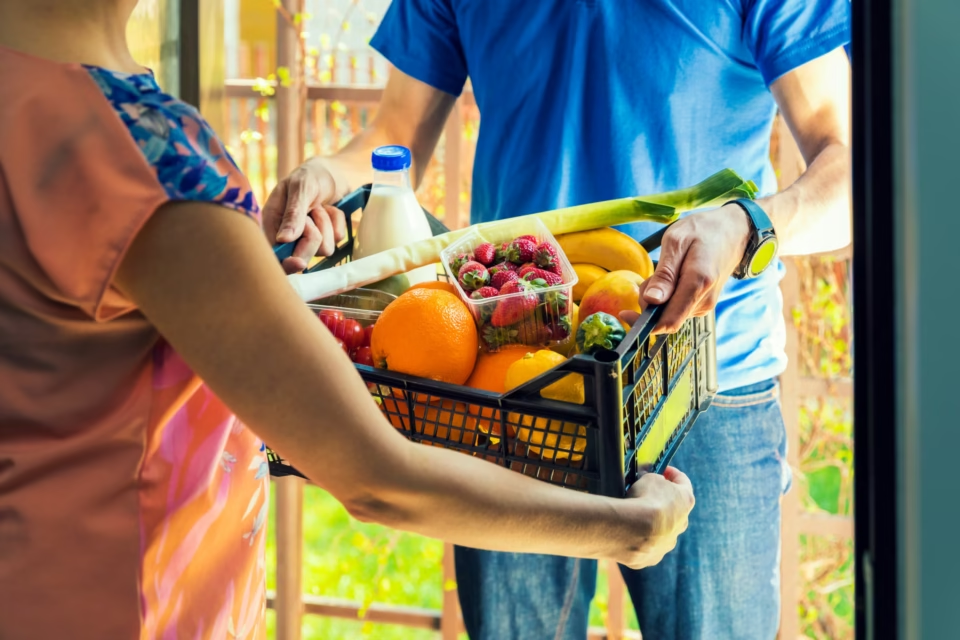
The global grocery sector is entering a new competitive phase as major retail and technology-driven companies accelerate investment in ultra-fast delivery, dark stores, and hybrid fulfilment models aimed at reshaping how consumers shop for food.
Retail giants including Walmart, Amazon, and leading European supermarket groups are expanding their rapid delivery networks, with a focus on reducing delivery times from hours to as little as 15–30 minutes in selected urban markets. The move reflects increasing consumer demand for convenience, immediacy, and seamless digital shopping experiences.
In the United States, Walmart continues to scale its grocery delivery infrastructure through store-based fulfilment and automated picking systems, while Amazon is strengthening its position through its grocery network integration and same-day delivery expansion strategy. In Europe, retailers such as Carrefour, Tesco, and Ahold Delhaize are also investing heavily in digital-first grocery platforms and localised fulfilment hubs.
A major driver behind this transformation is the rise of “on-demand grocery consumption,” where customers expect near-instant access to essential items without traditional weekly shopping cycles. This behavioural shift has pushed supermarkets to rethink store layouts, logistics models, and inventory management systems.
Dark stores—dedicated fulfilment centres designed exclusively for online orders—are expanding rapidly in major cities. These facilities allow retailers to process orders more efficiently than traditional supermarkets, significantly reducing picking time and improving delivery accuracy.
At the same time, partnerships between supermarkets and third-party delivery platforms are becoming more common, enabling retailers to extend their reach without fully building out proprietary logistics networks in every market.
However, the rapid expansion of ultra-fast grocery delivery is also raising questions around profitability, workforce pressure, and long-term sustainability of high-cost delivery models. Industry analysts note that while customer adoption is growing, the economic viability of sub-30-minute delivery remains a key challenge for many operators.
Despite these concerns, investment continues to accelerate as supermarkets compete not only on price and product range, but increasingly on speed, convenience, and digital experience.
The global grocery industry is therefore entering a decisive period where the winners will likely be those capable of successfully integrating physical retail strength with advanced digital fulfilment capabilities.