

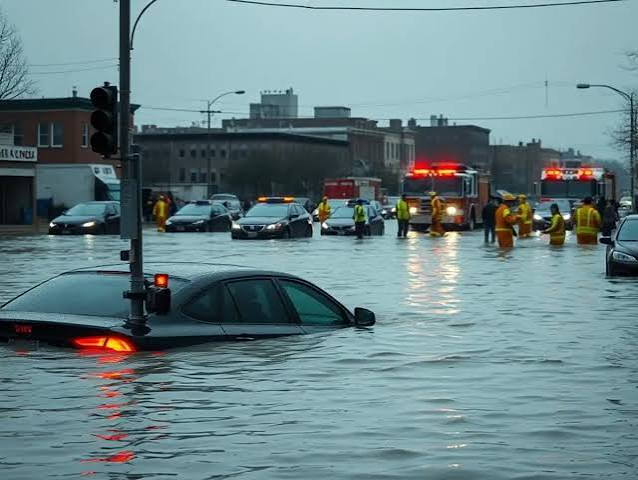

Extreme weather is no longer simply a problem for farmers. When floods close roads, damage farmland and disrupt transport, the consequences can eventually reach warehouses, supermarkets and consumers.
Wisconsin has provided another warning about the vulnerability of America’s food supply chain after severe storms and flooding caused significant damage across the state earlier this year.
In April, flooding forced the closure of multiple highways across northern and central Wisconsin, with some roads remaining shut as rivers reached their highest levels. The Wisconsin Department of Transportation warned that changing water levels could continue to affect transport routes.
For the retail industry, this is more than a transport problem.
Wisconsin is an important agricultural state, producing milk, livestock, crops and a wide range of food products. When extreme weather damages farms or infrastructure, the effects can move through the supply chain.
The US Department of Agriculture confirmed that Wisconsin agricultural operations were significantly affected by severe weather including flooding, hail, tornadoes and straight-line winds. Federal assistance was made available to farmers and livestock producers dealing with damage to crops, land, infrastructure and animals.
The supermarket is at the end of the chain
Consumers rarely see the disruption happening behind the supermarket shelves.
They see the price.
They see whether a product is available.
They see whether a delivery arrives on time.
But behind every product is a complicated network of farmers, processors, warehouses, trucks, roads, distribution centres and retailers.
A flood can interrupt several of those links simultaneously.
A damaged farm can reduce production. A flooded road can prevent a truck from reaching a processing plant. A damaged warehouse can interrupt distribution. And when transport routes are closed, alternative routes can add time and cost.
Wisconsin officials launched preliminary damage assessments following the April storms and flooding because the destruction was extensive enough to require a coordinated evaluation of affected communities.
A warning for retailers
The lesson for America’s retailers is clear.
Supply-chain resilience cannot simply mean having another supplier on a spreadsheet.
Retailers need alternative transport routes, diversified sourcing, adequate inventories and better visibility across their supply networks.
Extreme weather is becoming a business risk.
For supermarkets, manufacturers and logistics companies, the question is no longer whether floods can disrupt the food chain.
It is whether companies are prepared when they do.
The Wisconsin experience should therefore be treated as a warning — not just about flooding, but about how quickly a local environmental disaster can become a national retail problem.
The next disruption may begin on a farm or a flooded highway. Consumers may experience it several hundred miles away — when the product they expect is suddenly missing from the shelf.