
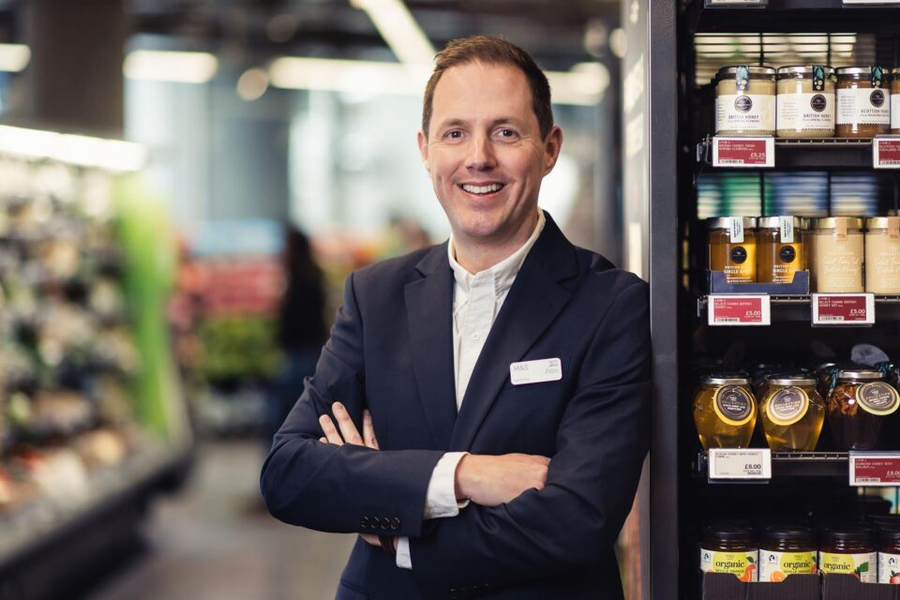
International Supermarket News backs the campaign led by M&S Food Managing Director Alex Freudmann, alongside Emily English and Dr Anisha Patel, calling for clearer rules on how retailers can communicate the health benefits of fibre to consumers.
The UK has a fibre problem — and it is not simply a question of what shoppers are buying.
It is also about how the benefits of healthier foods are communicated.
Alex Freudmann, Managing Director of M&S Food, has called for a review of the rules governing fibre health claims, arguing that the language currently permitted on food products and in retail communications can be far removed from the language ordinary consumers actually understand.
His criticism is strikingly simple.
Terms such as “faecal bulk” and “intestinal transit” may be scientifically accurate, but they are hardly the language most consumers would associate with making a healthier food choice.
Freudmann has joined forces with nutrition communicator Emily English and Dr Anisha Patel in writing to the Health Secretary, calling for the rules governing fibre health claims to be reviewed.
ISN supports this campaign.
Britain has a major fibre gap
The issue is significant.
M&S research published earlier this year highlighted that 96% of UK adults are not meeting the recommended daily fibre intake of 30g. Average consumption is around 16.2g — little more than half the recommended amount. M&S also found that a quarter of consumers struggle to identify foods that are rich in fibre.
That creates a challenge for retailers.
Supermarkets are increasingly being asked to help consumers make healthier choices, but if the information used to explain those choices is overly technical, consumers may not understand why a product deserves a place in their shopping basket.
This is where the M&S campaign raises an important question for the entire grocery industry:
If retailers know that fibre is important, why shouldn’t they be able to explain its benefits in simple, consumer-friendly language?
From the supermarket shelf to the dinner table
M&S is not simply calling for regulatory change. The retailer is also changing its own offer.
The company has been expanding its range of fibre-rich foods and has introduced its Nutrient Dense range, with fibre clearly identified on packaging. M&S says the range was developed by its chefs and nutritionists in consultation with the British Nutrition Foundation.
It has also been highlighting everyday sources of fibre including wholegrains, beans, pulses, nuts, seeds, fruit and vegetables.
Freudmann has now highlighted a further practical example: M&S has upgraded its beans and pulses range and is moving products from tins into glass jars, with prices starting at 55p.
The message is important for retailers: healthier eating does not necessarily require complicated products or expensive ingredients.
Beans, pulses, wholegrains, fruit and vegetables are familiar supermarket products. The challenge is making it easier for shoppers to understand their nutritional value and incorporate them into everyday meals.
Retailers need clearer rules
ISN believes the debate deserves attention across the supermarket sector.
Retailers are increasingly expected to play a role in improving public health. They are being asked to reformulate products, improve nutritional information, encourage healthier purchasing and make healthier choices easier.
But regulation should not inadvertently make straightforward consumer communication more difficult.
There is an important distinction between making a medical claim and explaining an established nutritional benefit in language that shoppers can understand.
Consumers should not need a nutrition degree to understand why fibre matters.
The grocery industry should be able to communicate evidence-based information clearly, responsibly and without misleading consumers.
ISN backs the campaign
International Supermarket News therefore supports the call from M&S Food, Alex Freudmann, Emily English and Dr Anisha Patel for the Government to review the rules surrounding fibre health claims.
This should not be viewed simply as an M&S initiative.
It is a wider grocery and public-health issue.
If 96% of UK adults are failing to reach the recommended fibre intake, the industry needs every responsible tool available to help shoppers make better-informed choices.
Clearer language is one of those tools.
The supermarket of the future will not only compete on price, range and convenience. It will increasingly compete on how effectively it helps customers understand what they are buying.
On fibre, the message should be simple.
If the science is clear, the language should be clear too.Alex Freudmann
