
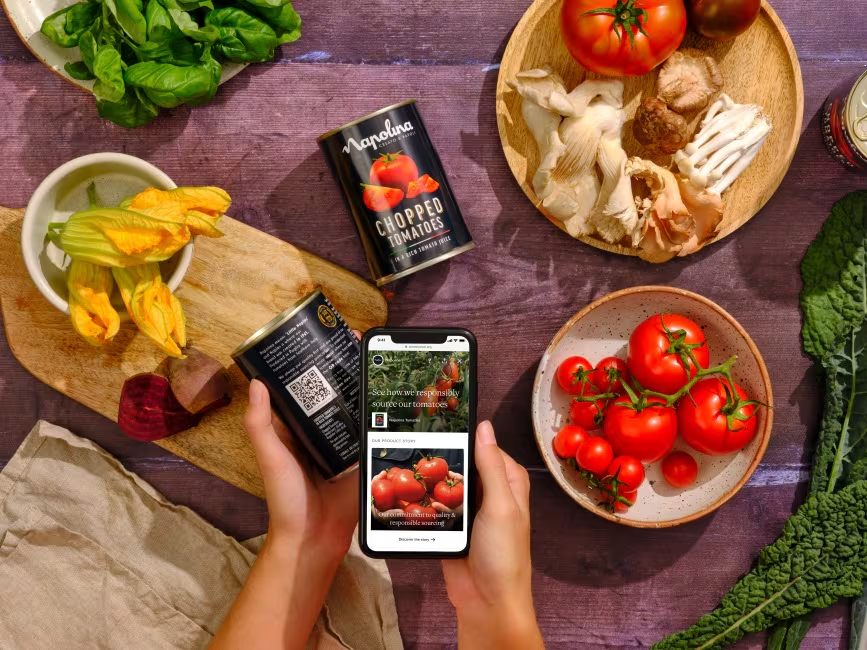
Princes is investing a six-figure sum in a new marketing campaign for Napolina, its Italian food brand, as it looks to build on recent growth and strengthen its position in the UK grocery market.
The campaign, running through October and November, combines outdoor advertising with YouTube activity rather than traditional television advertising. The creative work focuses on home cooking and the role of products such as canned tomatoes in familiar Italian dishes.
Princes said Napolina’s value sales had increased by 13.7% over two years. Its first-half 2026 results also identified Italian Products as a strong-performing division, with revenue up 48.1% to £227.3 million and EBITDA rising 39.5% to £23.4 million. That division includes Napolina, Delverde and the recently acquired infant nutrition business Plasmon, so the overall growth should not be attributed to Napolina alone.
The company has also been expanding Napolina’s range, including flavoured oils, sauces and pasta products.
Why manufacturers are investing in established brands
For food manufacturers, established products can still offer opportunities for growth when they are supported by new ranges, stronger distribution and more focused marketing.
Napolina is operating in a competitive market where supermarket own-label products provide shoppers with alternatives across canned tomatoes, pasta, sauces and cooking oils. A recognisable brand must give consumers a reason to choose it, whether through quality, provenance, taste or the confidence associated with a familiar product.
The latest campaign is also a reminder that manufacturers are changing how they reach consumers. Online video and outdoor advertising allow brands to target people interested in cooking without necessarily committing to the cost of a traditional television campaign.
The challenge is turning attention into sales
At ISN, we believe the important question is whether marketing investment can translate into sustained sales growth and stronger relationships with retailers. Advertising may increase awareness, but products still need competitive pricing, reliable availability and a clear reason to stand out on the shelf.
The expansion of Napolina’s range also creates opportunities for buyers to review how Italian ingredients are represented across the ambient grocery aisle. But the commercial outcome will depend on repeat purchases rather than the campaign’s reach alone.
For suppliers, the lesson is not simply to spend more on advertising. It is to connect marketing, product development and retailer distribution so that consumer interest has a clear route to purchase.
