
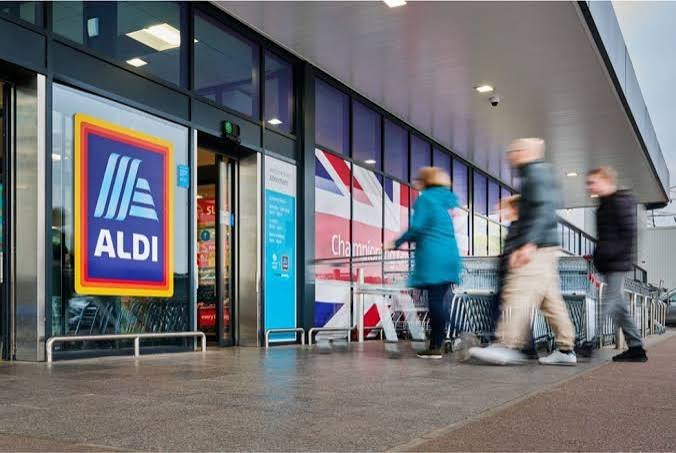
Over the past decade, the UK grocery landscape has undergone a brutal structural revolution. What began as a slow, post-2008 encroachment by German discounters Aldi and Lidl has evolved into a dominant market force, permanently shattering the traditional supremacy of Britain’s “Big Four” grocery empires. Driven by a relentless sequence of economic shocks—from Brexit supply chain friction to the COVID-19 pandemic and the crushing post-pandemic cost-of-living crisis—British consumer behavior has shifted permanently. Faced with eroded buying power, shoppers have abandoned historic brand loyalties in a desperate hunt for raw value, forcing established giants like Tesco, Sainsbury’s, and Asda to fight a grueling defensive war to retain their customers.
UK GROCERY MARKET SHARE REVOLUTION (A Decade of Disruption)
The Great Calorie Migration: Sacrificing Service for Survival
A decade ago, industry analysts dismissed the German discounters as peripheral players, assuming their spartan store formats, lack of counter services, and unfamiliar private-label boxes would cap their growth. Traditional British supermarkets bet heavily on the “theatrical shopping experience”—investing in sprawling cafes, staffed deli counters, massive parking lots, and extensive customer service desks.
However, as inflation soared and real wages stagnated, the luxury of convenience quickly evaporated. British households discovered a harsh financial reality: they could no longer afford to pay a premium for a pleasant aesthetic.
When the cost-of-living crisis hit its peak, shoppers actively chose to trade away service for survival:
• The Spartan Reality: Consumers accepted longer queues, minimalist cardboard-box displays, and lightning-fast checkout conveyor belts where they were expected to pack their own bags at frantic speeds.
• The Discovery of Value: Shoppers quickly realized that Aldi’s and Lidl’s unbranded, private-label products matched—and often exceeded—the quality of the expensive household names filling the shelves of the major multiples, at a fraction of the cost.
• The Market Expansion: This massive influx of cash allowed Aldi and Lidl to rapidly expand, opening hundreds of new brick-and-mortar stores and pushing their combined UK market share to roughly 20%.
The Retaliation of the Incumbents: Margin Compression and Price Wars
The rapid rise of the discounters sent shockwaves through executive boardrooms, forcing the traditional market leaders to radically strip back their operations. The old strategy of offering endless promotions and complex multi-buy deals was completely abandoned. To survive, the big players had to beat the discounters at their own game.
Tesco and Sainsbury’s: The Loyalty Lock-In
Market leader Tesco and its closest rival, Sainsbury’s, mounted a sophisticated, tech-driven counteroffensive. They systematically stripped out underperforming service counters (such as fresh meat, fish, and hot deli stations) to slash in-store labor costs. The saved capital was poured directly into aggressive pricing structures:
• Aldi Price Match: Both supermarket giants rolled out direct “Aldi Price Match” campaigns, locking the prices of hundreds of essential, everyday items directly to the discounters’ benchmarks.
• Two-Tier Pricing: They weaponized data via Tesco Clubcard Prices and Sainsbury’s Nectar Prices, creating an ecosystem where only customers willing to hand over their personal shopping data received discounted rates. This strategy effectively locked in footfall and penalized transient shoppers.
Asda: The Vulnerable Giant
While Tesco and Sainsbury’s successfully stabilized their market share through massive capital injection and data ecosystems, Asda became the primary casualty of the discount war. Burdened by heavy debt obligations following its leveraged buyout by the Issa brothers and TDR Capital, Asda lacked the financial flexibility to match the aggressive, margin-eroding price cuts of its peers. Hampered by rising debt servicing costs and highly publicized store-level operational struggles, Asda saw its market share decline significantly as budget-conscious shoppers left for the cleaner pricing models of Aldi and Lidl.
Executive Decadal Summary: UK Grocery Performance Metrics
Supermarket Group 10-Year Market Share Trajectory Primary Defensive Strategy Structural Impact / Current Outlook
Aldi & Lidl Massive Growth (Doubled combined share to ~20%) Rapid store rollout, aggressive private-label expansion Positioned as mainstream destinations; expanding into premium tier lines.
Tesco Stable/Defensive (Maintained market dominance) Clubcard Prices, Aldi Price Match, service counter closures Leaner operations with high digital engagement; successfully protected its core base.
Sainsbury’s Stable/Defensive (Slight consolidation) Nectar Price loyalty lock, premium “Taste the Difference” push Successfully positioned as a value-driven alternative while maintaining a premium edge.
Asda Severe Decline (Lost significant market ground) Rollout of “Asda Rewards” app, targeted price drops Severely constrained by corporate debt; struggling with operational consistency and worker disputes.
Would you like to expand this report with specific data on how supplier relationships were strained during this 10-year price war, or shall we analyze the profit margin drops experienced by the Big Three?