
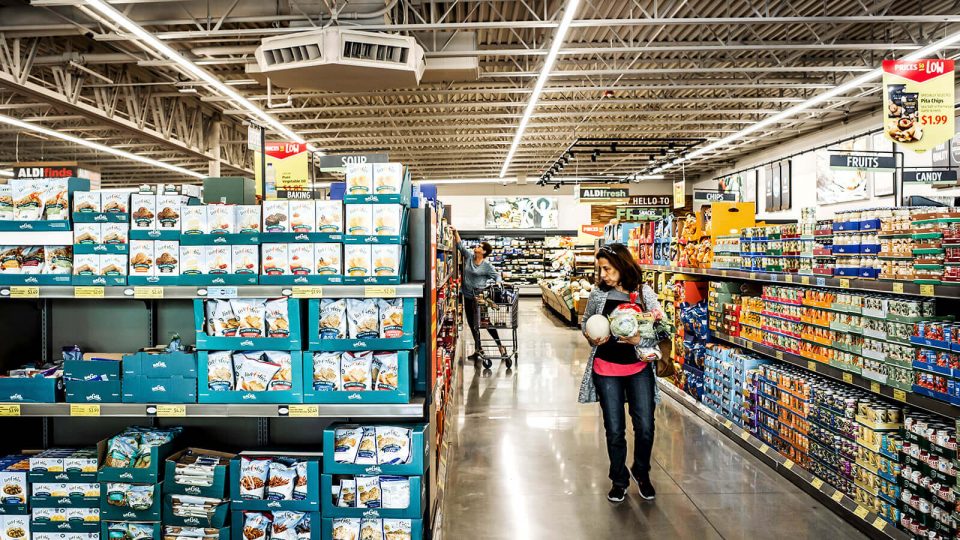
Aldi is continuing its rapid expansion across several international markets, reinforcing its position as one of the fastest-growing supermarket chains in the world. The discount retailer remains focused on opening new stores, strengthening its supply chain and increasing investment in private label products as consumers continue to seek affordable grocery shopping without sacrificing quality.
The retailer’s steady expansion reflects a long-term strategy that has remained largely unchanged for decades. Rather than operating large hypermarkets or carrying thousands of product lines, Aldi continues to concentrate on a carefully selected range of products, efficient store layouts and streamlined operations that help keep prices low.
As inflation continues to influence household budgets in many countries, shoppers remain increasingly focused on value. Aldi has benefited from this trend by attracting customers who previously shopped primarily at traditional supermarkets. Many consumers now divide their weekly shopping between discount retailers and larger supermarket chains, allowing Aldi to reach a broader customer base than ever before.
Store expansion remains one of Aldi’s biggest priorities. New outlets are opening in both urban and suburban locations, improving convenience while increasing competition for established retailers. Each new store strengthens Aldi’s distribution network and enables the company to serve additional communities with its low-cost operating model.
Private label products continue to drive Aldi’s success. Unlike many competitors that rely heavily on national brands, most products sold by Aldi carry the retailer’s own labels. This allows greater control over quality, pricing and product development while maintaining strong profit margins. Over the years, Aldi has invested significantly in improving product quality, with many private label ranges now competing directly with leading branded products.
Fresh food also remains a key area of investment. The retailer has expanded its fruit and vegetable ranges while improving bakery, meat and dairy departments to encourage customers to complete their entire weekly grocery shop in a single visit. Improving freshness and product availability has become increasingly important as Aldi seeks to compete directly with full-service supermarket chains.
Technology is also playing a greater role throughout Aldi’s operations. Modern warehouse systems, improved inventory management and more efficient logistics networks are helping the company reduce operating costs while improving stock availability. These investments support continued expansion without significantly increasing operational complexity.
Sustainability has become another important priority. Aldi continues investing in energy-efficient stores, environmentally friendly refrigeration systems and packaging improvements designed to reduce waste. The retailer is also working closely with suppliers to improve responsible sourcing while supporting sustainable agricultural practices across its supply chain.
Competition across the discount grocery sector continues to intensify. Lidl remains Aldi’s closest rival, with both companies expanding aggressively in Europe and North America. Traditional supermarkets have also responded by strengthening their own value ranges and increasing promotional activity in an effort to retain price-conscious customers.
Industry analysts believe Aldi’s disciplined business model continues to provide a significant competitive advantage. Limited product ranges, efficient store operations and strong purchasing power allow the retailer to maintain competitive pricing even during periods of economic uncertainty. This consistency has helped build customer confidence and long-term loyalty.
Looking ahead, Aldi is expected to continue investing in store development, logistics infrastructure and product innovation while maintaining the operational simplicity that has defined the business for decades. As grocery competition continues to evolve, the retailer’s focus on efficiency, value and quality places it in a strong position to capture further market share in both established and emerging markets.
With consumer demand for affordable food remaining strong, Aldi’s expansion strategy shows no sign of slowing, reinforcing its role as one of the most influential retailers shaping the future of the global supermarket industry.