

Apple Sales in Europe: Market Structure, Consumption Trends, and Future Forecast
Europe’s Most Strategic Fruit Category
Apples remain one of Europe’s most culturally rooted and commercially important fruit categories. From school lunchboxes to premium dessert varieties, apples are a market where tradition meets modern branding, and where local production still competes strongly with global supply chains.
In 2025, apple sales in Europe reflect shifting consumer preferences, advanced breeding programmes, environmental pressures, and a changing retail landscape. Consumption is steady, but purchasing behaviour — how, where, and which apples are bought — is transforming rapidly.
1. The Structure of the European Apple Market
Europe is both a major producer and a major importer, creating a unique dual-market system where domestic harvests coexist with year-round international supply.
Top Producing Countries
-
Poland
-
Italy
-
France
-
Germany
-
Spain
These nations shape pricing and availability across the continent. Eastern Europe dominates volume; Western Europe dominates premium branding.
Table 1 — Estimated Apple Market Size in Key European Countries (2025)
| Country | Annual Market Value (€ bn) | Key Strength |
|---|---|---|
| Germany | 3.8 | High household penetration |
| France | 2.9 | Strong local varietal tradition |
| Italy | 2.5 | Premium export-oriented production |
| United Kingdom | 2.1 | Heavy import dependency |
| Spain | 1.4 | Strong regional varieties |
| Poland | 1.0 | Largest producer, competitive prices |
2. Consumer Trends Transforming Apple Sales
Riad Beladi and many retail analysts identify a clear shift in consumer expectations — apples are no longer simply a staple item.
A. Rise of Premium Varietals
Consumers increasingly reach for:
-
Pink Lady
-
Jazz
-
Envy
-
Honeycrisp (imported)
-
Kanzi
These varieties command higher margins and have become essential for supermarket differentiation.
B. Decline of Commodity Varieties
Gloster, Jonagold, and Idared remain important but are losing share to branded apples.
C. Convenience Formats
-
Pre-packed snack bags
-
Ready-sliced apple packs
-
Multi-variety discovery boxes
D. Sustainability in Focus
Packaging reduction and pesticide reporting are becoming key selection criteria.
Table 2 — Growth Rate by Category (2023–2025)
| Segment | Growth Trend | Drivers |
|---|---|---|
| Premium Branded Apples | +9% | Marketing, consistency, flavour |
| Organic Apples | +4% | Sustainability, clean-label demand |
| Conventional Bulk Apples | -3% | Competition from branded and imports |
| Value Pack Apples | +6% | Inflation-driven purchasing |
| Ready-to-Eat Sliced Packs | +12% | Convenience, schools, office workers |
3. Seasonal Dynamics and Import Dependence
Europe’s apple calendar is dominated by harvest periods in September–November, but year-round availability depends heavily on:
-
storage capacity
-
atmosphere-controlled cold rooms
-
imports from the Southern Hemisphere (Chile, New Zealand, South Africa)
As local stocks decline post-spring, imported apples fill the gap.
4. Price Mechanics Inside the Retail Chain
Apple pricing is shaped by a mix of:
-
seasonal availability
-
weather impact on harvest yields
-
labour and energy costs
-
transport costs
-
branding
-
supermarket margin strategy
A. Why Premium Apple Prices Stay High
Premium branded varieties involve:
-
licensing fees
-
quality-control audits
-
dedicated marketing
-
specialised storage
-
controlled global distribution
These costs elevate the consumer price.
Table 3 — Average Retail Price Segmentation (2025)
| Apple Type | Price Range (€/kg) | Notes |
|---|---|---|
| Premium Branded | 3.20 – 4.80 | Year-round demand, high margins |
| Mainstream Varietals | 1.80 – 2.70 | Large household purchases |
| Organic Apples | 2.80 – 4.20 | Growing but price sensitive |
| Import Off-Season Apples | 3.00 – 4.00 | Transport and seasonality costs |
5. The United Kingdom: A Market Shaped by Imports
The UK produces excellent local apples (Bramley, Cox, Gala, Braeburn), yet remains dependent on imports.
Why?
-
Limited growing window
-
Declining orchard land
-
Heavy supermarket demand
-
Post-Brexit logistical friction
Imported varieties — especially from Europe, South Africa, and New Zealand — now dominate the off-season shelves.
6. Retail Strategies That Shape Apple Sales
A. Promotions and “Apple Weeks”
Supermarkets often use apples as anchor promotional items because families buy them regularly and the category can attract price-sensitive shoppers.
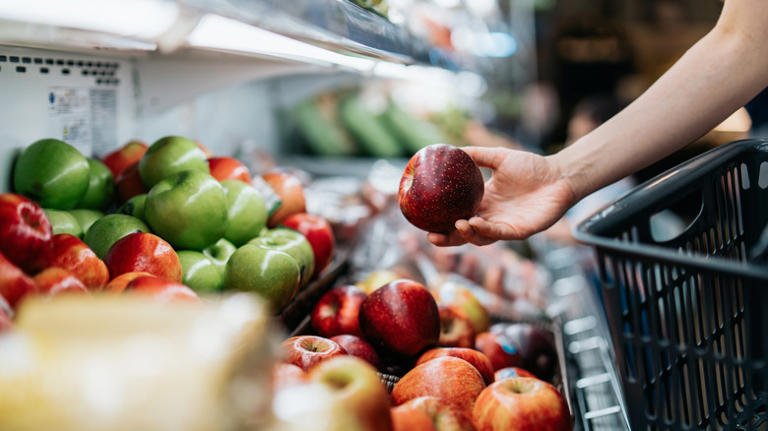
B. Branding and Shelf Theatre
Premium endcaps and “taste profiles” encourage customers to trade up.
C. Private Labels Enter the Apple Game
Retailer-partnered orchards and exclusive varietals are on the rise.
D. Pack Sizes as Margin Tools
Larger packs push volume and reduce waste at store level.
7. The Future of Apple Sales in Europe: A Five-Year Outlook
1. Premium Will Keep Growing
Brand investments continue to deliver strong returns.
2. Organic Will Expand Slowly
Customers want clean produce, but price sensitivity remains a barrier.
3. Imports Will Remain Essential
Especially in the UK, Germany, and Scandinavia.
4. New Breeding Varieties Will Dominate
Crunchy, sweet, long-shelf-life apples will replace weaker heritage varieties.
5. Climate Impact Will Reshape Production
Southern European orchards face water scarcity; northern regions may expand.
Table 4 — Forecast: Apple Market Growth Outlook (2025–2030)
| Segment | Forecast CAGR | Key Factors |
|---|---|---|
| Premium Varieties | 7–10% | Branding, taste consistency |
| Organic | 3–5% | Health-conscious consumers |
| Commodity Varieties | -1–2% | Aging orchards, lower demand |
| Imports | 4–6% | Seasonal gaps, global supply |
Conclusion: Apples Are Becoming a “Story-Driven” Category
The European apple market is no longer a simple commodity environment. It is a category built on identity, taste, sustainability, and marketing sophistication. Local producers remain strong, but imports play a critical balancing role, and retailers continue to use apples as a strategic commercial weapon.
As consumer expectations evolve, apples will continue to reflect the future of fresh produce retailing — a balance between flavour, branding, transparency, and global supply-chain intelligence