
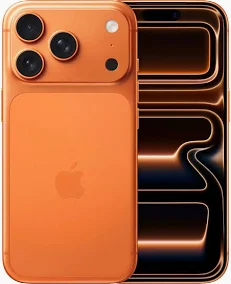
Apple is about to do something it has rarely done with its most important product: launch a new iPhone season without actually putting the standard new iPhone on sale. That could make the arrival of the iPhone 18 one of the most unusual launches in Apple’s history — and potentially one of the most important for retailers.
The latest reports indicate that Apple is preparing to unveil the iPhone 18 Pro and iPhone 18 Pro Max in September 2026, while the standard iPhone 18 is being pushed back to spring 2027. Apple has not officially confirmed the timetable, but reports have increasingly converged on a split launch, with the premium models arriving first and the more affordable models following several months later.
That means shoppers walking into a retailer expecting the usual choice between the latest standard iPhone and the Pro version could find that the choice has disappeared. There may be no new standard iPhone 18 sitting alongside the Pro in September. Instead, Apple is expected to put the spotlight firmly on its premium range, potentially alongside its first foldable iPhone.
And this is where the story becomes much bigger than another smartphone launch.
The September iPhone could become a premium-only event
The iPhone 18 Pro is expected to be the star of Apple’s autumn launch. Reports point to Apple’s next-generation A20 Pro chip, potentially manufactured using a 2nm process, along with camera improvements, a smaller Dynamic Island and other display and design changes. A variable-aperture camera has also been reported as a possible upgrade, although many of these specifications remain unconfirmed until Apple makes the product official.
The Pro models are also expected to receive improvements in photography and battery performance, while Apple is reportedly working on changes that could make the front-facing camera and Face ID components less visually intrusive. The result would be an iPhone designed to look and feel more premium rather than simply offering another annual specification upgrade.
But there is a catch for shoppers.
The iPhone 18 itself is reportedly not coming at the same time.
That could change the psychology of the entire launch. In previous years, consumers could see the new standard iPhone, compare it with the Pro and decide whether the additional features justified spending more. This year, consumers wanting the newest iPhone in September could instead be presented with a much more expensive decision: buy the new Pro, buy the previous-generation iPhone, or wait until spring.
Apple could be creating two iPhone shopping seasons
For retailers, this could be the most interesting part of the story.
Instead of one huge annual iPhone sales period, Apple could effectively create two separate shopping seasons. September would be dominated by the iPhone 18 Pro and Pro Max, while spring 2027 could bring the standard iPhone 18 and potentially other models into the market.
That gives retailers more opportunities to promote smartphones, accessories, trade-in schemes, finance packages and upgrades throughout the year. It could also change inventory planning because retailers will no longer necessarily receive the entire new-generation range at the same time.
Apple’s strategy could also push consumers towards the higher end of the market. If somebody has decided that September is the month to replace an ageing iPhone, waiting several months may not be attractive. The psychological pressure of owning the latest model could push some shoppers towards the Pro.
That is a potentially powerful commercial strategy: remove the cheaper new option from the launch window and the premium option becomes the natural upgrade.
And then comes the really expensive iPhone
The September event could become even more dramatic if Apple introduces its long-rumoured foldable iPhone.
Reports suggest Apple’s first foldable could sit above the Pro range, with a book-style design and a much larger internal display. Estimates circulating in the technology industry have placed the potential price somewhere around $2,000 to $2,500, although Apple has not confirmed the product, name or price.
If that happens, Apple’s 2026 launch could effectively create a premium ladder: the Pro, the Pro Max and then an ultra-expensive foldable at the top.
For consumers, that could make the iPhone 18 Pro appear more reasonable by comparison.
It is a familiar retail principle. Put an extremely expensive product next to a merely expensive one and the second product can suddenly look like better value. Apple does not need every shopper to buy the most expensive iPhone. It needs the premium range to redefine what consumers consider acceptable when upgrading.
The iPhone 18 could arrive as the “value” iPhone
There is another strange consequence of the strategy.
When the standard iPhone 18 finally arrives in spring 2027, it could suddenly look like the value proposition in Apple’s range — even if it is considerably more expensive than smartphones many consumers would normally consider affordable.
That could be particularly interesting for supermarkets and mass-market retailers that compete heavily on price. A delayed standard model could become an attractive product for shoppers who want the newest Apple technology but cannot justify the cost of the Pro range.
It could also extend the life of Apple’s previous models. Retailers may have an unusually important role in deciding whether consumers buy the latest Pro, an older iPhone at a discount, or wait for the standard iPhone 18.
The biggest risk is not technology — it is affordability
Apple’s challenge is that the smartphone market is changing. Consumers are becoming more careful about major purchases, and the difference between a phone that costs hundreds of pounds and one costing well over £1,000 is becoming increasingly important.
The premiumisation of the iPhone therefore carries a risk. Apple may successfully persuade affluent customers to spend more, but it could also leave a gap in the market for competitors willing to offer powerful smartphones at significantly lower prices.
For retailers, that gap could become an opportunity.
The iPhone 18 launch may generate enormous attention, but the real battle will happen after the headlines disappear. Retailers will have to decide how much space and promotional money to dedicate to Apple’s premium models, how aggressively to discount older iPhones and how to sell the new generation to consumers who increasingly ask one simple question before upgrading: what am I actually getting for my money?
Apple’s decision to split the iPhone 18 launch could therefore prove to be much more than a change to its product calendar. It could be a deliberate attempt to reshape the economics of the iPhone business — putting the expensive models at the centre of the world’s biggest smartphone launch and making consumers wait for the phone that many of them actually want.
And that is what makes the iPhone 18 launch potentially so dangerous for consumers and so fascinating for retailers: for the first time, Apple may be turning the September iPhone launch into a place where the cheapest new option simply isn’t there.
