
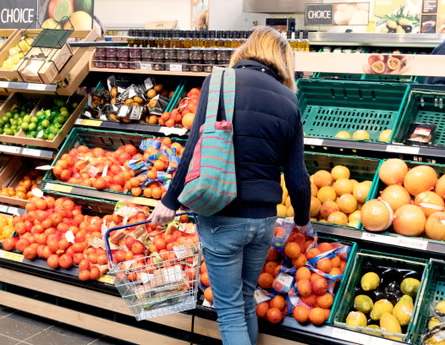
For decades, supermarkets were simply retailers, acting as the link between food producers and consumers. Today, their role has expanded far beyond selling groceries. Europe’s largest supermarket groups are now among the continent’s most influential businesses, shaping everything from farming practices and food manufacturing to logistics, technology and consumer behaviour.
The modern supermarket is no longer just a place to shop. It is becoming a powerful ecosystem that controls large parts of the food supply chain.
Europe’s leading retailers purchase billions of euros worth of products every year. Their buying power gives them enormous influence over suppliers. A decision by a major retailer to stock, delist or promote a product can determine the success or failure of a manufacturer. For smaller producers, securing a listing with a major supermarket chain can transform a business almost overnight.
Private label has become one of the biggest drivers of this transformation.
Thirty years ago, supermarket own-brand products were often viewed as budget alternatives. Today, they compete directly with some of the world’s biggest brands in quality, innovation and packaging. In several European countries, private label accounts for more than 40% of grocery sales, and in some categories it dominates supermarket shelves.
Retailers are investing heavily in their own brands because they offer greater control over pricing, quality and supply. They also help build customer loyalty. A shopper who enjoys a supermarket’s exclusive products has a reason to return rather than shop elsewhere.
Technology is strengthening the position of supermarkets even further.
Artificial intelligence is helping retailers forecast demand with greater accuracy, reducing waste and improving stock availability. Electronic shelf labels allow prices to be updated instantly across thousands of products. Self-checkout systems, smart shopping trolleys and mobile payment solutions are making stores more efficient while reducing operating costs.
At the same time, supermarkets are collecting more customer data than ever before through loyalty programmes and digital shopping platforms. This information enables retailers to personalise promotions, improve product selection and better understand changing consumer habits.
Sustainability has also become a major priority. European supermarket groups are investing in energy-efficient stores, reducing plastic packaging, cutting food waste and sourcing products more responsibly. Consumers increasingly expect retailers to demonstrate environmental responsibility, and supermarkets recognise that sustainability is becoming a competitive advantage as well as a social responsibility.
The relationship between supermarkets and suppliers is also evolving. While negotiations remain challenging, retailers are increasingly looking for long-term partnerships that encourage innovation, improve product quality and create more resilient supply chains. Manufacturers that can offer sustainable packaging, reliable supply and competitive pricing are well positioned to succeed.
Looking ahead, supermarkets are likely to become even more influential. As digital technology, automation and private label continue to expand, retailers will gain greater control over the customer experience from production to purchase. Some analysts believe supermarkets will increasingly resemble technology companies, using data and artificial intelligence to manage every stage of the shopping journey.
The supermarket of the future will not simply sell food. It will manage supply chains, develop brands, provide financial services, deliver online orders, generate consumer insights and influence how food is produced and consumed across Europe.
The balance of power within the food industry is shifting. Manufacturers remain essential, but Europe’s largest supermarket groups are increasingly setting the agenda. Their decisions shape markets, influence innovation and determine which products reach millions of consumers every day.
For suppliers, adapting to this new retail landscape will be essential. For consumers, the changes may be less visible, but they will increasingly experience a shopping environment driven by technology, efficiency and retailer-owned brands. The supermarket has become far more than a shop—it has become one of the most powerful forces in the modern food industry.