
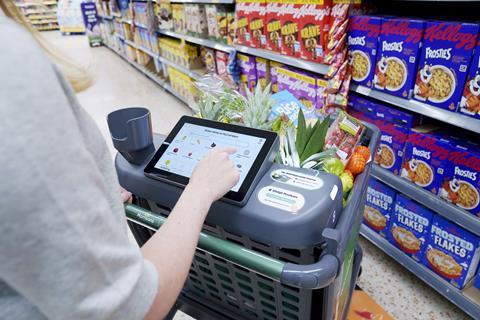
Forget the traditional shopping trolley. A new experiment in Florida is turning the humble supermarket basket into an interactive assistant, raising an intriguing question for the grocery industry: could the trolley eventually become the most valuable advertising space inside a supermarket?
For decades, the shopping trolley has remained one of the least sophisticated elements of the supermarket experience. It carries groceries, follows customers through the aisles and occasionally becomes difficult to steer. Its role has never really changed.
That could now be about to change.
At Seed to Table in Naples, Florida, a new retail experiment is introducing artificial intelligence into the shopping journey, including a striking golden shopping trolley called Goldie. The project, announced by Live Buzz Interactive in November, also features a seven-foot holographic assistant designed to interact with customers.
The concept is interesting, but its commercial implications could be considerably bigger than the technology itself.
When the trolley becomes a salesperson
Imagine entering a supermarket and asking your trolley where to find a particular product. Instead of looking for an employee or studying aisle signs, you receive an immediate answer.
Now take that experience further. The trolley could suggest an alternative when an item is unavailable, explain the difference between two products or highlight a promotion relevant to your shopping needs.
This is where the technology becomes particularly interesting for retailers.
Supermarkets already spend considerable resources understanding purchasing behaviour through loyalty programmes, electronic shelf labels and customer data. An interactive trolley could introduce another point of contact, bringing product information and recommendations directly into the shopping journey.
For food manufacturers, the possibilities are equally interesting. A brand might eventually be able to communicate with a shopper at the exact moment a purchasing decision is being made.
The next battle may be for the shopper’s attention
Supermarket advertising has traditionally concentrated on promotional displays, end-of-aisle presentations, shelf positioning and increasingly sophisticated digital screens.
An AI-enabled trolley introduces a different possibility: advertising that responds to the customer rather than simply waiting to be noticed.
A shopper looking for breakfast products could receive information about a new cereal. Someone comparing ingredients might be offered additional product details. A customer searching for a particular brand could be presented with alternatives.
However, there is an important distinction between useful assistance and unwanted advertising.
Consumers may welcome technology that saves time and makes shopping easier. They may be less enthusiastic if every journey becomes an endless sequence of commercial recommendations.
Privacy will also be central. Retailers will need to be transparent about what information is collected, how customer preferences are remembered and whether personal data is shared with commercial partners.
Will the big supermarket groups follow?
For companies such as Walmart, Tesco, Carrefour and Kroger, the experiment raises an interesting strategic question.
They already have the scale, customer data and retail technology infrastructure to explore more personalised shopping experiences. But introducing conversational technology across hundreds or thousands of stores would require investment, reliable systems and convincing evidence that customers actually want it.
There is also the question of economics. Will the additional sales and advertising income justify the cost of installing and maintaining intelligent shopping equipment?
For now, Goldie is an experiment rather than proof that the traditional trolley is about to disappear.
But the wider message for the supermarket industry is difficult to ignore.
The next major development in grocery retail may not be another self-checkout machine or a faster payment system. It could be something that has been sitting in supermarket aisles for generations.
The shopping trolley may finally be getting a new job – and this time, it could be working for both the retailer and the brands competing for the customer’s attention.