

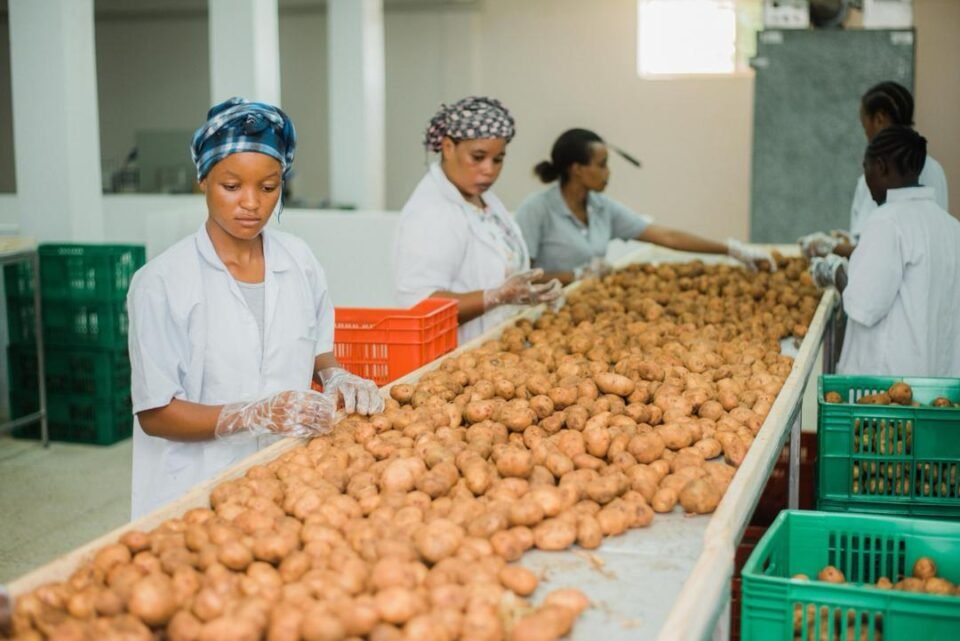
Across Africa, a profound shift is taking place in the way food is consumed, produced and valued. Where once the continent was largely seen through the lens of chronic food insecurity and dependency on imports, today a narrative of transformation is emerging: consumption is rising alongside local production, governments are rebuilding agricultural ecosystems, quality standards are improving, and nations are clamouring to rebalance food trade in favour of surplus rather than deficit. This is not a story of marginal reform—it is the early phase of an agrifood revolution that could reshape the global food landscape over the next decade.
A Surge in Consumption and a Demand‑Driven Market
Africa’s food consumption patterns are undergoing rapid evolution. Rising incomes, urbanisation and demographic growth are driving demand not just for staples but for diversified diets that include higher‑value proteins, fresh produce, processed goods and convenience foods. Middle classes across the continent are expanding, and with them the appetite for quality, variety and nutrition.
This has two major implications. First, it creates an enormous domestic market that is attractive to producers and investors alike. A continent with more than 1.4 billion people—and one of the youngest populations on Earth—is generating unprecedented demand for food across all categories. Second, this consumption boom is redefining “security” not only as physical availability of calories but as consistent access to diverse and nutritious foods. In many North African countries, this shift in consumption is clear in supermarket aisles, in restaurant menus, in the rapid growth of retail food services, and in new product launches that reflect evolving tastes.
The result is a departure from the old model of external dependency. While imports still fill gaps, especially in segments such as wheat and certain proteins, the trend lines are unmistakable: African consumers want more, and they want quality.
Policy, Investment and the New Agricultural Environment
Governments across the continent have recognised that rising consumption must be matched by rising production. Ethiopia, Egypt, Morocco, Algeria, and Kenya, among others, are actively shaping agricultural policy to boost output, attract investment and strengthen value chains. These efforts include:
-
Strategic subsidies for key inputs such as seeds, fertilisers and irrigation equipment;
-
Infrastructure investments in rural roads, storage facilities and cold‑chain logistics;
-
Training and extension services to improve farming practices and yield;
-
Reforms to land tenure and financing mechanisms to unlock credit for smallholders.
In North Africa, in particular, the drive for food sufficiency is no longer theoretical. Countries are aggressively pursuing policies that aim to reduce net food imports, increase exportable surpluses, and rebuild agricultural ecosystems that were weakened during decades of underinvestment. The goal is not autarky—no country can realistically be self‑sufficient in all foods—but balance. A state where imports are strategic, exports are competitive, and local production meets the bulk of domestic needs.
This policy shift has not come overnight. It is the product of years of planning, far‑sighted leadership and a growing awareness that food security is national security. By creating an enabling environment for producers—through access to finance, technology adoption and improved supply chain connectivity—governments are not just subsidising agriculture; they are restructuring it.
Quality on the Rise: From Quantity to Marketability
Production increases alone are not sufficient; quality must improve if African food systems are to compete globally. Here too, progress is tangible. Farmers are adopting improved seed varieties, embracing soil health practices, and integrating technology that enhances consistency and shelf life. Local processing facilities are expanding, moving beyond primary production to value‑added manufacturing that meets regional and international standards.
Certification schemes and quality assurance programmes are proliferating, particularly in export‑oriented sectors such as horticulture, olive oil, dairy and poultry. These improvements do more than elevate product quality—they build trust with retailers, wholesalers and consumers. They enable African products to move more confidently across borders, into regional markets and eventually into global supply chains.
The result is a dual revolution: food that is grown in greater quantities, and food that is good enough to be sold beyond local markets. This quality shift is essential because it turns producers into competitive players rather than merely subsistence growers.
Investment and Private Sector Momentum
The rise in food production is not solely a government story; it is also an investor story. Private capital is flowing into African agribusiness in ways unseen a decade ago. Local entrepreneurs, diaspora investors and global corporations are financing farms, processing plants and distribution networks. Public‑private partnerships are driving innovation in financing schemes that de‑risk agriculture and bring new technologies to scale.
Companies are investing in precision agriculture, digital advisory services, mobile platforms for market access and financial inclusion tools that help smallholders participate in formal supply chains. These innovations are democratizing access to markets and income streams that historically favoured large agribusinesses.
The private sector’s engagement is also critical in bridging the gap between rural producers and urban consumers. Sophisticated logistics providers are emerging in major cities, linking hinterland production with supermarket shelves and food service venues. This integration of value chains supports not only efficiency but resilience.
Export Potential and a New Trade Balance
One of the most striking aspects of this transformation is the rising potential for African food exports. Regional trade blocs such as the African Continental Free Trade Area (AfCFTA) are setting the stage for easier movement of agricultural goods across borders, reducing tariffs and harmonising standards. This creates a larger integrated market where surplus production in one country can satisfy demand in another.
Countries like Morocco and Egypt are already significant exporters of fruits, vegetables and processed foods to Europe and the Middle East. Algeria, historically a major importer of wheat, is investing in domestic milling and irrigation to bolster local grain production. Kenya’s horticulture industry has become a linchpin of export earnings. In each case, the shift is from import reliance toward competitive export capacity.
The vision many governments now articulate is not one of complete self‑sufficiency—for that is unrealistic—but of strategic balance: producing enough domestically to reduce vulnerability, while exporting value‑added products that strengthen national income and create jobs.
Challenges Remain, But Change Is Underway
Despite impressive progress, challenges remain. Climate change, water scarcity and infrastructure deficits continue to pose serious constraints. Smallholder fragmentation and access to affordable credit are ongoing barriers. Yet even these hurdles are being met with innovative responses: climate‑smart agriculture, renewable energy‑powered irrigation, shared machinery platforms, and microfinance models tailored to rural realities.
Critically, the narrative has shifted. African nations are no longer waiting for external solutions to food challenges. They are building them. The energy around production, quality improvement and trade repositioning suggests that within the next decade, the continent’s role in global food systems will be markedly different from what it is today.
A New Landscape Ahead
In ten years’ time, Africa’s agrifood sector is poised to look dramatically different: less dependent on imports, more integrated regionally, and more competitive globally. Local production will feed more mouths with higher‑quality food, and exports will drive economic growth. This is not a speculative future—it is an emerging reality rooted in tangible policy shifts, private sector investment and the lived experience of producers and consumers alike.
Africa’s food transformation is not simply about feeding itself—it is about asserting a presence in the global food economy. The boom in production, rising consumption, improving quality and strategic trade rebalancing are all indicators that the continent is moving toward a more resilient, more prosperous agrifood future.
This evolution will not be linear or without setbacks, but the momentum is unmistakable. Today’s investment in agriculture is laying the foundation for tomorrow’s food security and economic opportunity. And in the next decade, the world will be watching a continent not defined by scarcity, but by its growing agricultural strength and influence.