
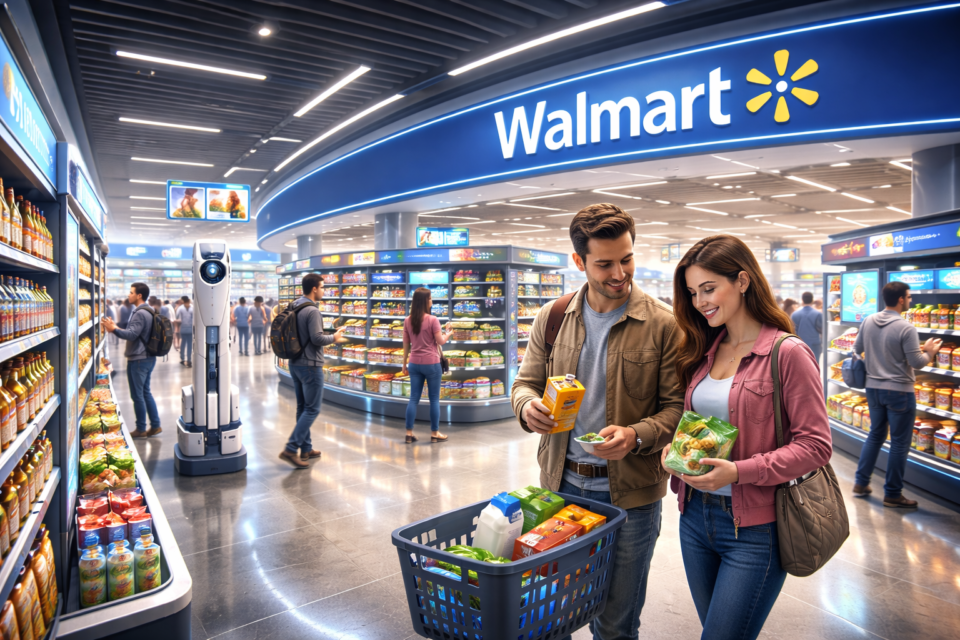
The escalation of the US–Iran war in 2026 is no longer a distant geopolitical conflict. It is rapidly becoming a direct cost-of-living crisis for European consumers, with supermarket prices already rising — and set to worsen significantly in the months ahead.
What began as a military confrontation has evolved into a full-scale economic shock, transmitted through energy, fertiliser, logistics, and ultimately, food.
The Trigger: Energy Shock Turning Into Food Inflation
At the centre of the crisis lies the disruption of the Strait of Hormuz — one of the most critical arteries of global trade.
Around 20% of the world’s oil supply flows through this route
Shipping disruption has caused oil prices to surge sharply
Gas prices in Europe have nearly doubled in days
The consequence is immediate:
Energy becomes more expensive → production costs rise → transport costs increase → food prices follow.
As one economist warned:
“The longer this lasts, the more significant the shock”
This is not theoretical. It is already happening.
From Fuel to Food: The Domino Effect
Food inflation is not driven by supermarkets alone. It is driven by the entire system behind them.
1. Fertiliser Crisis
The Middle East is a key supplier of fertiliser inputs. Disruption is already pushing prices higher.
The CEO of fertiliser giant Yara, Svein Tore Holsether, issued a stark warning:
“Could severely impact global food supplies”
Urea prices have already surged dramatically, threatening crop yields worldwide.
2. Agriculture Under Pressure
European farmers are being squeezed:
Gas prices (used for heating greenhouses) have surged
Fertiliser costs rising
Imports becoming more expensive
This means less production, higher costs, and lower margins — all feeding into supermarket pricing.
3. Transport & Imports
Europe imports a significant share of its food.
With oil prices rising:
Shipping costs increase
Refrigeration costs increase
Distribution becomes more expensive
Economists warn that even basic logistics inflation will push grocery prices higher across the board
What Will Become More Expensive?
The impact is not limited to one category — it is systemic.
According to retail and supply chain analysts:
Fresh vegetables: up to +15% expected
Dairy (milk, cheese, butter): rising due to feed and energy costs
Bread: impacted by fertiliser and grain production
Cooking oils, coffee, seafood: highly exposed to global trade disruption
This is not a temporary spike — it is the beginning of a broader inflation wave.
Supermarket CEO Reality: Quiet Alarm
While few supermarket CEOs have publicly panicked, their messaging is becoming increasingly cautious.
Executives across global retail are signalling three key concerns:
1. Cost Pressure Cannot Be Fully Absorbed
Retailers absorbed inflation during earlier crises. This time, capacity is limited.
Margins are already thin. The ability to shield consumers is weakening.
2. Supply Chains Are Becoming Unpredictable
The war has introduced a level of volatility not seen since the Ukraine crisis.
Retailers are facing:
Delayed shipments
Contract uncertainty
Sudden price renegotiations
3. A Warning Behind Closed Doors
Industry insiders indicate a growing concern:
This is not a short-term shock.
It is a structural inflation phase linked to geopolitics.
Europe: The Most Exposed Region
Europe is particularly vulnerable for three reasons:
1. Energy Dependence
Unlike the United States, Europe relies heavily on imported energy.
Energy price spikes directly translate into:
Higher production costs
Higher retail prices
2. Import Reliance
Countries like the UK import up to 40% of their food supply
Any disruption in global trade hits supermarket shelves quickly.
3. Weak Consumer Spending Power
Even before the war, European consumers were under pressure.
Now:
Purchasing power is falling
Inflation is returning
Economic growth is slowing
The Consumer Impact: A Second Cost-of-Living Crisis
For households, the consequences are clear:
🛒 Smaller baskets
Consumers will buy:
Fewer items
Cheaper alternatives
More private label
💸 Higher weekly bills
Even modest increases across categories create a cumulative effect.
A typical family shop could rise significantly over months.
🔄 Behavioural Shift
Expect:
More discount shopping
Reduced brand loyalty
Increased price sensitivity
This trend is already visible — and will accelerate.
Will It Get Worse? Yes.
All indicators point in one direction: further pressure ahead.
Oil markets remain unstable
Fertiliser shortages are worsening
Agricultural output is under threat
The Bank for International Settlements has warned that prolonged conflict could intensify economic stress globally
And in food terms, the timeline is delayed:
👉 Energy shock → production cost → supply chain → supermarket shelf
This means the worst price increases may not yet have arrived.
ISN Final View: A War That Ends at the Checkout
The US–Iran war is not just a geopolitical event.
It is a supply chain war with global consequences.
For supermarkets:
Margins will tighten
Price pressure will intensify
Competition will become more aggressive
For consumers:
Food will take a larger share of income
Choice will narrow
Affordability will dominate decisions
The uncomfortable truth is this:
The battlefield may be thousands of miles away —
but the impact is already visible in Europe’s supermarket aisles.
And for millions of households,
the real cost of war will be paid at the checkout.