

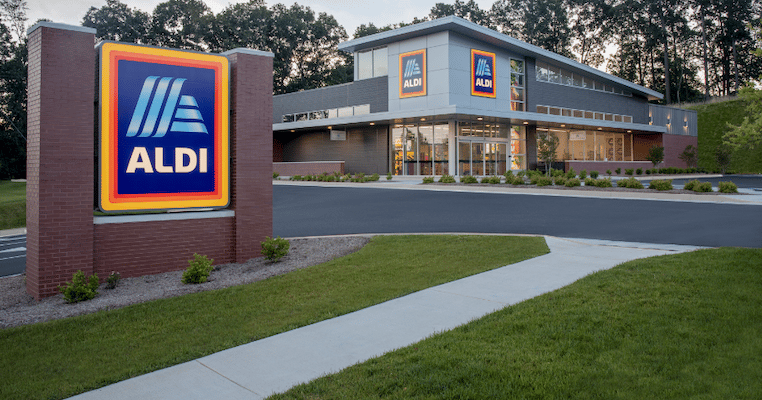
The rapid expansion of Aldi in the United States has reached a defining milestone, as the retailer officially opened a new store in Portland, Maine—marking its presence in its 40th state. This move signals not only geographic growth but a deeper transformation of the American grocery landscape, where value-driven retail continues to dominate consumer behaviour.
The Maine opening represents more than just another store launch. It highlights Aldi’s relentless expansion strategy, which aims to reach 3,200 stores by 2028, positioning the company as one of the most influential players in U.S. grocery retail.
In recent years, Aldi has moved from being a niche discount operator to becoming a mainstream force competing directly with giants such as Walmart and Kroger. Its success lies in a tightly controlled product range, efficient store layouts, and a heavy reliance on private-label goods.
The Portland store reflects Aldi’s standardised approach—compact, cost-efficient, and designed for speed. This operational simplicity enables the retailer to maintain consistently low prices, a key factor attracting American consumers facing ongoing inflationary pressures.
The expansion comes at a time when price sensitivity remains high. Aldi’s model, which eliminates unnecessary overheads, aligns perfectly with shifting shopper priorities. By focusing on essentials and reducing brand clutter, the company offers a streamlined experience that resonates with modern consumers.
Moreover, Aldi’s growth is not limited to store openings. The company is simultaneously investing in logistics infrastructure, including new distribution centres across key regions. This ensures that its expansion is supported by a robust supply chain capable of maintaining product availability and cost efficiency.
Industry analysts view Aldi’s expansion as part of a broader shift in U.S. retail, where European discount chains are reshaping competitive dynamics. Aldi is already the third-largest grocer in the country by store count, and its trajectory suggests further disruption ahead.
The Maine launch also reflects Aldi’s strategy of entering underserved markets. By targeting regions with limited discount options, the retailer can quickly establish a loyal customer base. This approach reduces direct competition while maximising growth potential.
As Aldi continues to expand, traditional supermarkets are being forced to adapt. Pricing strategies, private-label development, and store efficiency are now critical areas of focus across the industry.
The Portland opening is therefore more than symbolic—it is a clear signal that Aldi’s influence is far from reaching its peak. Instead, it marks the beginning of a new phase in U.S. grocery retail, where efficiency, affordability, and simplicity define success.