

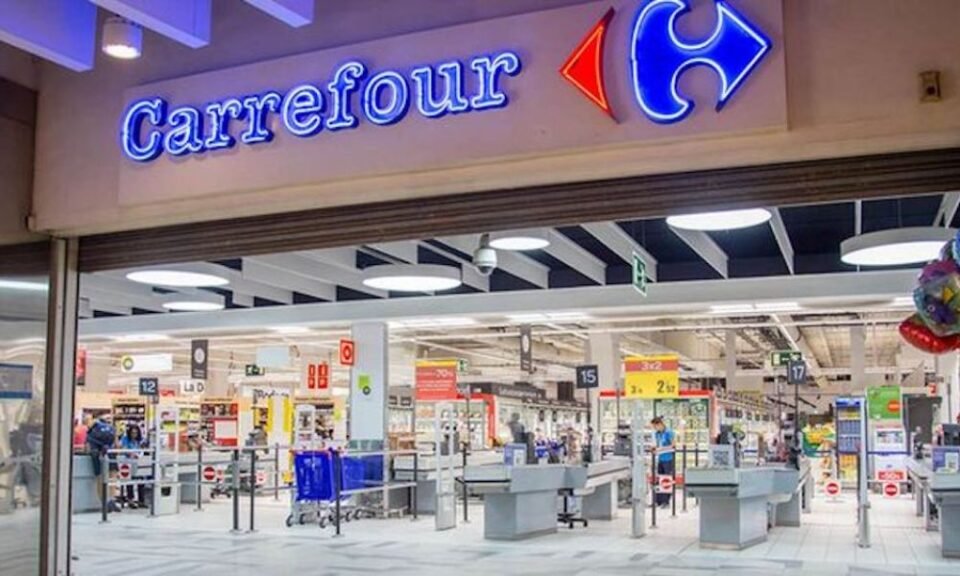
Europe’s largest food retailer, Carrefour, has entered 2026 projecting confidence, despite reporting a slight decline in operating profit for 2025. While headline figures showed pressure on margins, performance surpassed market expectations — a signal that the group’s strategic recalibration across France and Spain is beginning to deliver measurable stability.
In an environment shaped by post-inflation caution and value-driven consumer behaviour, beating expectations matters more than headline contraction. The modest dip in operating profit reflects a retail landscape still adjusting to slower volume growth, higher labour costs and intense promotional competition. Yet underlying indicators suggest that Carrefour has strengthened its foundations rather than retreated.
France: Price Leadership as a Defensive Weapon
In its home market, France remains both Carrefour’s greatest opportunity and its fiercest battleground. French grocery retail is structurally competitive, with price comparison culture deeply embedded in consumer habits. Shoppers scrutinise weekly baskets with discipline, and loyalty is earned through consistency rather than sentiment.
Carrefour’s response has been unequivocal: reinforce price competitiveness without abandoning margin discipline. Rather than engage in unsustainable discounting, the group has leaned heavily on its private-label architecture, promotional precision and loyalty-driven pricing.
Private brands now play a strategic rather than purely tactical role. Entry-tier ranges protect price perception, while premium private labels offer margin resilience. This tiered approach allows Carrefour to defend its value image while appealing to consumers seeking affordable quality.
Consumer sentiment in France has shown tentative improvement as inflation moderates. Although purchasing power has not fully recovered to pre-crisis levels, households are beginning to loosen strictly defensive shopping patterns. Basket composition remains rational, yet frequency and willingness to trade within categories have stabilised.
Carrefour’s management views this stabilisation as an inflection point. The company is not relying on a surge in spending; rather, it is positioning itself to capture incremental recovery through operational efficiency and brand trust.
Spain: Momentum Through Focused Expansion
Across the Pyrenees, Spain represents a complementary growth story. The Spanish grocery market has demonstrated resilience, supported by strong private-label acceptance and a competitive yet structured retail environment.
Carrefour’s Spanish operations have benefited from disciplined expansion in proximity formats and a sharper alignment of assortment with local purchasing behaviour. Convenience stores and smaller urban formats continue to gain traction, reflecting demographic shifts and lifestyle changes.
Spanish consumers remain price sensitive, but confidence levels have improved compared with the height of inflationary pressure. Retailers that successfully communicate price stability are rewarded with loyalty. Carrefour’s emphasis on predictable pricing and clear promotional messaging has strengthened its competitive standing.
Moreover, tourism recovery has provided an additional tailwind in coastal regions and major cities. Seasonal traffic has supported top-line growth, even as households maintain prudent spending habits.
Profit Pressure, Expectation Management
The slight drop in operating profit during 2025 must be viewed within context. Retail margins across Europe have been under structural strain since the onset of double-digit inflation. Energy, logistics and wage costs increased significantly, and while some pressures have eased, cost bases remain elevated compared with pre-crisis norms.
Carrefour’s ability to outperform expectations despite these headwinds suggests effective cost control. Efficiency programmes, supply chain optimisation and digital price management have cushioned the impact of softer margins.
Investors and analysts increasingly focus on trajectory rather than static performance. In this regard, Carrefour’s reaffirmed confidence entering 2026 carries strategic weight. It signals management belief that the most acute margin compression phase has passed.
Strategic Priorities for 2026
Looking ahead, Carrefour’s strategy across France and Spain rests on four pillars:
1. Price Credibility:
Maintaining a reputation for competitiveness is non-negotiable. Price perception drives traffic, particularly in periods of economic uncertainty.
2. Private-Label Development:
Continued innovation within own-brand ranges will remain central to protecting margins and differentiating the offer.
3. Format Adaptation:
Hypermarkets remain important, but growth lies in convenience and proximity. Urbanisation and smaller households favour flexible store formats.
4. Digital Integration:
Data-driven pricing, loyalty personalisation and supply chain analytics are no longer optional. They are essential tools for operating in a lower-growth environment.
Consumer Psychology: The Real Battlefield
Beyond financial metrics, the deeper narrative is behavioural. European consumers have undergone a structural shift since the cost-of-living crisis. Even as inflation slows, caution persists. Shoppers have learned to compare, substitute and delay discretionary purchases.
Carrefour’s leadership understands that restoring confidence is not about waiting for macroeconomic recovery; it is about demonstrating reliability. Consistent pricing, visible value and transparent communication foster trust — and trust translates into footfall.
In both France and Spain, Carrefour’s competitive stance is less about short-term volume spikes and more about consolidating long-term positioning. The group is aiming for sustainable profitability rather than volatile growth.
A Measured but Positive Outlook
While 2025 delivered modest profit contraction, the broader narrative is one of resilience. Beating expectations in a volatile retail climate indicates structural stability. Reaffirming confidence for 2026 suggests that management sees improving fundamentals rather than temporary relief.
France offers gradual recovery through strengthened consumer sentiment and sharper price execution. Spain provides steady momentum supported by expansion and tourism. Together, these two markets anchor Carrefour’s European core.
The road ahead remains competitive. Inflation may have slowed, but consumer caution is unlikely to disappear entirely. Retailers must operate in a world where value perception is permanent currency.
Carrefour appears prepared for that reality. By combining disciplined cost management with strategic investment in price competitiveness and format evolution, Europe’s largest food retailer enters 2026 not triumphant — but strategically positioned.
In modern grocery retail, that may be the more important victor