

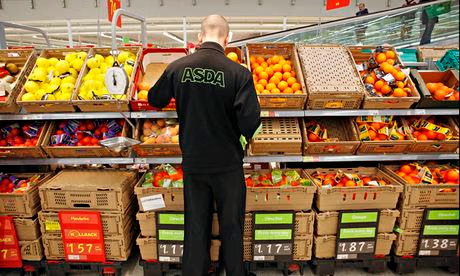
Across Europe, a decisive shift is underway in supermarket aisles. Consumers are no longer simply shopping for price or convenience—they are actively seeking health-driven choices, with high-protein, fibre-rich, and fresh products rapidly gaining ground. This is not a passing trend. It is a structural change in demand, and it is already reshaping the future of retail.
The message from shoppers is clear: food must now deliver more than taste and affordability. It must contribute to wellbeing, support active lifestyles, and offer transparency in ingredients. In response, categories once considered stable—such as bakery and ready meals—are being redefined at speed.
Yet the real question is not whether this shift is happening. It is which supermarkets in Europe will act decisively—and which will fall behind.
Retailers have always held more power than they sometimes admit. They control shelf space, dictate product visibility, and ultimately decide which products succeed or fail. If health is now driving purchasing decisions, then supermarkets are no longer passive distributors—they are gatekeepers of public nutrition.
Some are already moving. Groups like Tesco and Carrefour have expanded their healthy private label ranges, introducing high-protein yoghurts, low-sugar ready meals, and functional snacks. Meanwhile, Aldi and Lidl are quietly redefining value by offering healthier alternatives at competitive prices, making nutrition accessible to a broader audience.
But incremental change is no longer enough.
If supermarkets truly want to align with this consumer revolution, they must go further—and faster. The next phase will not be about adding a few “healthy options” to existing ranges. It will require putting direct pressure on food producers to reformulate, innovate, and meet stricter nutritional expectations.
This is where the balance of power becomes critical.
For decades, large food manufacturers have shaped product development, often prioritising shelf life, cost efficiency, and mass appeal. Now, retailers must challenge that model. They must demand higher protein content, reduced sugar levels, cleaner ingredient lists, and greater transparency. Contracts, listings, and shelf positioning should increasingly depend on nutritional performance—not just price negotiations.
The bakery sector is a clear example of this transformation. Traditionally driven by indulgence, it is now being pushed towards functional bakery: protein-enriched breads, fibre-packed loaves, and reduced-carb alternatives. The same applies to ready meals, where convenience must now coexist with nutritional value. Consumers expect meals that are not only quick but also balanced, high in protein, and free from excessive additives.
Private label will be the battleground where this change accelerates fastest.
Retailers have full control over their own brands, giving them a unique opportunity to lead rather than follow. By investing in healthier formulations and clearly communicating nutritional benefits, supermarkets can set new standards for the entire industry. Once private label raises the bar, branded suppliers will have little choice but to respond.
However, this transition will not be without resistance.
Healthier ingredients often come at a higher cost, and reformulation requires investment. There is also the challenge of maintaining taste and consumer acceptance. But the direction of travel is unmistakable. Shoppers are already voting with their wallets, and the growth of high-protein, fresh, and functional categories proves that demand is both real and accelerating.
The supermarkets that succeed will be those that recognise their responsibility—and their opportunity. They will not wait for producers to lead. They will set the agenda, redefine standards, and use their influence to reshape the food ecosystem.
In doing so, they will not only capture market share but also position themselves as trusted partners in consumer health.
The era of health-driven retail has arrived. The question is no longer whether supermarkets should act—but who will lead, and who will be forced to catch up.