
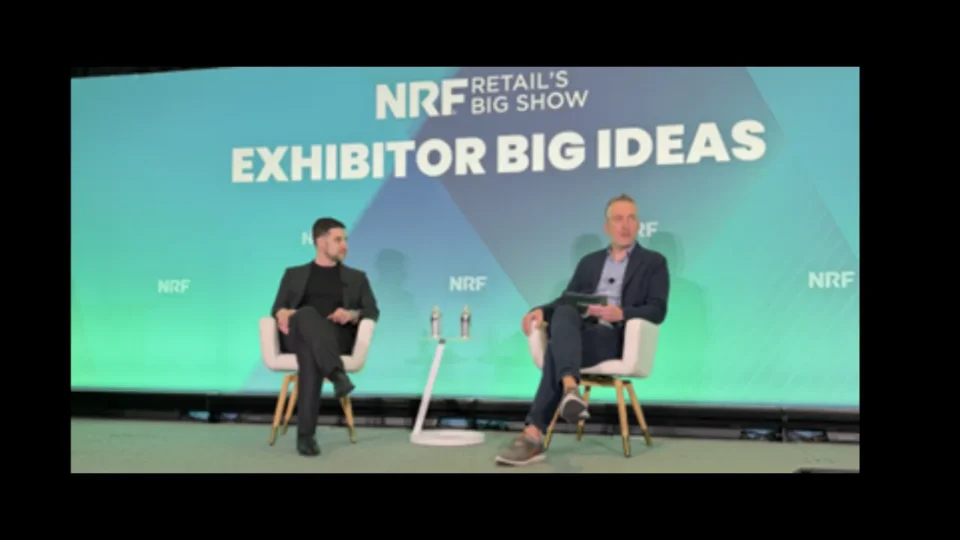
The NRF Big Show 2026 did not revolve around a single technology, format or retail concept. Instead, it marked a turning point in how supermarkets will operate, compete and communicate with consumers in the coming decade. The dominant theme emerging from New York was the arrival of what industry leaders are calling the “agentic era” — a phase in which artificial intelligence no longer simply supports retail operations but actively makes decisions, executes actions and represents both retailers and shoppers in real time.
For the grocery and supermarket sector, this shift is far more profound than previous waves of digitalisation. Unlike e-commerce, mobile apps or self-checkout, agentic AI challenges the very foundations of merchandising, loyalty, pricing and customer engagement.
From Predictive to Agentic: A Structural Shift
Until now, most supermarkets have used AI in a largely predictive or assistive capacity. Algorithms forecast demand, optimise inventory, reduce waste and personalise promotions. These systems analyse data and recommend actions, but humans remain firmly in control.
Agentic AI changes that balance.
At NRF 2026, technology providers showcased systems capable of autonomously negotiating promotions with suppliers, dynamically adjusting shelf prices based on real-time demand, managing replenishment orders without human intervention, and even interacting directly with consumers through digital assistants that act on their behalf.
In simple terms, the agent does not wait to be asked. It observes, decides and acts.
For supermarkets operating on thin margins and facing relentless cost pressure, this represents both an opportunity and a strategic dilemma.
What Agentic AI Means for Grocery Retailers
1. Autonomous Merchandising and Pricing
One of the most immediate applications discussed at NRF was agent-led merchandising. Instead of weekly or daily pricing decisions, AI agents can now adjust prices continuously based on:
-
Local demand fluctuations
-
Weather patterns
-
Competitor pricing
-
Stock levels and expiry dates
-
Consumer price sensitivity
For fresh categories — produce, meat, bakery and dairy — this is particularly transformative. Waste reduction and margin protection, long-standing pain points for supermarkets, can be addressed dynamically rather than reactively.
However, this also raises questions around transparency and trust. Regulators in Europe, in particular, are likely to scrutinise algorithmic pricing models to ensure they do not disadvantage vulnerable consumers.
2. The Rise of the Consumer Agent
Perhaps the most disruptive insight from NRF 2026 was not retailer-driven AI, but consumer-controlled agents.
Major tech platforms demonstrated AI assistants that:
-
Compare prices across multiple supermarket chains
-
Optimise shopping baskets based on nutrition, budget and brand preferences
-
Automatically place orders or switch retailers without human involvement
This could dramatically weaken traditional brand loyalty and retailer differentiation. If a consumer’s agent decides where to shop, supermarkets may find themselves competing for algorithms rather than people.
In this scenario, visibility, data compatibility and platform partnerships become as important as store location or range depth.
Loyalty Programmes Under Pressure
For decades, loyalty cards have been the cornerstone of supermarket data strategies. Agentic AI threatens to make traditional loyalty schemes obsolete.
If AI agents manage shopping decisions, points and discounts lose relevance. Instead, retailers will need to offer:
-
Guaranteed value consistency
-
Ethical sourcing transparency
-
Reliable fulfilment and availability
-
Data-sharing incentives that benefit the consumer directly
Some retailers at NRF hinted at a shift towards “loyalty ecosystems” rather than programmes — integrating health, sustainability, financial services and personalised nutrition into a single value proposition.
Supply Chain Automation Moves Upstream
Agentic AI is not limited to front-of-store or digital channels. At NRF 2026, several retailers and logistics providers demonstrated fully automated supply chain decision systems.
These agents can:
-
Reroute shipments based on geopolitical risk
-
Switch suppliers in response to price volatility
-
Optimise transport loads to reduce carbon emissions
-
Negotiate delivery slots and penalties autonomously
For multinational supermarket groups, this offers resilience in an era of ongoing disruption — from climate events to trade restrictions. However, it also concentrates power in the hands of those who control the algorithms.
Smaller suppliers, particularly from emerging markets, may struggle to integrate unless standards are clearly defined and access remains open.
Implications for Private Label and Brands
Private label is likely to be one of the biggest beneficiaries of the agentic era.
AI agents prioritise value, availability and consistency — areas where private label already outperforms many branded products. As a result, brands may need to rethink their role, focusing on:
-
Functional differentiation
-
Provenance and storytelling
-
Health, wellness and sustainability credentials
At NRF, several brand executives privately acknowledged that future negotiations may take place between brand agents and retailer agents, with humans overseeing exceptions rather than leading discussions.
The European Perspective: Regulation and Ethics
While much of the NRF conversation was US-centric, European retailers watching closely will face additional layers of complexity.
The EU’s evolving AI regulations, combined with strict data protection laws, mean agentic systems will need:
-
Explainability in decision-making
-
Clear consumer consent mechanisms
-
Safeguards against discrimination or price manipulation
European supermarkets may move more cautiously, but this could become a competitive advantage. Trust, ethics and transparency are increasingly central to consumer choice, particularly in food retail.
A New Competitive Landscape
The agentic era does not automatically favour the largest players, but it does reward those who move decisively.
Retailers that delay risk becoming price-takers in an ecosystem controlled by external AI platforms. Those that invest early — while retaining strategic oversight — can redefine efficiency, customer experience and supplier relationships.
What became clear at NRF 2026 is that AI is no longer a tool to support retail strategy. It is the strategy.
Conclusion: Adapt or Be Automated
The supermarket industry has always evolved through technology — from barcodes to ERP systems, from online shopping to data-driven personalisation. Agentic AI, however, represents a qualitative leap.
It challenges how decisions are made, who makes them, and ultimately who controls the relationship between retailers, suppliers and consumers.
For grocery executives, the question is no longer if agentic AI will reshape the sector, but who will define the rules of engagement.
NRF 2026 made one thing unmistakably clear: supermarkets are entering an era where intelligence is no longer passive — and those who fail to adapt may find themselves managed by the very systems they once deployed.
