

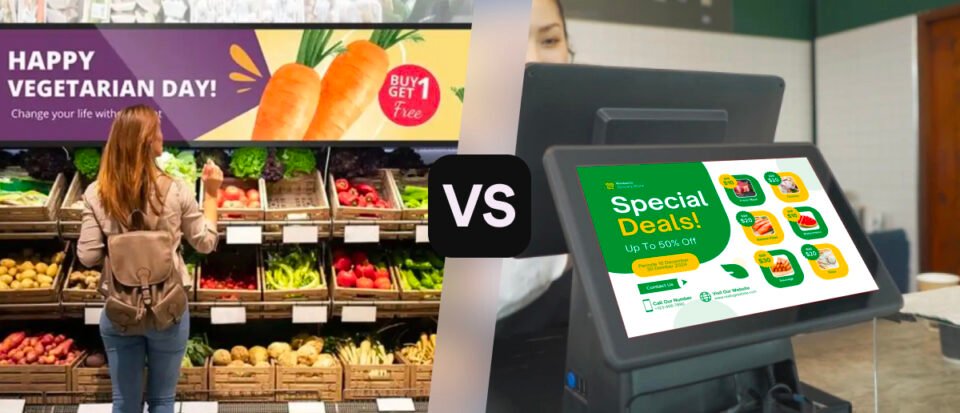
The Importance of POP and POS
In the complex ecosystem of modern retail, two acronyms dominate how brands communicate with consumers in-store: POP (Point of Purchase) and POS (Point of Sale). Though often used interchangeably, each plays a distinct role in driving sales, building brand visibility, and shaping shopper behaviour.
-
POP (Point of Purchase) refers to the marketing materials and displays placed around the product, shelf, or store to attract attention, promote specific offers, or influence buying decisions. Examples include shelf talkers, promotional banners, floor decals, endcap displays, or interactive kiosks.
-
POS (Point of Sale) generally refers to the checkout area, the terminal, or the transaction moment itself, encompassing the hardware (cash registers, card readers), software, and often marketing messaging such as receipts, digital screens, or impulse displays.
Both POP and POS form the frontline of retail engagement, where shoppers make critical decisions. POP drives interest and consideration, while POS captures the final transaction and reinforces brand perception.
2. The Strategic Role of POP in Retail
2.1 Influence on Shopper Behaviour
POP materials act as the silent salesperson, catching the consumer’s eye in the aisles, conveying messages instantly, and guiding choices. Key functions include:
-
Attention Capture: Eye-catching displays or creative packaging draws shoppers toward products they may not have considered.
-
Education: Informational POP signage explains benefits, features, or usage instructions for products.
-
Promotion: Special offers, discounts, and bundles are often communicated via POP.
-
Brand Reinforcement: Consistent design and messaging at the POP level increase brand recall and loyalty.
2.2 POP Design Trends
Modern POP materials increasingly incorporate digital and interactive features:
-
Digital Screens: Video content or animated messaging to engage shoppers dynamically.
-
QR Codes and NFC Tags: Directing consumers to recipes, product demos, or social campaigns.
-
Augmented Reality (AR): Enabling customers to visualise products in real life, such as furniture or cosmetics.
-
Sustainability Messaging: Eco-friendly POP displays align with consumers’ environmental consciousness.
Table 1 — Types of POP Materials and Functions
| POP Type | Purpose | Example |
|---|---|---|
| Shelf talkers | Highlight offers or key info | “New flavour!” tags |
| Endcap displays | Promote seasonal or featured products | Holiday candy display |
| Floor decals | Direct foot traffic | Arrows to a promotion zone |
| Interactive kiosks | Engage, educate, entertain | Digital recipe stations |
| Digital signage | Eye-catching, dynamic content | Animated product promotions |
3. The Strategic Role of POS in Retail
3.1 POS as the Transaction Hub
POS is where the purchase decision crystallises. Modern POS systems do more than process payments; they are central to customer experience, loyalty, and operational efficiency. Key components include:
-
Hardware: Cash registers, touchscreen terminals, barcode scanners, mobile POS devices.
-
Software: Inventory tracking, loyalty program integration, analytics.
-
Marketing: Impulse purchase displays, last-minute promotions, suggested add-ons.
POS is also critical for data collection: purchase history, basket composition, and demographic information provide retailers with insights to optimise stock, promotions, and store layout.
3.2 POS Experience and Technology Trends
Recent developments in POS systems have transformed the checkout from a mere transactional point into a strategic engagement tool:
-
Self-Checkout & Mobile POS: Reducing queues, improving customer satisfaction, and freeing staff for value-added interactions.
-
Integrated Loyalty Programs: Shoppers can redeem points, receive personalised discounts, and engage digitally at the checkout.
-
Dynamic Promotions: POS screens can display real-time offers based on basket contents.
-
Contactless Payments & Digital Wallets: Enhancing convenience and aligning with modern consumer expectations.
Table 2 — Key Functions of Modern POS
| Function | Benefit | Example |
|---|---|---|
| Payment processing | Speed, accuracy | Credit card, NFC, mobile wallet |
| Loyalty integration | Customer retention | Points, personalised offers |
| Analytics & reporting | Inventory and marketing insights | Sales by SKU, basket analysis |
| Impulse display promotions | Increase basket value | Chocolates, drinks, small gadgets |
| Self-checkout | Reduce queue times | Touchscreen kiosks |
4. How POP and POS Work Together
While POP attracts attention and encourages trial, POS ensures the transaction is smooth and often encourages additional spending. Together, they form a seamless path from awareness to purchase:
-
Discovery (POP): Shoppers notice a product via displays, signage, or interactive content.
-
Consideration (POP & POS cues): Messaging and information help consumers evaluate the purchase.
-
Decision (POS): Checkout systems, impulse displays, and loyalty rewards finalise the sale.
-
Retention (POS Data): Loyalty programs, receipts, and personalised marketing build repeat business.
Retailers increasingly measure POP effectiveness by sales uplift, footfall engagement, and social media traction. POS data, in turn, provides granular insights into which POP elements are converting interest into sales.
5. The Economic and Operational Impact
Investing in POP and POS systems is not optional for retailers seeking growth in competitive markets.
-
POP Investment ROI: High-quality, well-designed displays can increase category sales by 10–25%, particularly for new products or seasonal items.
-
POS Investment ROI: Efficient, modern POS systems reduce checkout times, improve customer satisfaction, and increase average basket value.
-
Synergy Effect: When POP and POS are aligned in messaging, branding, and promotion timing, retailers often see a cumulative sales boost that exceeds the impact of each individually.
Modern retail chains increasingly view POP and POS not as costs but as strategic levers to influence consumer behaviour, maximise revenue per square metre, and gather actionable intelligence.
6. Challenges and Considerations
-
Design Fatigue: Shoppers can become desensitised to excessive POP; creativity and relevance are key.
-
Integration Complexity: POS systems must seamlessly connect with inventory, loyalty programs, and analytics.
-
Cost vs. Impact: Balancing investment in premium displays and checkout technology with expected sales uplift.
-
Digital Adaptation: POP and POS increasingly require software maintenance, digital content creation, and staff training.
7. Conclusion: The Frontline of Retail Engagement
POP and POS are the twin pillars of in-store marketing. POP draws the eye, educates, and persuades; POS captures the sale, extends engagement, and builds loyalty. In today’s competitive retail landscape, ignoring either is a missed opportunity.
Retailers who combine compelling POP with modern, efficient POS systems create an ecosystem where consumer attention is captured, purchase is facilitated, and long-term loyalty is nurtured. The most successful stores treat both as strategic investments, not mere operational necessities, and continuously innovate to keep shoppers engaged, satisfied, and returning.
As consumer expectations evolve — with digital integration, convenience, and personalised experiences at the forefront — POP and POS remain the frontline of retail innovation, shaping the way products are discovered, purchased, and remembered.