
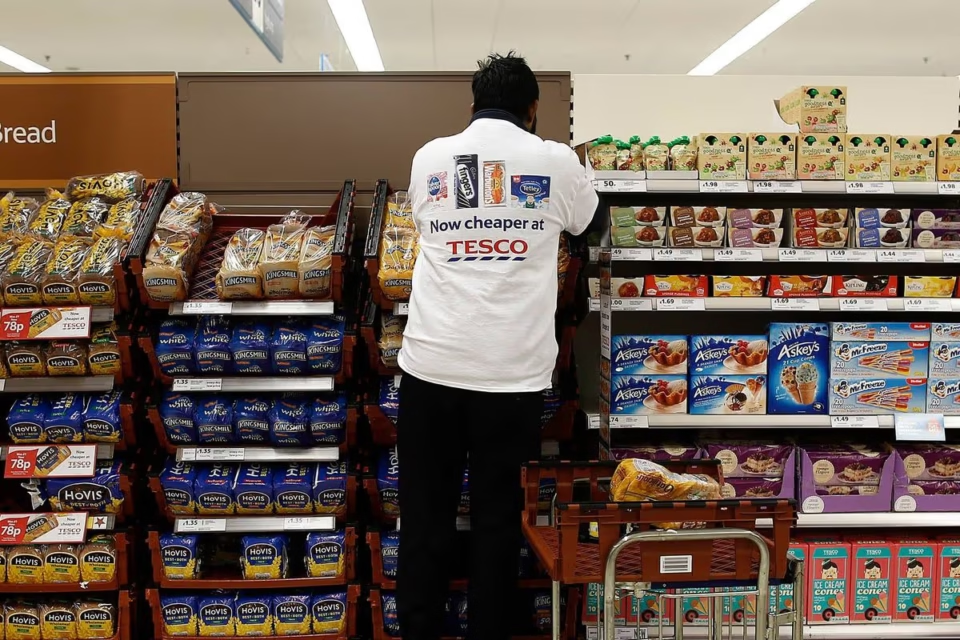
Tesco’s latest trading performance highlights a challenge for the rest of the British supermarket industry. Winning customers is no longer simply a question of offering the lowest price. Retailers must convince shoppers that they are getting good value across the entire weekly shop, while keeping costs under control.
For competing supermarket groups, the question is how to respond when a major retailer combines competitive prices with the scale to invest in its stores, product ranges and customer offer.
Value means more than cutting prices
British shoppers have become increasingly conscious of the cost of their weekly groceries. Loyalty-card offers, promotions and lower-priced own-label products have all become important tools in the competition for household spending.
However, supermarkets cannot rely on price reductions alone. Lower prices may attract customers, but they can also put pressure on margins if retailers cannot offset the cost through better purchasing, more efficient operations or increased sales.
This creates a difficult balancing act. Customers expect supermarkets to remain affordable, but they also want products to be available, fresh food to be of good quality and the shopping experience to be convenient.
Tesco’s performance provides a useful benchmark for the wider market, particularly as competitors look for ways to protect their customer base without damaging profitability.
What does this mean for food suppliers?
For manufacturers, the battle for value creates pressure at several levels.
Branded suppliers must explain why shoppers should pay more for their products when supermarket own-label alternatives are available. Quality, taste, provenance, convenience and innovation can all help justify a price difference, but manufacturers need to demonstrate that these benefits matter to customers.
Private-label producers face a different challenge. They must help retailers deliver attractive products at competitive prices while maintaining consistent quality and reliable supply.
Promotional spending is another consideration. Suppliers may be asked to support discounts or special offers, but frequent promotions can make it harder to maintain a clear price position for a brand.
The challenge is particularly important for smaller manufacturers, which may have less financial flexibility than multinational food companies.
The next stage of supermarket competition
Tesco’s performance does not mean every competitor will follow the same path. Each retailer has its own customer base, cost structure and market position.
Nevertheless, the direction of competition is clear. Supermarkets need to deliver value consistently rather than rely on occasional discounts to attract shoppers.
For suppliers, this means understanding the commercial priorities of each retailer and demonstrating how their products contribute to sales, customer loyalty and the overall shopping experience.
ISN view: The supermarkets best placed to compete will be those that make value part of their entire business model, from purchasing and distribution to the products customers put in their baskets.