
STOCKHOLM, The race to build cleaner energy systems risks overlooking another resource at the heart of the climate challenge: water.
That is the warning from Swedish environmental entrepreneur Bengt Rittri, founder and chief executive of Bluewater, who is calling on governments and business leaders attending Climate Week NYC to treat water security as a central part of climate policy rather than a separate environmental issue.
“Clean energy and clean water must go hand in hand,” Rittri said, arguing that decisions being made today on energy, industry and infrastructure will determine how much safe water is available to future generations.
The pressure on freshwater supplies is already global.
According to WHO and UNICEF, 2.1 billion people did not have access to safely managed drinking water in 2024. Safe drinking water is defined as water available at home when needed and free from contamination.
Pollution is adding to the problem, including from chemicals that can persist in the environment for years.
Research by the US Geological Survey has estimated that at least one PFAS chemical examined in its study could be present in roughly 45% of US tap water. In Europe, monitoring programmes have also detected widespread PFOS contamination in water bodies.
Other pollutants are creating additional concerns. Scientists have detected pharmaceutical residues in rivers across numerous countries, while microplastics have been identified in both bottled and tap water. Researchers continue to investigate the potential health implications of microplastic exposure.
The findings do not mean that all drinking-water supplies are unsafe, but they illustrate the increasingly complicated challenge facing governments responsible for protecting water quality.
At the same time, climate change is putting pressure on the quantity of water available.
Drought, changing rainfall patterns, pollution and growing demand are placing freshwater systems under strain. WWF has warned that rivers, lakes and groundwater reserves are increasingly vulnerable to overuse and environmental degradation.
The expansion of data centres is another emerging issue.
The facilities themselves can require significant amounts of water for cooling, while the wider technology supply chain can also have a substantial water footprint through electricity generation and semiconductor manufacturing. The scale of the impact varies considerably according to the technology used, location and local availability of water.
For policymakers, the issue is therefore becoming less about whether a particular industry uses water and more about whether local supplies can withstand additional demand.
Rittri argues that governments should establish water availability and drought resilience before approving developments that could significantly increase consumption.
That means knowing where the water will come from, understanding what happens when supplies are restricted and ensuring that domestic users are not placed at the back of the queue.
He is calling for governments to focus on four areas: long-term water security planning, stronger controls on pollution, investment in water infrastructure and greater transparency from industries with high water consumption.
The discussion is also moving beyond prevention and towards emergency preparedness.
Bluewater has developed a portable water purification station designed to provide drinking water for up to 10,000 people, based on two litres per person per day. The system is intended for use during emergencies when conventional water supplies are disrupted.
The company says the technology can treat water from sources including rivers, lakes, ponds and brackish water, removing contaminants such as PFAS, microplastics, lead, bacteria, viruses, arsenic and chlorine.
The Swedish armed forces have placed the first order for the emergency system, according to Bluewater.
For Rittri, however, emergency technology is only one part of a much larger challenge. Resilient water systems still depend on functioning public infrastructure, effective regulation and protection of freshwater sources.
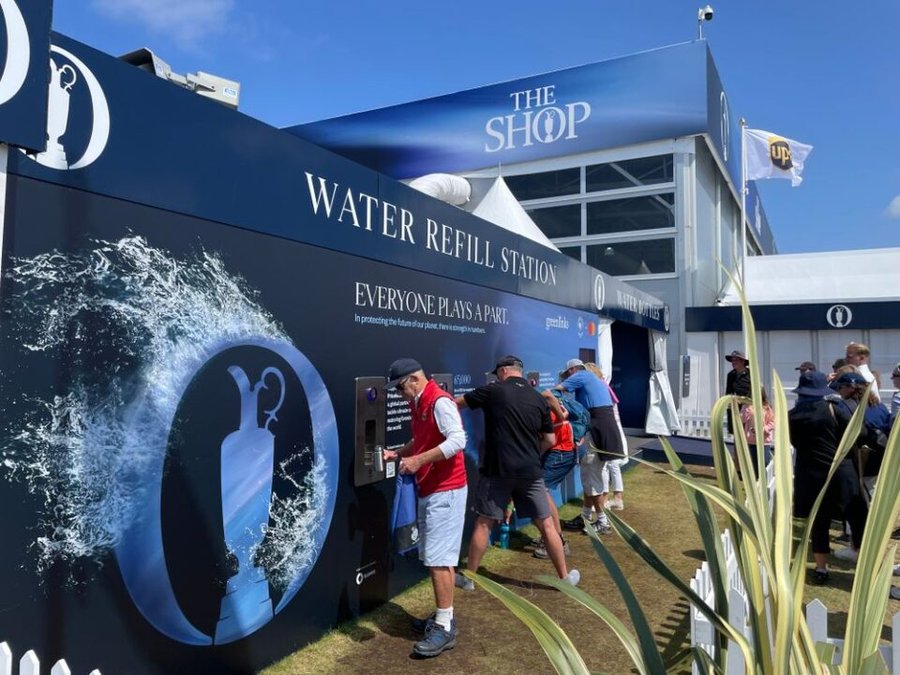
Bluewater has also used purification and refill stations at major golf events, including The Open and the AIG Women’s Open, as part of efforts to reduce dependence on single-use plastic bottles.
The wider question now facing governments at Climate Week NYC is how water will be incorporated into climate and industrial planning.
As countries expand renewable energy, electrification, advanced manufacturing and digital infrastructure, competition for resources will not be limited to land and electricity.
Water is increasingly becoming part of the calculation.
Rittri believes governments should leave the climate discussions in New York with measurable commitments on water quality, supply and access — and, crucially, clear deadlines for delivering them.
The climate transition may be powered by cleaner energy, but its long-term resilience will also depend on something much more basic: whether people can continue to rely on the water coming out of the tap.
