

If history is any guide, the answer is yes — and that is precisely why Kroger may be better positioned than critics assume.
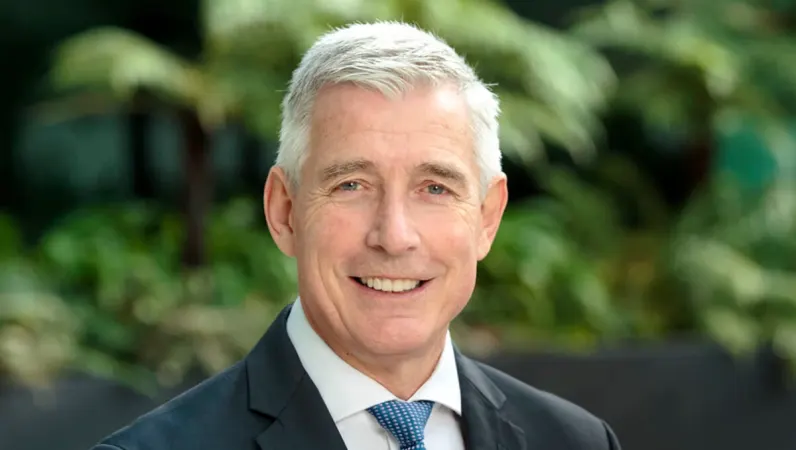
Foran arrives in Cincinnati with a reputation forged at Walmart, where he ran the US business from 2014 to 2019. During that period, he restored momentum by returning to retail fundamentals: sharper prices, cleaner stores, tighter execution and renewed attention to frontline staff. Later, as chief executive of Air New Zealand, he demonstrated that operational discipline and digital investment can coexist.
Kroger is not a distressed retailer. It is a stayer. But it has endured a difficult stretch.
Sales growth has been uneven since the pandemic, as shoppers wrestled with roughly 25% food inflation over the decade. The costly and ultimately unsuccessful $25 billion bid for Albertsons — which drained more than $1 billion in advisory and legal expenses — was a strategic setback. And its ambitious push into automated fulfilment resulted in the closure of three robotic warehouses and a hefty accounting charge.
Yet none of this signals structural weakness. It signals a retailer recalibrating.
Back to basics — and beyond
If Foran follows his established playbook, the first lever will be price. Kroger has already cut prices on more than 3,500 items since 2025. Further “price investment” would not be a sign of distress but of confidence — a deliberate move to reaccelerate top-line growth and reinforce value perception in a highly competitive grocery market.
But price alone never defined Foran’s leadership.
At Walmart, he decluttered ranges, tightened stock discipline and elevated fresh food — meat, produce and organics — while insisting on higher in-store standards. He famously revived Sam Walton’s “10-foot rule”: greet every customer who comes within that distance. It sounds simple. In practice, it transforms culture.
Under interim chief Ron Sargent, Kroger has already indicated a renewed emphasis on physical stores, with capital spending shifting back towards refurbishments and selective new openings. Foran is unlikely to abandon that course. He understands that in food retail, the shop floor remains the theatre of competition.
Making digital deliver
Foran is no analogue nostalgist. He oversaw Walmart’s expansion of click-and-collect and, at Air New Zealand, strengthened digital tools that improved the customer journey. Kroger’s $12 billion e-commerce arm must now prove it can generate profit as well as scale. Closing underperforming automated facilities may be less a retreat than a reset.
Expect pragmatism rather than grand gestures.
Investing in people
One of Foran’s most consequential moves at Walmart was raising wages and investing in staff training. Better-paid, better-trained colleagues improve execution — and execution wins in grocery. Higher retention reduces operational friction. Morale translates into service.
Kroger, long regarded as operationally solid, could benefit from a similar cultural refresh.
A steady hand at the helm
Foran formally took the reins in February, though Sargent remains closely involved during the transition period ahead of the company’s annual regulatory filing. Investors are expected to receive greater clarity with the upcoming financial results.
The broader point, however, is this: Kroger does not require reinvention. It requires disciplined renewal.
In an industry where weaker players have fallen away, Kroger has endured for more than a century because it adapts without losing its core. With Greg Foran at the helm, the emphasis is likely to be straightforward: price integrity, store standards, digital practicality and colleague engagement.
Not dramatic. Not reckless. Just retail done properly.
And that is why Kroger remains a formidable — and resilient — force in American food retail.