


By ISN Magazine
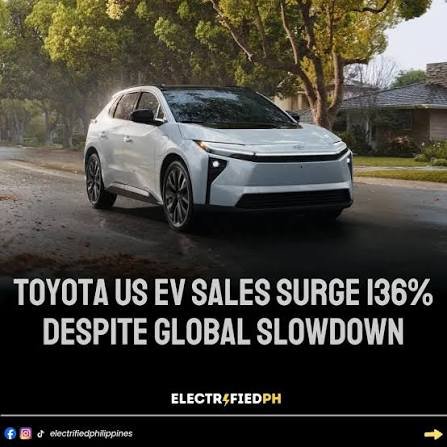
Toyota has once again demonstrated why it remains one of the world’s most resilient manufacturers after reporting a sharp increase in quarterly profits, even as vehicle sales declined in several major markets.
The Japanese automotive giant surprised financial markets by delivering results that exceeded analyst expectations, proving that profitability is no longer determined solely by the number of vehicles sold. Instead, pricing strategy, operational efficiency and global market positioning are becoming increasingly important drivers of corporate performance.
The results arrive at a challenging time for the automotive industry.
Manufacturers across Europe, North America and Asia continue to face supply chain adjustments, rising production costs, changing consumer demand and an accelerating transition towards electric and hybrid vehicles. Despite these pressures, Toyota has managed to strengthen its financial position while maintaining its reputation as one of the world’s most profitable carmakers.
Industry analysts attribute Toyota’s strong performance to several factors.
A favourable exchange rate has boosted earnings from international markets, while disciplined pricing has helped protect profit margins. Rather than relying on aggressive discounting to increase sales volumes, Toyota has focused on selling higher-value vehicles and maintaining healthy returns across its global portfolio.
The company’s expanding hybrid vehicle range has also continued to perform strongly.
While many competitors remain heavily focused on fully electric vehicles, Toyota has maintained its long-standing strategy of offering consumers multiple technology options, including hybrid, plug-in hybrid, hydrogen fuel cell and battery electric vehicles. That diversified approach is proving increasingly valuable as customer demand continues to vary from one region to another.
Artificial intelligence is also playing a growing role in Toyota’s operations.
From improving manufacturing efficiency and quality control to enhancing supply chain forecasting, AI technologies are helping reduce production costs while increasing operational flexibility. Smart factories, predictive maintenance and automated logistics systems are becoming central to the company’s long-term competitiveness.
The results highlight a wider trend across global manufacturing.
Companies are increasingly measuring success by profitability rather than production volume alone. Investors are rewarding businesses capable of protecting margins through innovation, technology and disciplined financial management instead of simply chasing higher sales.
Toyota’s performance also reflects the continued strength of its global brand.
The company benefits from one of the most diversified product portfolios in the automotive industry, serving customers across passenger vehicles, commercial transport, luxury automobiles and mobility services. Its strong presence in North America, Europe, Asia and emerging markets provides additional resilience during periods of economic uncertainty.
For suppliers and manufacturing partners, Toyota’s results offer encouraging signs that demand for advanced automotive technologies remains strong despite broader market challenges.
The company continues investing heavily in next-generation manufacturing, battery technology, connected vehicles and sustainable mobility solutions, ensuring it remains at the forefront of industry innovation.
As global competition intensifies, Toyota’s latest financial performance demonstrates an important lesson for businesses across every sector.
Long-term success is no longer measured simply by selling more products.
It depends on building operational resilience, embracing technological innovation and maintaining the flexibility to adapt quickly to changing market conditions.
Toyota’s latest results show that even in a slowing market, strong leadership, disciplined strategy and continuous innovation can continue to deliver impressive financial performance—an approach that many industries, including retail, will be watching closely.