
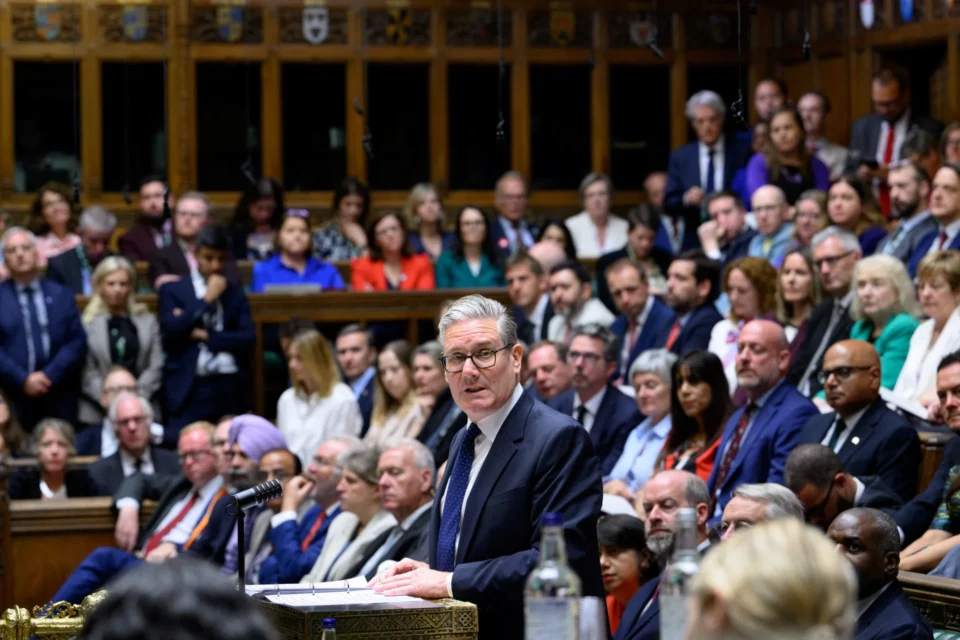
For much of the past decade, Britain has been searching for a leader capable of restoring confidence, rebuilding economic growth and providing long-term stability. Instead, the country has experienced an extraordinary period of political turnover. In roughly ten years, the United Kingdom has seen seven prime ministers, each promising a fresh start but facing many of the same underlying challenges.
Political change has been rapid, but the structural problems have proved far more difficult to solve.
The UK economy has endured a series of shocks that have tested businesses, consumers and policymakers alike. Brexit, the COVID-19 pandemic, the energy crisis, inflation, labour shortages and global geopolitical tensions have all combined to create one of the most challenging periods for the British economy in modern history.
Brexit: The Defining Turning Point
The 2016 referendum changed Britain’s economic direction more profoundly than any political event in recent decades. Supporters argued that leaving the European Union would allow the UK to regain control over its laws, borders and trade policy while creating new opportunities around the world.
Several years later, opinions remain deeply divided.
Brexit has undoubtedly given Britain greater control over domestic policymaking and the freedom to negotiate its own trade agreements. However, it has also introduced additional customs procedures, regulatory barriers and administrative costs for companies trading with the European Union, Britain’s largest trading partner.
Many exporters, particularly small and medium-sized businesses, have struggled with the increased paperwork and higher costs associated with cross-border trade. Some companies have reduced exports to Europe, while others have established operations within the EU to maintain easier access to the Single Market.
The expected economic benefits of Brexit have taken longer to materialise than many supporters anticipated.
COVID-19 Changed Everything
Just as Britain was beginning to adapt to life outside the European Union, the COVID-19 pandemic brought the economy to an abrupt halt.
Lockdowns closed thousands of businesses. Hospitality, tourism, aviation and retail were among the hardest-hit sectors. The government introduced unprecedented financial support schemes to protect jobs and businesses, borrowing hundreds of billions of pounds in the process.
These measures prevented a much deeper recession but significantly increased public debt.
Although the economy eventually reopened, many businesses never fully recovered. Labour shortages emerged across multiple industries, supply chains became more fragile and inflation accelerated as demand returned faster than production capacity.
COVID did not create every economic problem Britain faces today, but it amplified many existing weaknesses.
Inflation and the Cost of Living
Perhaps the most visible consequence for households has been the sharp increase in living costs.
Food prices, housing costs, mortgages and energy bills all rose significantly between 2022 and 2024. Although inflation has since eased, many families continue to feel financially stretched because wages have not always kept pace with higher living expenses.
Retailers have responded by expanding private-label ranges, increasing promotions and competing aggressively on price. Consumers have become more selective, with discount supermarkets continuing to gain market share.
While inflation has slowed, prices remain considerably higher than they were before the crisis.
Seven Prime Ministers, Limited Stability
Political instability has also affected business confidence.
Frequent changes in government leadership have often resulted in changes to economic priorities, tax policy and investment strategies. Businesses generally value predictability when making long-term investment decisions.
Successive governments have announced plans to improve productivity, encourage investment and stimulate growth. Some initiatives have achieved progress, but many businesses argue that constant policy changes have made long-term planning more difficult.
The rapid turnover of leadership has reinforced the perception that Britain has struggled to establish a consistent long-term economic strategy.
Immigration Remains One of Britain’s Most Divisive Issues
Immigration was one of the central issues during the Brexit referendum.
Many voters believed leaving the European Union would significantly reduce immigration levels. The reality has proved more complex.
While free movement from EU countries ended, migration from non-EU countries increased substantially. Britain has welcomed workers to fill shortages in healthcare, social care, construction, hospitality, agriculture, logistics and technology.
International students have also contributed significantly to migration figures, alongside humanitarian programmes and refugee schemes.
As a result, total immigration has reached historically high levels in recent years, despite tighter controls on European migration.
Supporters argue immigration helps address labour shortages, supports economic growth and contributes valuable skills to the workforce.
Critics argue that rapid population growth places additional pressure on housing, healthcare, education and public services.
The debate continues to shape British politics and is likely to remain one of the country’s defining issues.
Business Investment Has Been More Cautious
Investment decisions often depend on confidence and certainty.
Many companies delayed major expansion projects during Brexit negotiations. The pandemic then created further uncertainty, followed by rising interest rates and inflation.
Although foreign investment continues in sectors such as life sciences, renewable energy, artificial intelligence and financial services, business investment has generally grown more slowly than many economists had hoped.
Infrastructure projects continue, but productivity growth remains weaker than in many comparable advanced economies.
The Retail Sector Reflects Wider Economic Challenges
Supermarkets provide a useful snapshot of Britain’s wider economy.
Consumers remain highly price sensitive, prompting retailers to compete through loyalty programmes, promotions and expanding private-label ranges.
Discounters continue attracting shoppers from every income group, while premium retailers have focused on quality, convenience and differentiation.
Technology investment has accelerated, including automation, electronic shelf labels, artificial intelligence and digital supply chains, helping retailers improve efficiency while controlling operating costs.
The grocery sector has shown resilience, but it has also highlighted how consumer behaviour has changed during a prolonged period of economic uncertainty.
Can Britain Rebuild Momentum?
The UK retains significant economic strengths.
London remains one of the world’s leading financial centres. British universities continue attracting international talent. The country remains a global leader in pharmaceuticals, advanced manufacturing, aerospace, technology and creative industries.
However, restoring stronger long-term growth will require more than changing political leadership.
Business groups continue calling for a stable industrial strategy, investment in infrastructure, skills development, planning reform and improved productivity. Many also argue that stronger trading relationships with both Europe and global markets will be essential for future growth.
Political stability may prove just as important as economic policy.
Looking Ahead
Britain’s economic challenges cannot be attributed to a single event or a single government. Brexit, COVID-19, global inflation, geopolitical instability and domestic political uncertainty have all contributed to today’s environment.
Seven prime ministers in a decade illustrate how difficult it has been to find lasting solutions. Each administration has inherited problems that developed over many years, while new global crises have repeatedly disrupted economic plans.
The United Kingdom remains one of the world’s largest economies, with world-class businesses and considerable innovative capacity. Yet many of the questions that dominated public debate a decade ago—economic growth, living standards, productivity, public services and immigration—remain unresolved.
The next phase of Britain’s recovery will depend less on finding another political “saviour” and more on delivering consistent, long-term policies that provide businesses with confidence, encourage investment and improve living standards for households across the country.