Will the Supermarket of 2035 Sell Mostly Its Own Brands?
ISN Editorial Team
Private label has reached a turning point. For decades, supermarket own brands were viewed as low-cost alternatives sitting quietly beside famous household names. Today, they are becoming the centre of retailers’ growth strategies, challenging global manufacturers in almost every grocery category.
The question facing the retail industry is no longer whether private label will continue to grow. The real question is whether supermarkets will eventually become businesses that primarily sell their own brands.
Across Europe, private label now accounts for around 40% of grocery sales in many major markets, while in the six largest European grocery markets it has reached a record 50% share by units sold. Growth is also accelerating in North America, where analysts expect private label penetration to continue rising throughout the decade.
For retailers, the attraction is obvious.
Every private label product gives supermarkets greater control over pricing, product development, packaging and supply. Instead of sharing profits with multinational manufacturers, retailers build value within their own businesses while strengthening customer loyalty to the supermarket rather than to an external brand.
This represents one of the biggest shifts the grocery industry has experienced in the past 50 years.
The supermarket becomes the brand
Traditionally, supermarkets competed by offering the widest selection of famous brands. The retailer’s role was to provide shelf space while manufacturers invested billions in advertising and marketing.
Today, that relationship is changing.
Retailers increasingly want shoppers to associate quality, innovation and value with the supermarket itself rather than with the companies supplying the products.
A customer buying Tesco Finest, Carrefour Bio, Albert Heijn, Great Value, Aldi’s Specially Selected or Lidl Deluxe is strengthening the retailer’s own brand with every purchase.
The supermarket is no longer simply selling products.
It is building its own consumer brand portfolio.
Marketing becomes much simpler
One of the biggest advantages of private label is marketing efficiency.
Consumer goods manufacturers spend enormous amounts on television advertising, digital campaigns, sponsorships and product launches to maintain brand recognition.
Retailers do not have to.
Every promotion, loyalty programme, social media campaign or television advert automatically supports hundreds of private label products at the same time.
Instead of promoting dozens of different manufacturers, supermarkets promote one identity—their own.
This gives retailers significant commercial power while reducing dependence on external brand investment.
The manufacturer moves into the background
Perhaps the biggest change over the next decade will be invisible to consumers.
Many supermarkets already source similar products from different manufacturers without customers knowing who actually produced them.
The retailer owns the brand, sets the specifications and controls product quality. The manufacturer simply produces the goods.
This manufacturing model is likely to become increasingly common.
Food producers may gradually shift away from investing in expensive consumer brands and instead focus on becoming world-class manufacturing partners serving multiple supermarket chains.
For many companies, production capacity could become more valuable than brand recognition.
Will supermarkets remove national brands?
Probably not.
Brands such as Coca-Cola, Nutella, Heinz, Nescafé and Red Bull remain powerful traffic builders that attract shoppers into stores. They continue to invest heavily in innovation, research and global marketing, creating products that retailers alone would struggle to develop.
Consumers also continue to trust established brands in many categories, particularly baby food, soft drinks, confectionery and premium products.
However, supermarkets may increasingly reduce the number of branded alternatives.
Instead of offering six competing brands within one category, retailers may stock only one or two market leaders while expanding shelf space for their own labels.
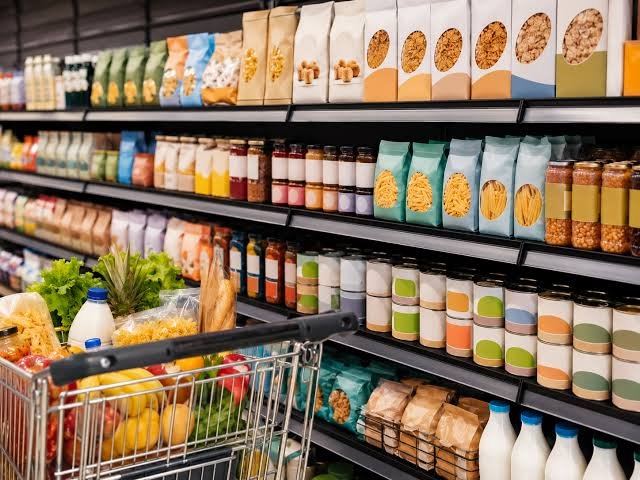
The supermarket shelf of 2035 could look very different from today’s.
Artificial intelligence will accelerate the change
Artificial intelligence may become one of private label’s greatest allies.
Retailers now possess enormous amounts of purchasing data showing exactly which branded products customers are willing to replace with supermarket alternatives.
AI can identify gaps in product ranges, recommend new private label opportunities and even predict which categories are ready for further expansion.
Instead of relying on instinct, supermarkets can make product decisions based on millions of shopping transactions.
This makes private label development faster, more accurate and less risky.
A brandless grocery industry?
The idea of completely brandless supermarkets remains unlikely within the next five to ten years.
Consumers will continue to expect famous international brands, and many manufacturers remain leaders in product innovation.
However, the balance of power is changing.
Private label is moving beyond value products into premium food, health, organic ranges, ready meals, frozen food, pet care, household products and personal care. Forecasts suggest the global private label market will continue to grow strongly through 2030 and beyond.
The future supermarket is therefore unlikely to be brandless.
Instead, it may become retailer-led.
National brands will remain important, but supermarket own brands are increasingly becoming the foundation of retail strategy rather than simply an alternative on the shelf.
The next decade may well redefine the relationship between retailers and manufacturers. The winners will be those that understand that today’s consumer is buying more than a product—they are buying confidence in the retailer behind it.
Research by the ISN Editorial Team