

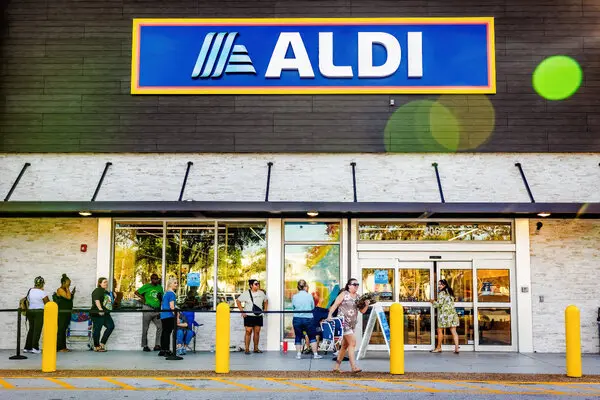
Aldi has reached a point where it is no longer simply competing within the retail sector — it is actively reshaping it.
What distinguishes Aldi in 2026 is not rapid expansion alone, but the consistency of its execution. While many retailers have spent the past few years reacting to inflation, Aldi has remained anchored to a model designed precisely for such conditions. Limited assortment, high private-label penetration, and rigorous cost control are not temporary strategies; they are structural principles.
This consistency has given Aldi a powerful advantage. As consumers across Europe and the United States become more price-sensitive, the retailer does not need to reposition itself — it simply becomes more relevant.
However, Aldi’s influence extends beyond its own stores. Competitors are increasingly adjusting their pricing strategies, private label development, and even store formats in response to Aldi’s success. In effect, Aldi is setting the benchmark for efficiency across the industry.
Yet growth introduces complexity. Expansion into new markets, particularly outside Europe, requires adaptation to different consumer expectations, regulatory environments, and supply chain conditions. The challenge for Aldi is to maintain its operational discipline while scaling internationally.
There is also the question of perception. Historically, Aldi’s strength lay in its no-frills approach. Today, as it improves store environments and broadens certain product ranges, it risks diluting the clarity of its proposition. The balance between simplicity and evolution must be carefully managed.
Another pressure point lies within the supply chain. Aldi’s model depends on strong relationships with a limited number of suppliers. In a context where production costs remain volatile due to energy prices and geopolitical tensions, maintaining these relationships without compromising on price will require careful negotiation.
Despite these challenges, Aldi’s trajectory remains strong. Its focus on essentials aligns perfectly with current consumer priorities. More importantly, it has avoided the strategic drift that has affected many traditional retailers.
Aldi is not attempting to be everything to everyone. It is doubling down on what it does best — and in doing so, it is forcing the entire industry to reconsider what efficiency truly means.