

By John Moverley
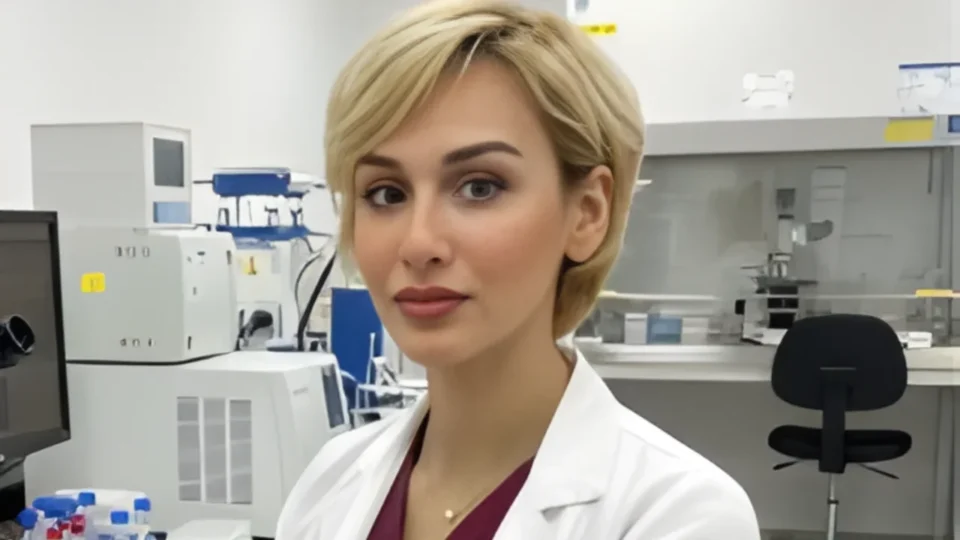
Scientific voices emerging from Algeria are increasingly contributing to global conversations in reproductive health, as illustrated by Rasha Zenasni, whose recent analysis of a major international study has drawn attention to the critical role of male health in fertility outcomes.
The findings she shared originate from a study published in the leading American journal Fertility and Sterility, authored by Andreu Quintana-Vehí and colleagues. The paper, titled “Paternal BMI and Early Embryonic Morphokinetics: A Large-Scale Study in Oocyte Donation Cycles”, provides compelling evidence that a father’s weight significantly impacts embryo quality and pregnancy success.
Algeria Engaging with Global Science
Zenasni’s contribution reflects a broader trend: Algerian professionals and researchers are increasingly engaging with high-level international scientific developments, interpreting and disseminating them within professional networks. Her analysis highlights how scientific knowledge is no longer confined to traditional research centres, but is shared and amplified globally.
Key Scientific Findings
The study analysed more than 2,000 egg donation cycles using advanced time-lapse imaging technology, enabling researchers to isolate the paternal factor with precision. The conclusions challenge long-standing assumptions in fertility science:
- Kinetic retardation: Embryos from obese fathers (BMI > 30) exhibit slower cell division from the earliest stages.
- Reduced morphological quality: A clear decline in top-grade (Grade A) blastocysts by day five (D5) was observed.
- Epigenetic alterations: Obesity affects sperm DNA methylation, disrupting the activation of the embryonic genome—demonstrating that the impact goes beyond standard semen parameters.
These findings dismantle the long-held belief that the quality or “youth” of the oocyte alone can compensate for male-related factors.
A Turning Point in Fertility Care
The implications are significant. As highlighted by Silvia Alvarez, who also shared Zenasni’s post, fertility treatment must move beyond traditional semen analysis.
A more comprehensive approach is now required—one that integrates metabolic health, lifestyle, and epigenetic factors in male patients. This marks a shift towards shared responsibility in assisted reproduction and a more holistic understanding of fertility.
A Message from Algeria to the Scientific Community
Through her engagement with this American-published research, Rasha Zenasni underscores an important message: Algeria is actively participating in the global scientific dialogue. Her work illustrates that contributing to science also involves analysing, contextualising, and communicating key findings to wider audiences.
Looking Ahead
As obesity continues to rise worldwide, the study reinforces the urgency of addressing male health as a central component of fertility strategies. Lifestyle optimisation is no longer optional—it is a direct lever for improving outcomes in assisted reproduction.
With professionals like Rasha Zenasni engaging with leading international publications, Algeria continues to strengthen its presence in the global fertility and reproductive health landscape.