

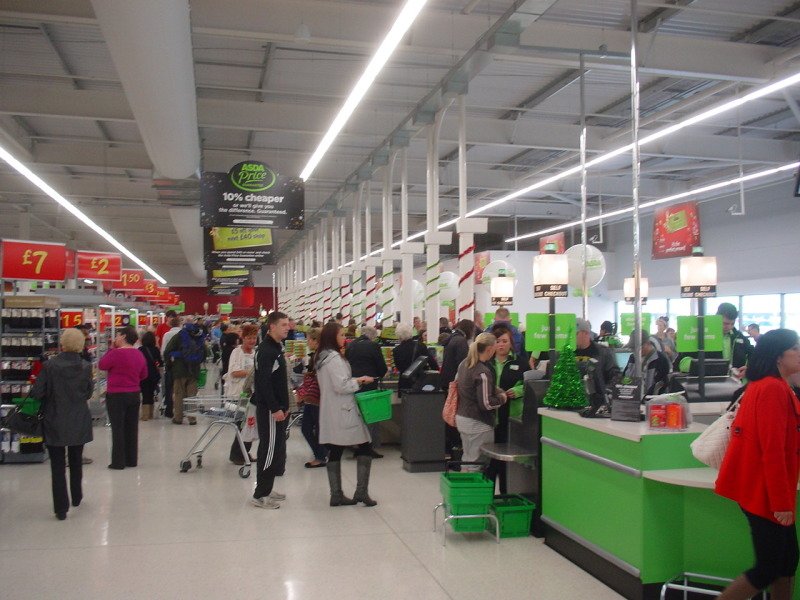
For many years, Asda built its reputation on a simple and powerful promise: low prices for British families. The supermarket chain positioned itself as the price champion of the UK grocery sector, competing aggressively with rivals and appealing particularly to cost-conscious shoppers.
But the British supermarket landscape has changed dramatically, and Asda now finds itself facing a far more complicated reality. The question increasingly being asked across the retail industry is whether Asda can still claim the role of price leader in a market that has become more competitive than ever.
The transformation of the UK grocery sector over the past decade has been profound. Traditional supermarket chains once dominated the market with large stores and extensive product ranges. However, the rapid rise of discount retailers has reshaped consumer expectations and forced every supermarket to rethink its strategy.
Chains such as Aldi and Lidl have expanded aggressively across the United Kingdom, capturing millions of customers with their straightforward model: limited product ranges, high levels of private label goods and consistently low prices.
These discounters have fundamentally altered the price perception in the British grocery market. Consumers now compare prices more carefully than ever before, and loyalty to any single supermarket brand has weakened significantly.
For Asda, which historically relied on price leadership as a central pillar of its identity, this shift has created intense pressure. When Aldi and Lidl entered the market with prices that were often even lower, the competitive battlefield changed overnight.
At the same time, the UK grocery sector is still dealing with the aftershocks of food inflation. Although inflation has slowed compared with previous years, the cumulative impact of higher food prices continues to influence household spending behaviour. Many families remain cautious about their grocery budgets, searching for bargains and promotions wherever they can find them.
This environment has triggered a constant price battle among Britain’s largest supermarket groups. Tesco and Sainsbury’s have launched price-matching initiatives designed to convince consumers that they can compete with the discount chains.
Asda has responded with its own pricing campaigns and promotional strategies, attempting to reinforce its reputation as a value retailer. However, rebuilding consumer confidence in price leadership is not an easy task once competitors have successfully challenged that perception.
Another issue complicating Asda’s position is the structure of its store network. Many of its locations are large supermarkets or hypermarket-style outlets. While these stores offer wide product assortments, they also carry significant operational costs.
Running large stores requires substantial staffing, energy consumption and logistics coordination. In contrast, discount retailers operate with simpler layouts, smaller assortments and leaner operational models. This structural difference makes it difficult for traditional supermarkets to match discounter pricing across all categories.
Asda must therefore find a balance between offering competitive prices and maintaining profitability. Price wars may attract customers in the short term, but they can quickly erode margins if not carefully managed.
Private label products have become one of the key tools in this battle. Like most modern supermarket chains, Asda has expanded its store-brand offerings in order to provide lower-cost alternatives to well-known food brands. These products allow retailers to control pricing more directly while maintaining acceptable profit margins.
The quality perception of private label products has also improved significantly over the past decade. Many consumers now view supermarket brands as reliable substitutes for national brands, particularly when economic conditions encourage cost-conscious shopping.