

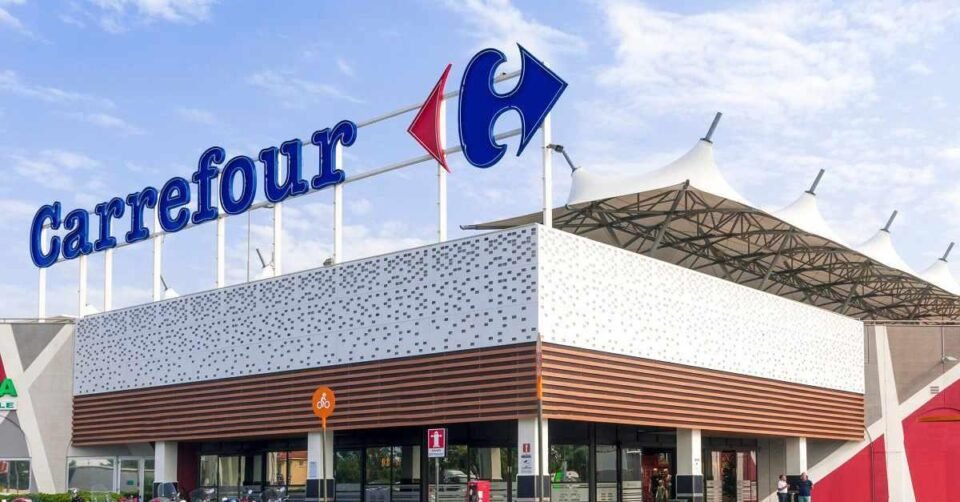
When Carrefour unveiled its “Carrefour 2030” plan, it was more than a routine strategic update. It marked a decisive repositioning of one of Europe’s largest retailers at a time when food distribution is under intense pressure from inflation, discount competition, technological disruption and changing consumer behaviour. The plan signals discipline, concentration and a renewed sense of ambition.
Under the leadership of Alexandre Bompard, the group is choosing clarity over complexity. The message is straightforward: focus on what works, strengthen competitive advantages, modernise operations and deliver stronger returns.
Strategic Concentration: France, Spain and Brazil
One of the most striking elements of the plan is the geographical concentration on three core markets: France, Spain and Brazil. These are not merely large territories; they are markets where Carrefour holds leadership positions and deep operational expertise.
For years, international retailers pursued expansion across continents as a badge of prestige. Yet scale without dominance often erodes margins and distracts management. Carrefour’s decision to narrow its perimeter reflects a more mature view of global retail. Growth is no longer about flags on a map; it is about sustainable profitability.
France remains the emotional and economic heart of the group. It is a fiercely competitive market, shaped by powerful domestic rivals, aggressive pricing and regulatory complexity. Maintaining leadership here requires constant reinvention. Spain offers a dynamic retail environment with solid growth potential and operational synergies with France. Brazil, meanwhile, represents a different growth story altogether: a large, expanding consumer base with significant opportunities in both cash-and-carry and mainstream grocery formats.
By concentrating capital and managerial attention on these three countries, Carrefour reduces fragmentation and improves execution. This sharper focus should allow faster decision-making and better alignment across supply chains, purchasing and digital systems.
The Fresh Imperative
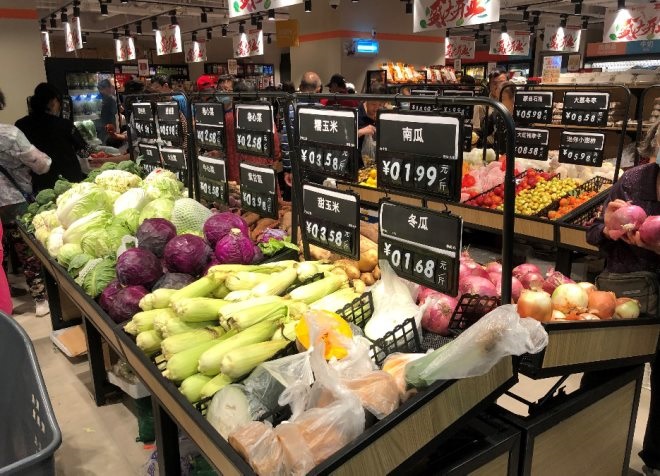
Fresh food sits at the centre of the strategy. This is not accidental. Fresh categories — fruit and vegetables, meat, fish, bakery and dairy — are where differentiation truly happens. They drive footfall, shape perception of quality and anchor loyalty.
In a market increasingly dominated by discounters, fresh produce offers a field where expertise, sourcing relationships and operational discipline matter more than pure price cutting. It is also where local identity can be reinforced, particularly in France and Spain, where consumers remain attached to regional products and provenance.
Carrefour’s renewed emphasis on fresh signals a desire to reclaim emotional territory. While price attracts, freshness retains. Investment in sourcing, logistics and in-store presentation will be essential. Fresh food demands precision: waste reduction, accurate forecasting and skilled staff. Here, technology and human expertise must operate together.
Price: Competing in a Tough Landscape
Price competitiveness is no longer optional; it is existential. European households have experienced sustained pressure on disposable income in recent years. Discounters such as Aldi and Lidl have strengthened their appeal, reshaping expectations around value.
Carrefour’s plan explicitly recognises that price leadership cannot be surrendered. Yet achieving it requires structural efficiency rather than promotional theatrics. The focus on operational effectiveness, artificial intelligence and data-driven decision-making is therefore closely linked to pricing power.
Margin expansion and price competitiveness often appear contradictory. The challenge for Carrefour will be to balance both. The announced objective of raising operating margin to 3.2 per cent by 2028 and 3.5 per cent by 2030 suggests confidence that efficiencies and scale advantages can offset the cost of sharper pricing.
The Club and the Power of Loyalty
Loyalty programmes have evolved from simple discount cards into sophisticated data engines. Carrefour’s “Club” ambition reflects recognition that customer data is now one of retail’s most valuable assets.
Personalisation, targeted offers and predictive analytics can strengthen frequency of visits and basket size. In a digital environment where consumers are bombarded with alternatives, maintaining relevance requires intelligent engagement.
The Club is also a defensive strategy. As online platforms expand and quick-commerce players attempt to capture urban customers, loyalty ecosystems create switching costs. The more integrated the customer experience — in-store, online and mobile — the harder it becomes for competitors to disrupt.
Modernising the Store Network
Physical retail remains at the core of Carrefour’s model. Despite growth in e-commerce, stores are still where the majority of grocery transactions occur. However, legacy hypermarkets require adaptation.
Investment in modernisation suggests renovation of layouts, improved energy efficiency, enhanced digital interfaces and better product flow. Stores must become more intuitive, welcoming and operationally agile.
The hypermarket format, once the crown jewel of French retail, has faced criticism for being oversized and inefficient. Carrefour’s approach appears to be evolution rather than abandonment. By integrating fresh leadership, improved merchandising and digital integration, the group aims to reassert the relevance of large-format stores.
Smaller proximity formats and cash-and-carry operations in Brazil will also benefit from investment. Modernisation is not merely cosmetic; it affects productivity, shrinkage control and labour efficiency.
Artificial Intelligence, Technology and Data
The integration of AI and advanced analytics represents a structural transformation rather than a passing trend. In food retail, margins are thin and volumes immense. Even minor improvements in forecasting accuracy or inventory optimisation can generate substantial gains.
AI can refine demand planning, reduce waste in fresh categories and optimise promotions. It can also improve supply chain resilience — an issue highlighted during recent global disruptions.
Carrefour’s emphasis on technology reflects awareness that traditional retailing is merging with data science. Success will depend not only on systems but on cultural adaptation. Employees must be trained to interpret insights and act decisively.
Operational and commercial efficiency, supported by digital tools, underpins the financial ambitions of the plan. Technology becomes the invisible backbone of margin improvement.
Financial Ambition: Measured Confidence
The stated targets are ambitious but not extravagant. An operating margin of 3.5 per cent by 2030 represents meaningful progress without drifting into unrealistic territory. Retail is capital-intensive; excessive promises can undermine credibility.
The cumulative net free cash flow target of €5 billion between 2026 and 2028 highlights an emphasis on liquidity and financial strength. Cash generation enables debt reduction, investment and shareholder returns.
Investors will judge the plan by its consistency rather than rhetoric. Delivery across several years will require disciplined capital allocation and careful cost management.
Cultural and Leadership Dimensions
Behind every strategic plan lies a cultural transformation. Alexandre Bompard’s tenure has been marked by modernisation efforts and digital expansion. Carrefour 2030 appears to consolidate that trajectory.
Leadership credibility matters in retail, where employee engagement influences execution at store level. Thousands of frontline staff determine whether strategy translates into customer satisfaction.
The declaration of pride in pursuing this ambition alongside teams and partners indicates recognition that strategy cannot be imposed from headquarters alone. It must resonate across stores, warehouses and offices.
Risks and External Pressures
No strategic plan unfolds in isolation. Macroeconomic uncertainty, regulatory intervention and competitive aggression remain constant threats.
Inflationary cycles may persist. Labour costs could rise. Consumer confidence can fluctuate unpredictably. In Brazil, currency volatility adds another layer of complexity.
Competitors will not stand still. Discounters will intensify expansion, while digital platforms explore grocery penetration. Carrefour’s response must remain agile.
Execution risk is equally significant. Concentration on three markets simplifies structure but increases exposure. Underperformance in one core country could materially affect group results.
A Retailer Redefining Its Identity
Carrefour 2030 suggests a retailer redefining itself not as a sprawling multinational conglomerate but as a focused, technology-enabled leader rooted in key markets.
The emphasis on fresh food restores a traditional strength. The insistence on price competitiveness acknowledges contemporary realities. The investment in AI and data projects forward into the future.
Retail is often described as detail-driven. Strategy provides direction, but daily operations determine success. The coming years will reveal whether Carrefour can synchronise ambition with execution.
Conclusion: Towards the Commerce of Tomorrow
Carrefour 2030 is a strategic reset grounded in pragmatism. It narrows the geographical lens, sharpens competitive priorities and sets measurable financial goals. Rather than chasing expansion for its own sake, the group seeks depth, efficiency and relevance.
If successful, Carrefour will emerge leaner, more technologically integrated and more resilient. The plan reflects confidence without complacency.
In an era when retail is being reshaped by digital acceleration and shifting consumer values, Carrefour’s strategy attempts to bridge tradition and innovation. Fresh counters and artificial intelligence may appear worlds apart, yet in modern grocery they are increasingly interconnected.
The ambition to become the undisputed leader of tomorrow’s commerce is bold. Achieving it will require discipline, adaptability and sustained investment. For now, Carrefour 2030 stands as a clear statement of intent from one of Europe’s defining retail institutions.