

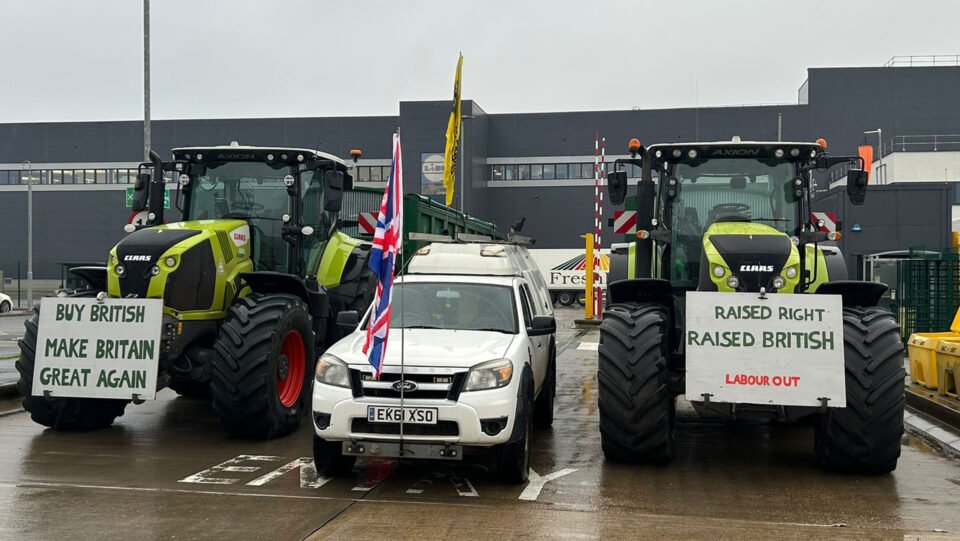
Across Britain, farmer-led protests have escalated from symbolic tractor rallies to coordinated blockades targeting supermarket depots and key logistics hubs. At the centre of the dispute stands Prime Minister Keir Starmer, whose government’s inheritance tax reforms have become the flashpoint for rural anger.
Direct Action Hits Food Distribution
In recent weeks, farmers have used tractors and heavy vehicles to block access to distribution centres supplying major supermarkets including Tesco, Lidl, Sainsbury’s and Morrisons. Some stores temporarily displayed notices warning customers of delivery disruptions linked to depot access issues.
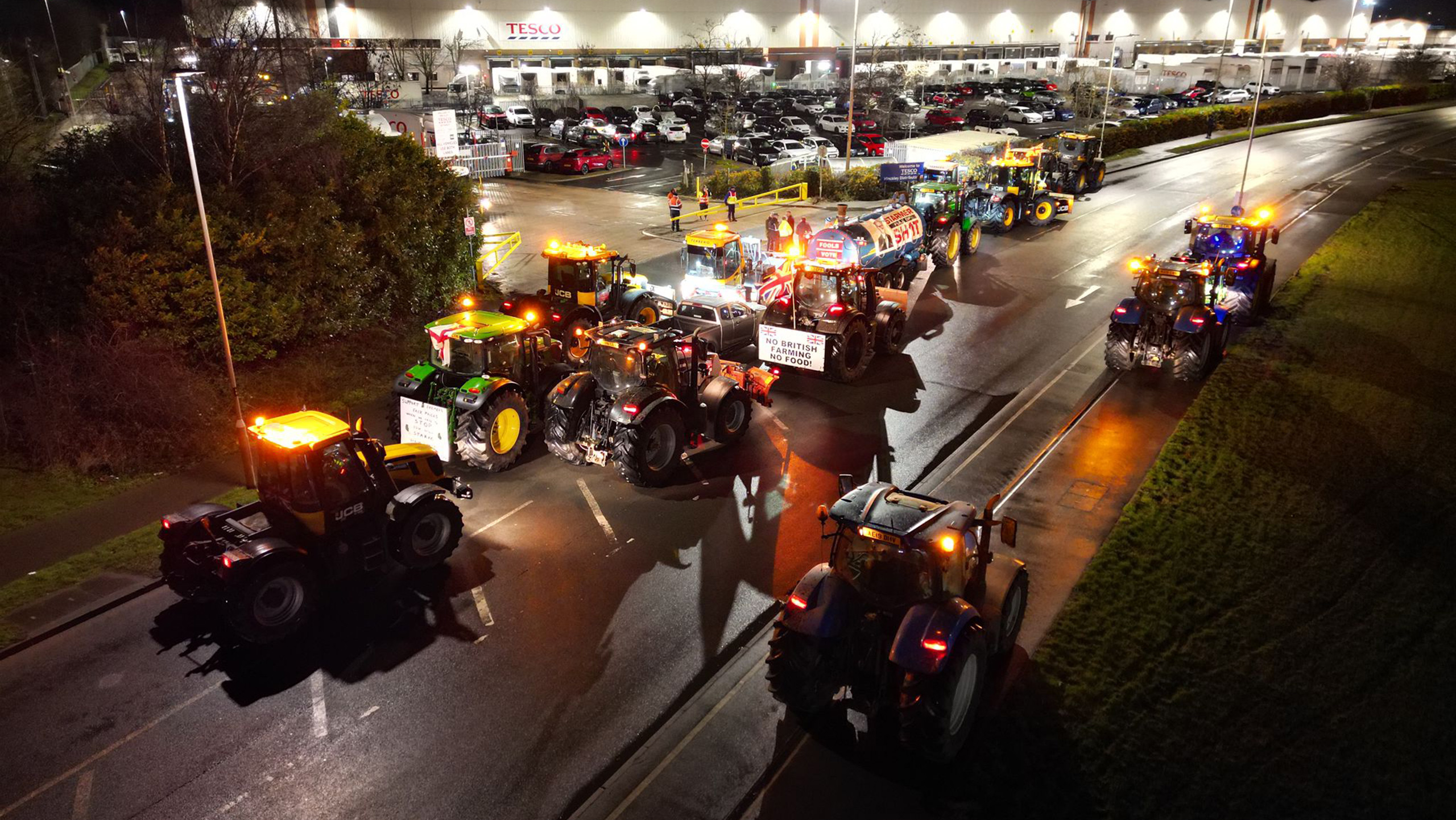
While not nationwide shutdowns, the protests have created logistical strain in certain regions, particularly affecting fresh produce and short-shelf-life goods. Retailers have largely avoided public confrontation, but industry sources acknowledge contingency planning has been activated in affected areas.
The Tax Policy Behind the Anger
The protests stem from reforms to Agricultural Property Relief announced in the 2024 Budget. Under the revised structure, large agricultural estates exceeding a set threshold will face inheritance tax at 20 per cent above that level.
The government argues the measure targets wealth preservation strategies used by high-value estates rather than working family farms. Ministers maintain that combined allowances for spouses significantly increase the effective threshold, protecting the majority of small and medium holdings.
Farmers’ groups strongly dispute that assessment. They argue land values — particularly in southern England — can push otherwise modest family farms above the threshold on paper, even when cash flow remains tight. With margins squeezed by input costs, environmental transition rules and global price competition, many in the sector see the reform as a structural threat.
Starmer’s Position
Prime Minister Starmer has so far declined to reverse the policy. He has framed the reform as part of a broader fiscal responsibility programme designed to fund public services while closing perceived loopholes in the tax system.
However, the political optics are complex. Rural communities traditionally sceptical of Labour are mobilised, and some backbench MPs in agricultural constituencies have urged caution. Polling suggests significant public sympathy for farmers, even among voters who do not directly work in the sector.
Political and Economic Stakes
The confrontation now extends beyond tax policy. It has evolved into a broader debate about:
-
Food security
-
Domestic production versus imports
-
Rural economic sustainability
-
Fairness within the tax system
Should protests intensify further — especially around major logistics infrastructure — pressure on the government could grow. For now, Starmer appears determined to maintain course, betting that fiscal credibility outweighs short-term unrest.
The coming weeks will likely determine whether negotiations ease tensions or whether the dispute becomes a defining test of his leadership in rural Britain.