

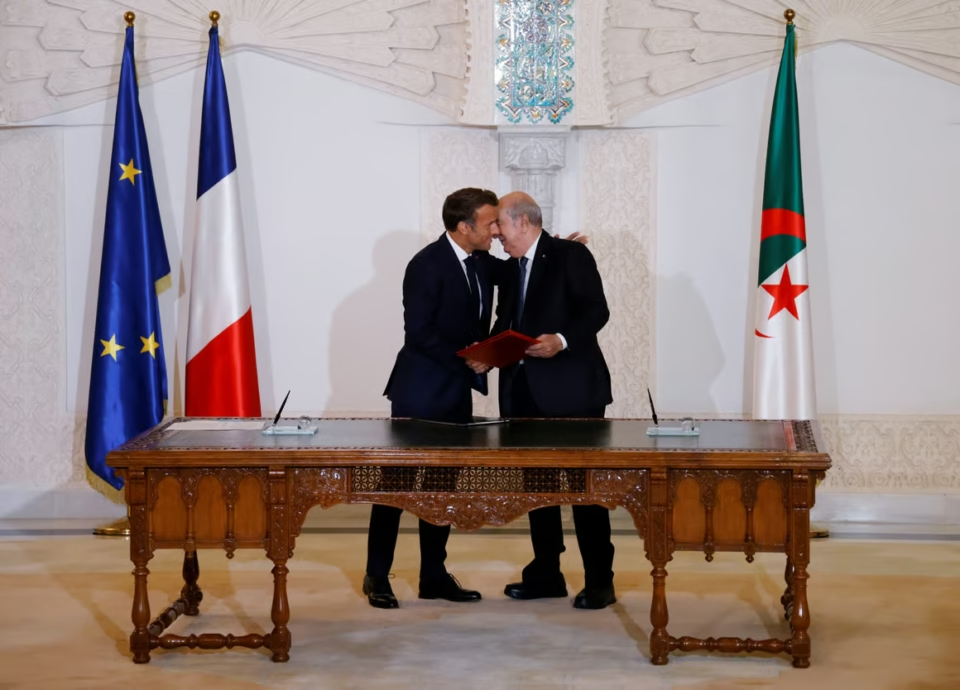
For decades, economic relations between France and Algeria were built on geography, history and commercial interdependence. French companies, farmers and exporters once benefited from a privileged position in the Algerian market, supplying everything from food products and agricultural equipment to industrial goods and services. However, recent political tensions and negative public discourse have severely undermined this historic relationship, leading to what many analysts now describe as a costly strategic error for the French economy.
While Algeria has continued to expand its global trade partnerships, France’s share of the Algerian market has steadily declined. This shift has not been driven by economic incompatibility or lack of demand. Instead, many observers argue that the deterioration stems largely from political decisions and media narratives that have damaged trust between the two countries.
In recent years, Algeria has adopted a pragmatic approach to international trade. Rather than relying heavily on a single partner, the country has diversified its commercial relationships with several European and global economies. Countries such as Germany, Italy, the United Kingdom and Norway have all strengthened their economic cooperation with Algeria. These nations have moved quickly to secure contracts in sectors ranging from energy and infrastructure to agriculture and manufacturing.
Italy in particular has emerged as a major beneficiary of this shift. Italian companies have expanded their presence in Algeria’s energy sector, infrastructure projects and food trade. German industrial groups have also secured new partnerships in engineering and technology. Meanwhile, British and Norwegian firms have increased their collaboration in energy and offshore development.
Against this backdrop, French companies have watched many of these opportunities pass them by.
Historically, France had a natural advantage. The two countries share a long commercial history, linguistic ties and well-established supply chains. French agricultural producers once exported significant quantities of wheat, dairy products, livestock and processed foods to Algeria. French construction firms and industrial suppliers were also deeply involved in major projects across the country.
However, political tensions have repeatedly disrupted this relationship. Statements by French ministers and ongoing political debates around historical issues and immigration have often generated diplomatic friction. In addition, certain segments of the French media have adopted a confrontational tone when discussing Algeria, which has further strained relations.
From an economic perspective, these tensions have real consequences.
Algeria, like any sovereign nation, seeks partners who demonstrate reliability, mutual respect and long-term commitment. When political rhetoric appears hostile or dismissive, decision-makers in Algiers inevitably look elsewhere for cooperation. In today’s globalised economy, alternative partners are always available.
The result has been a gradual reorientation of Algeria’s trade relationships. Contracts that might once have been awarded to French companies are increasingly going to competitors from other European countries and beyond. Infrastructure projects, energy partnerships and agricultural supply deals are now frequently secured by firms from countries that maintain a more stable diplomatic tone.
French farmers may be among the most overlooked victims of this shift. Algeria is a large and growing market for agricultural products, particularly cereals, dairy products and livestock feed. Losing access to such a market represents not only a diplomatic setback but also a significant economic loss for producers who could have benefited from long-term supply agreements.
French small and medium-sized enterprises are also affected. Many had built successful export relationships with Algerian partners over decades. As political tensions increased, some of these commercial channels weakened or disappeared entirely, leaving space for competitors.
Meanwhile, Algeria has continued signing new agreements with a broad range of countries. The country’s strategy is clear: diversify partnerships, strengthen domestic production and secure technology transfers from reliable international partners. This approach reduces dependency while encouraging competitive offers from foreign companies.
For France, the lesson is increasingly evident. Economic diplomacy requires careful balance. Political debates may be unavoidable in democratic societies, but when rhetoric escalates into sustained hostility, the economic consequences can be significant.
Trade relationships are built on trust as much as on price or quality. When trust erodes, even long-standing partnerships can weaken rapidly.
Many French business leaders quietly acknowledge that the Algerian market remains strategically important. With its large population, strong energy revenues and growing infrastructure needs, Algeria represents one of the most dynamic markets in the Mediterranean region.
Rebuilding that relationship will require renewed diplomatic engagement, respect for mutual interests and a more pragmatic approach to bilateral cooperation. If that happens, French companies could still regain part of the market they once dominated.
Until then, the reality remains clear: while Algeria continues to expand its global partnerships, France risks watching billions of euros in potential trade flow instead to competitors who have chosen cooperation over confrontation.