

Across the global retail landscape, the supermarket industry is entering a new phase of strategic competition. Major grocery operators are no longer competing solely within national markets; they are increasingly influenced by global trends in pricing, technology and consumer behaviour.
Among the companies shaping this evolving environment are Walmart, Carrefour and Kroger.
Each of these companies represents a different model of supermarket retailing, yet all face similar pressures: rising operational costs, growing technological demands and the need to attract increasingly selective consumers.
Walmart remains the dominant force in global retail. With thousands of stores and an enormous supply chain network, the company possesses unmatched purchasing power. This scale allows Walmart to maintain its longstanding strategy of offering extremely competitive prices.
Price leadership has always been central to Walmart’s identity. The company’s promise of everyday low prices has shaped consumer expectations not only in the United States but also in many international markets.
Yet maintaining this advantage is becoming more complex. Logistics costs, wage pressures and supply chain disruptions have forced retailers to rethink how they manage operations.
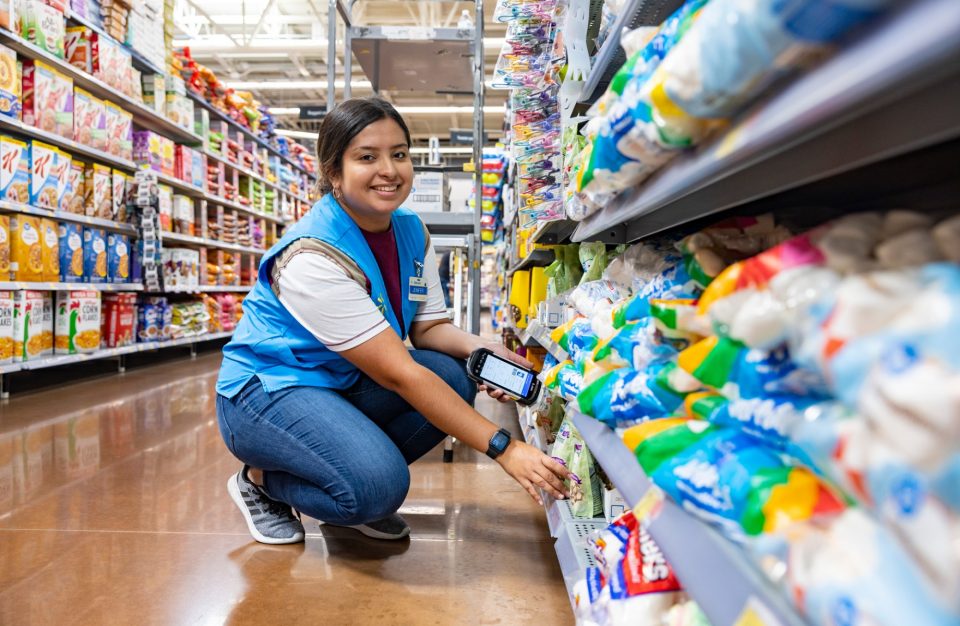
To address these challenges, Walmart has invested heavily in automation and technology within its distribution centres and stores. Robotics, data analytics and digital inventory systems are now integral parts of the company’s operational strategy.
These investments are designed to reduce costs and increase efficiency, enabling Walmart to maintain its competitive pricing model.
Meanwhile, Carrefour represents a different approach to global retail competition. As one of Europe’s largest supermarket operators, the French retailer has been pursuing a strategy centred on digital transformation and strategic partnerships.
Carrefour’s leadership recognises that the future of retail will depend on the integration of physical stores with digital platforms. The company has therefore invested heavily in e-commerce, data analytics and retail media networks.
Retail media – the practice of selling advertising space within digital retail platforms – has become an increasingly important revenue stream for large supermarket chains.
By leveraging customer data and online traffic, retailers can generate additional income while strengthening relationships with consumer brands.
For Carrefour, these initiatives represent an attempt to remain competitive in an environment where technological capabilities are becoming just as important as store networks.
Across the Atlantic, Kroger faces its own strategic challenges.
The American supermarket chain operates in one of the most competitive grocery markets in the world. In addition to Walmart, Kroger must contend with the rapid expansion of discount retailers and the growing presence of online grocery platforms.
In response, Kroger has focused on improving operational efficiency while reinforcing its value proposition for customers.
The company has also invested in technology partnerships aimed at modernising its supply chain and store operations.
From an industry perspective, the strategies adopted by Walmart, Carrefour and Kroger reveal several important trends shaping the future of grocery retail.
Firstly, scale remains a decisive advantage. Large supermarket groups can negotiate favourable terms with suppliers, invest in advanced technologies and absorb fluctuations in operating costs more effectively than smaller competitors.
Secondly, technology is becoming central to retail strategy. Automation, data analytics and digital commerce are no longer optional investments; they are essential components of modern supermarket operations.
Thirdly, the competition between retailers is increasingly global in nature. Innovations introduced in one market quickly influence strategies elsewhere.
For example, the growth of discount retail formats in Europe has inspired similar developments in the United States. Likewise, technological innovations pioneered by American retailers are now being adopted by European chains.
This cross-pollination of ideas is accelerating the pace of change within the industry.
Yet despite these transformations, the fundamental priorities of supermarket customers remain remarkably consistent.
Consumers still expect supermarkets to offer competitive prices, reliable product availability and convenient shopping experiences.
Retailers that lose sight of these basic expectations risk undermining their own technological and strategic ambitions.
From a journalistic viewpoint, the global supermarket sector can be understood as an industry balancing tradition with innovation.
Companies such as Walmart, Carrefour and Kroger are investing billions to modernise their operations, yet they must also preserve the simple value proposition that defines grocery retail.
Food retailing may be evolving, but its core mission remains unchanged.
Supermarkets exist to provide communities with access to essential goods. The retailers that succeed in the coming years will be those that combine operational excellence with technological progress.
As competition intensifies across international markets, the strategies adopted by the world’s largest supermarket chains will shape the future of the grocery industry.
And in this global contest, efficiency, value and innovation will determine which companies remain at the forefront of retail.