

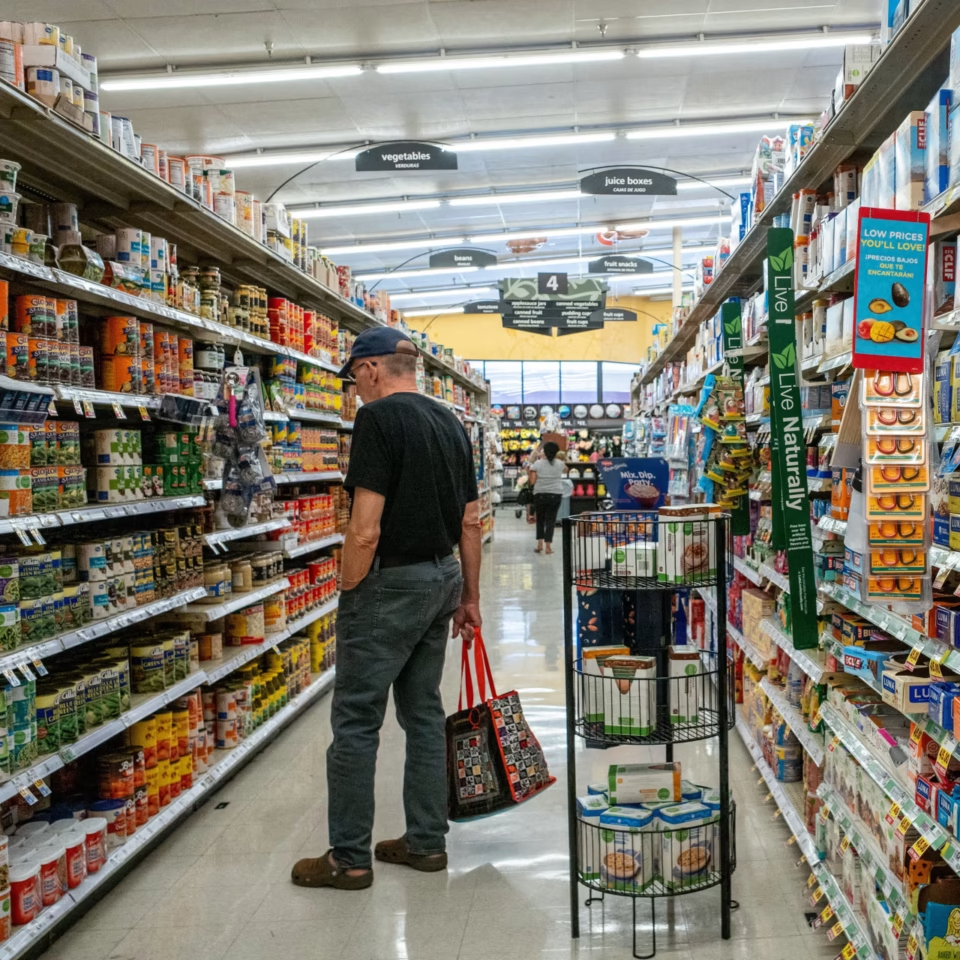
In recent months, grocery prices across several major markets have begun to show signs of decline, offering a welcome reprieve for consumers who have endured years of persistent food inflation. After a prolonged period marked by supply chain disruptions, energy cost surges, and global uncertainty, the easing of prices may signal a shift in the retail landscape.
Across Europe and parts of North America, staple items such as dairy, cereals, and cooking oils have seen modest price reductions. Analysts attribute this trend to stabilised supply chains, improved harvest yields, and a decrease in global commodity prices. In particular, wheat and vegetable oil markets have softened compared to the peaks experienced during recent geopolitical tensions.
Retailers have also played a critical role in driving prices downward. Fierce competition among supermarket chains has pushed many to adopt aggressive pricing strategies, including price matching and expanded private-label offerings. Discount retailers have been especially influential, forcing larger chains to reassess their pricing structures to maintain customer loyalty.
Energy costs—one of the primary drivers of food inflation—have also eased compared to previous highs. Lower fuel and transportation costs have reduced the burden on suppliers and distributors, enabling savings to be passed on, at least partially, to consumers.
However, industry experts caution that the decline is uneven and may not extend across all categories. Fresh produce, for instance, remains vulnerable to climate conditions, while labour costs continue to exert upward pressure on pricing in certain regions. Additionally, geopolitical uncertainties and currency fluctuations could quickly reverse current gains.
For consumers, the psychological impact of falling prices is significant. After a prolonged period of cautious spending, shoppers are beginning to regain confidence, although many remain price-sensitive and continue to seek value through promotions and discount outlets.
From a retail perspective, the shift presents both opportunities and challenges. While lower prices may drive increased footfall and volume sales, profit margins remain under pressure. Supermarkets must strike a delicate balance between competitiveness and profitability, particularly as operational costs remain relatively high.
Looking ahead, 2026 may prove to be a defining year for the grocery sector. The trajectory of prices will likely depend on global economic stability, climate conditions, and the ability of supply chains to remain resilient. What is clear, however, is that the era of relentless food price inflation may be easing—at least for now.