

In the highly competitive U.S. grocery sector, Kroger has embarked on a multi-dimensional strategy that combines digital innovation, local engagement, and operational efficiency to reinforce its position as one of the country’s leading supermarket chains. With more than 2,700 stores across 35 states, Kroger faces competition from national giants such as Walmart and Costco, regional supermarket chains, discount retailers, and rapidly growing e-commerce grocery platforms. Yet the company’s latest initiatives suggest it is not simply reacting to market pressures—it is actively shaping the future of American retail.
Digital innovation as a growth engine
Kroger has increasingly leveraged technology to improve customer experience and streamline operations. The company’s Kroger Ship and Kroger Delivery platforms allow customers to shop from home, with options ranging from same-day delivery to scheduled curbside pickup. These services are now supported by a sophisticated network of distribution centres and “dark stores” that process online orders efficiently without disrupting in-store operations.
Data analytics underpins many of these initiatives. Kroger uses insights from its Kroger Plus loyalty programme to personalise offers, optimise product assortments at each store, and predict purchasing patterns. For example, stores in commuter-heavy areas may prioritise ready-to-eat meals and breakfast items, while suburban locations emphasise family-size packaged goods. This data-driven approach ensures the retailer remains responsive to evolving consumer needs while maximising operational efficiency.
Expanding convenience and proximity retail
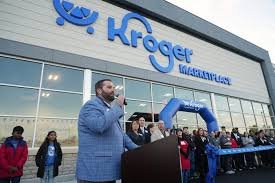
Recognising the shift in consumer behaviour towards frequent, smaller shopping trips, Kroger is investing in convenience and neighbourhood store formats. Its Kroger Express and Marketplaces cater to urban and suburban shoppers seeking speed and convenience without compromising product quality. These smaller formats also allow the company to penetrate dense urban areas where large supermarkets are impractical.
The expansion of these convenience formats aligns with broader trends in the grocery sector. Post-pandemic, U.S. consumers increasingly value proximity, speed, and flexibility in their grocery routines. Kroger’s strategy leverages its brand reputation while offering tailored experiences that discount chains and pure e-commerce players often struggle to replicate.
Community engagement and sustainability
Beyond technology and format innovation, Kroger has emphasised community engagement as a central pillar of its strategy. The company’s Zero Hunger | Zero Waste initiative reflects a commitment to social responsibility, aiming to eliminate food waste and provide meals for those in need. Kroger has partnered with local food banks, charities, and community organisations to distribute surplus food and address local hunger.
Sustainability initiatives are also gaining traction. Kroger is investing in energy-efficient store designs, electric vehicle charging infrastructure, and supplier programmes focused on reducing environmental impact. These efforts appeal to environmentally conscious consumers and strengthen the company’s long-term brand value.
Competitive pressures and differentiation
The U.S. grocery market remains fiercely competitive. Discount retailers such as Aldi and Lidl continue to expand aggressively, while traditional supermarkets face ongoing pricing pressures. At the same time, e-commerce platforms such as Amazon Fresh are redefining convenience and delivery expectations.
Kroger’s response is to differentiate through a combination of scale, technology, and local engagement. By integrating online and offline operations, the retailer can offer rapid delivery and customised services while leveraging its physical store footprint for convenience. Its private-label products, which now account for a growing share of sales, provide high-quality alternatives to national brands while maintaining strong margins.
The role of acquisitions and partnerships
While the failed merger with Albertsons was a setback, Kroger has pursued smaller, targeted acquisitions and partnerships to expand its capabilities. Investments in technology companies, supply chain startups, and logistics providers strengthen the company’s infrastructure and ability to innovate rapidly.
Strategic partnerships with fintech firms and digital platforms have also enabled Kroger to enhance payment options, loyalty programmes, and personalised offers, creating a more seamless and convenient shopping experience for consumers.
Operational efficiency and cost management
Kroger continues to focus on operational excellence as a foundation for growth. Automated warehouses, AI-driven inventory management, and lean supply chain practices have helped the company reduce costs and maintain competitive pricing.
By combining technology with traditional retail expertise, Kroger can optimise store operations, reduce waste, and improve the customer experience without significantly increasing overhead. These efficiencies are particularly important in a market where consumers remain price-sensitive but demand high quality and convenience.
Looking ahead: resilience in a shifting market
Kroger’s multi-faceted strategy positions the company to thrive in an evolving retail environment. By combining digital innovation, convenience-focused formats, sustainability, and community engagement, Kroger is building resilience against both discount competitors and pure e-commerce players.
The company’s emphasis on data-driven personalisation, operational efficiency, and targeted expansion ensures it remains responsive to consumer needs while maintaining a strong competitive edge.
For investors, employees, and consumers alike, Kroger’s initiatives signal that the supermarket giant is not merely maintaining its market share—it is actively shaping the future of grocery retail in the United States.
As American consumers continue to demand convenience, sustainability, and digital integration, Kroger’s ability to combine innovation with its historic operational strengths will likely determine its trajectory for the next decade.