

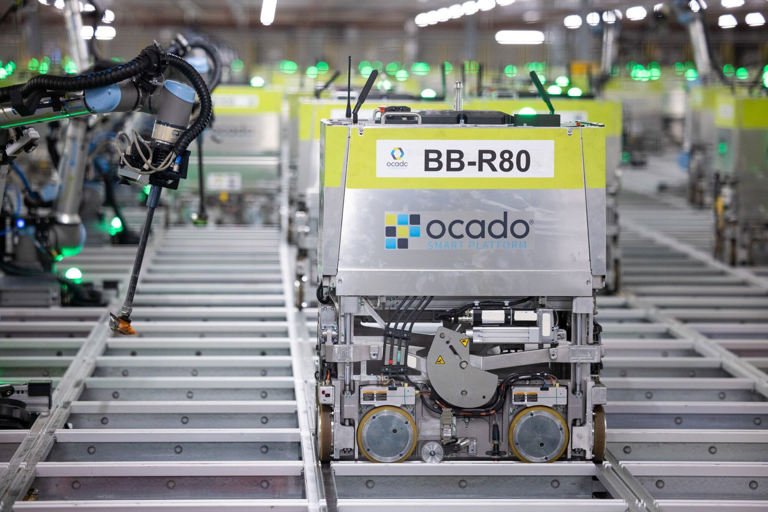
Ocado is set to receive a sizeable £262 million compensation payment from its long-standing American partner, Kroger, following the closure of several automated fulfilment centres in the United States. The settlement comes as Kroger scales back parts of its high-tech logistics network, a move that has reshaped the companies’ collaboration across the Atlantic.
A Strategic Pullback in the US
Kroger recently announced the closure of multiple robotic warehouses, as well as the cancellation of a planned site, citing a shift in strategic priorities. The facilities, which were designed and powered by Ocado’s automated fulfilment technology, had formed an ambitious part of Kroger’s online grocery expansion.
The decision to reduce the size of the network left a gap in future fees and service charges that Ocado would have earned. The newly agreed payment is intended to compensate for those losses and stabilise the financial impact on the UK group.
Financial Boost for Ocado
The £262 million payout provides a significant cash injection at a crucial moment. The closures had prompted concerns about reduced revenue expectations for the coming year, with analysts predicting a noticeable dip. This settlement, however, helps offset the shortfall and strengthens Ocado’s liquidity position.
Investors will welcome the clarity, as the company continues to navigate the evolving landscape of online grocery fulfilment and international partnerships.
Partnership Still Alive — but Smaller
Despite the closures, the relationship between Ocado and Kroger remains intact. Several robotic warehouses continue to operate in major American cities, and both companies have reaffirmed their commitment to ongoing collaboration.
Ocado is also in the process of expanding its technology offer, developing new automated solutions that can be integrated into traditional supermarkets, micro-fulfilment models and smaller-format stores. These innovations are expected to appeal to retailers seeking more flexible and cost-efficient automation.
What This Means for the Industry
The restructuring of the US network marks a notable moment for the global grocery sector. It underscores the complexity of rolling out fully automated fulfilment at scale, particularly in diverse markets with different consumer habits and cost structures.
For Ocado, the payment reduces immediate pressures and gives the company space to pivot, refine its technology and pursue new international opportunities. For Kroger, the move signals a more streamlined approach to automation — one that blends robotics with established distribution channels.
Looking Ahead
The £262 million settlement closes a challenging chapter and positions Ocado to move forward with greater financial stability. As both companies redefine their strategies, the grocery industry will be watching closely. The future of automated fulfilment is far from settled, but this development may shape how retailers balance ambition with practicality in the years ahead.