

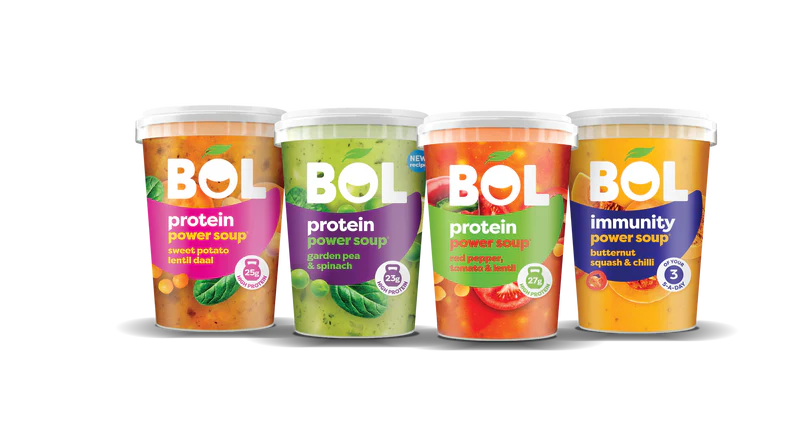
BOL Foods, the plant-powered British brand known for its vibrant bowls, soups and shakes, has built a loyal following in the UK. Its emphasis on natural ingredients, convenience and sustainability has positioned it as one of the more dynamic players in the healthy ready-meal sector. Yet, for many consumers across Europe, BOL remains tantalisingly out of reach.
Recently, an attempt to order BOL products from Spain highlighted a simple problem: the company does not deliver outside the UK. For a brand with strong identity, clear values and the momentum of the plant-based movement behind it, this limitation raises an important question: should BOL consider a strategic expansion into Europe?
Demand Exists — But Supply Does Not
The European market has embraced plant-based food at speed, especially in countries such as Spain, France, the Netherlands and Germany. Supermarkets are expanding their vegetarian and vegan ranges, and consumers are increasingly seeking healthy, ready-to-eat options that require minimal preparation.
In Spain in particular, health-driven food culture is thriving. Major retailers—from Carrefour to El Corte Inglés—are actively increasing their plant-based selections. A brand like BOL, with its bold packaging and clean-label promise, would fit naturally among this growing category.
The absence of direct delivery or retail availability leaves a noticeable gap. Those who know the brand from visits to the UK often search for it abroad, only to discover that it cannot be ordered. This unmet demand is a strong signal.
A Brand Tailored for European Tastes
Many of BOL’s bestselling products, such as Mediterranean-inspired bowls, tomato-rich stews and Asian-style veg pots, match the flavour profiles preferred by European consumers. The brand could also capitalise on the rising trend of healthy lunch solutions for busy professionals—a demographic that European cities share with London.
Moreover, BOL’s sustainability narrative, including recycled packaging and carbon-conscious sourcing, resonates with European shoppers who increasingly prioritise environmentally responsible brands.
Distribution: The Real Challenge
For BOL, entering Europe would require a robust logistics strategy. Temperature-controlled products, short shelf life and compliance with EU labelling regulations all present hurdles. Partnering with established European distributors or collaborating directly with major supermarket chains would be essential.
Additionally, establishing production within the EU—or co-packing arrangements—could reduce costs and avoid post-Brexit trade complications.
The Verdict
The evidence suggests clear potential. European consumers are ready for healthy, plant-based convenience food from a trusted brand. BOL Foods already has the product strength, branding and story to succeed beyond British borders. What it lacks is only presence.
For now, customers in Spain and elsewhere will continue searching in vain for home delivery. But the demand is real, and if BOL intends to grow its international footprint, Europe appears not just an option—but an opportunity waiting to be seized.