

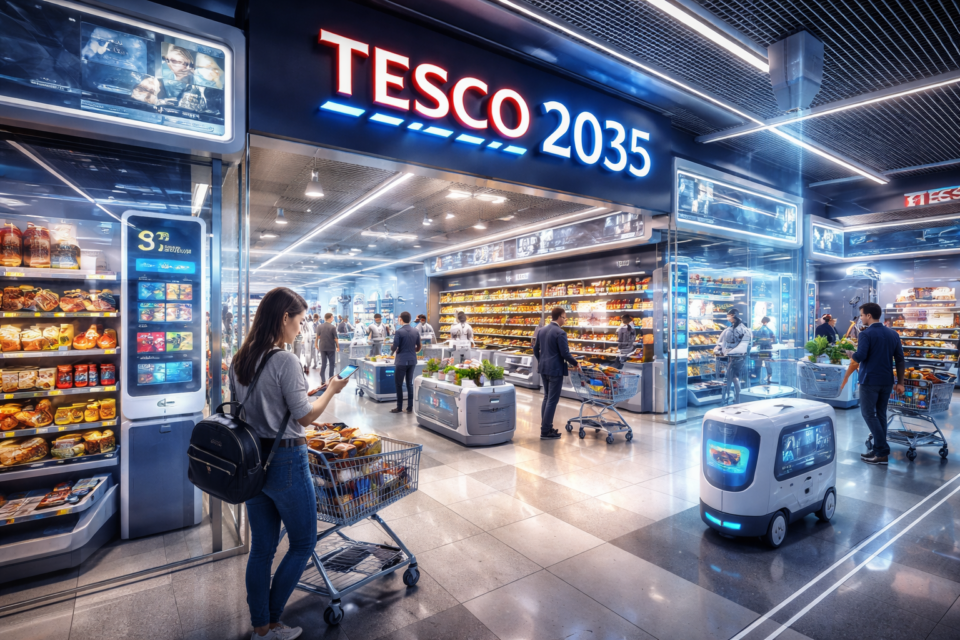
A Conceptual Vision of Grocery Retail in 2035
By Riad Beladi
Published by International Supermarket News
In collaboration with Tesco
As technology accelerates across the retail industry, supermarkets are preparing for a new era of innovation. By 2035, grocery shopping could be shaped by artificial intelligence, robotics, digital logistics networks, and connected homes.
For a major retailer such as Tesco, which serves millions of customers each week, the next decade will likely involve integrating advanced technologies while maintaining the core principles of retail: quality products, competitive prices, and efficient supply chains.
Below is a conceptual vision of what Tesco’s supermarket model could look like in 2035.
Checkout-Free Shopping
Traditional checkout lanes could gradually disappear. Advanced camera systems, smart sensors, and digital payment technology may allow customers to enter the store, select their products, and leave without stopping at a cashier.
Purchases would automatically be recorded through a mobile account or digital identification system. The result would be a faster and more seamless shopping experience, eliminating one of the most time-consuming steps in supermarket visits.
Smart Shelves and Digital Pricing
Store shelves may become fully connected to digital inventory systems. Electronic price labels could update instantly based on promotions, supply levels, or seasonal demand.
Smart shelf sensors would monitor product availability in real time and alert staff or automated systems when restocking is required. This would help reduce empty shelves and improve product availability for customers.
For retailers like Tesco, such systems could significantly increase operational efficiency.
Augmented Reality Shopping Assistance
Supermarket aisles may become interactive spaces through augmented reality technology.
Customers using smartphones or smart glasses could instantly access detailed information about products simply by pointing their device toward an item. Nutritional values, product origins, sustainability data, and recipe suggestions might appear directly on the screen.
This technology would allow shoppers to make more informed purchasing decisions while enhancing the overall in-store experience.
Robotic Micro-Fulfilment Centres
As online grocery shopping continues to grow, automated fulfilment centres may become a standard feature in supermarket logistics.
These robotic facilities could be located within or near supermarkets, allowing online orders to be picked and prepared within minutes. Robots would retrieve products from storage shelves and assemble orders with speed and precision.
Such systems would enable faster click-and-collect services and more efficient home delivery operations.
Autonomous Delivery Networks
Delivery technology is also expected to evolve significantly by 2035.
Retailers may operate fleets of autonomous vehicles and robotic couriers capable of transporting groceries across cities. Drone deliveries for smaller orders could also become part of the logistics network in certain regions.
These systems would help reduce delivery times and lower transportation costs.
The Role of Artificial Intelligence
Artificial intelligence will likely play a central role in the future of grocery retail.
AI systems may analyse purchasing patterns, seasonal demand, and household consumption habits to predict what customers will need before they even begin shopping. These predictive systems could generate personalised shopping suggestions and optimise stock levels across stores.
For Tesco, such technologies could improve both customer convenience and operational efficiency.
Connected Homes and Smart Kitchens
The supermarket of the future may begin in the kitchen.
Smart refrigerators and connected home devices could monitor food supplies and automatically reorder items when stocks run low. These systems might also suggest recipes based on available ingredients and add missing items to an online grocery basket.
By integrating with connected home technologies, Tesco could become part of a broader digital ecosystem linking households directly to grocery supply networks.
Sustainability and Transparency
Consumers are increasingly concerned about sustainability and food origins. By 2035, advanced traceability systems may allow customers to scan a product and instantly view detailed information about where it was produced, processed, and transported.
Digital records could also provide environmental data such as carbon footprint and packaging impact.
Such transparency will likely become an important factor in building consumer trust.
The Human Element in the Future Supermarket
Even as technology transforms retail operations, the human role in supermarkets will remain important.
Employees will increasingly focus on customer assistance, product expertise, fresh food preparation, and personalised service. Automation will support store operations, but human interaction will continue to play a vital role in the shopping experience.
Looking Toward 2035
The coming decade may represent one of the most transformative periods in the history of grocery retail. Artificial intelligence, robotics, and digital connectivity are already reshaping the way supermarkets operate.
For Tesco, the opportunity lies in combining innovation with its established strengths in logistics, product sourcing, and customer relationships.
By 2035, the supermarket may evolve from a traditional retail space into a highly connected ecosystem linking producers, distribution networks, retailers, and households.
And as the global food industry continues to adapt to these technological shifts, the supermarket of the future may become one of the most advanced retail environments in the world.