

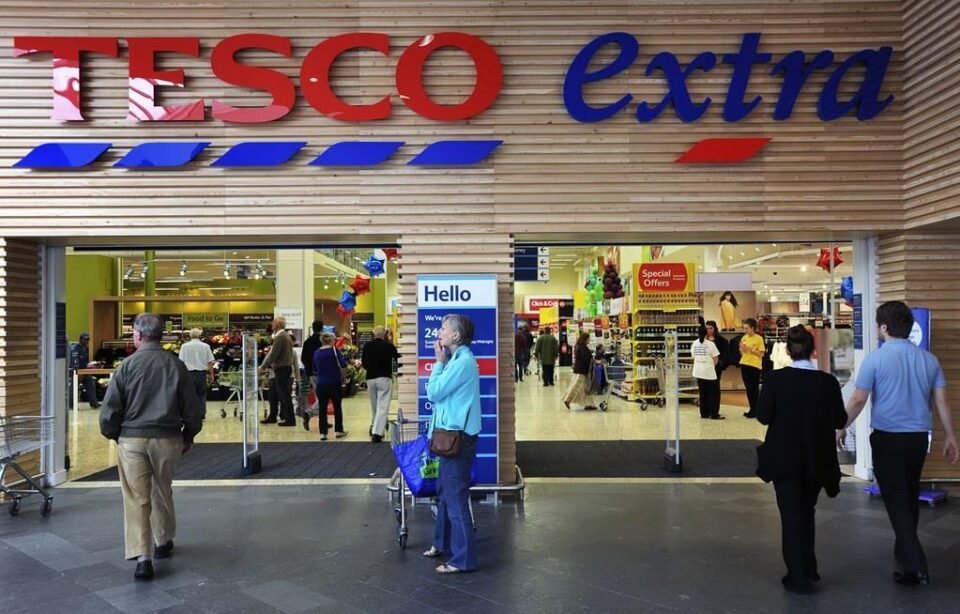
Tesco has adopted a strategy defined by control, discipline, and data-driven decision-making.
In contrast to competitors pursuing bold transformations, Tesco has focused on incremental improvement. Its Clubcard loyalty programme, supply chain optimisation, and pricing strategies are all designed to maximise efficiency and retain customer loyalty.
This approach has delivered stability in a volatile market. Tesco remains a dominant force in the UK, supported by strong brand recognition and an extensive store network.
However, stability can also become a limitation. The retail environment is evolving rapidly, with discounters gaining ground and consumer expectations shifting. Tesco’s reliance on established systems may reduce its ability to respond quickly to emerging trends.
Price competition is particularly intense. Aldi and Lidl continue to exert downward pressure on margins, forcing Tesco to engage in frequent price adjustments. While its scale provides some protection, the cumulative impact of these pressures cannot be ignored.
At the same time, Tesco must manage the complexity of its operations. Large store formats, extensive product ranges, and multiple channels require careful coordination. Efficiency gains are essential, but they must be achieved without compromising service or availability.
Another challenge lies in maintaining customer engagement. Loyalty schemes are effective, but they must evolve to remain relevant. Consumers are increasingly looking for personalised experiences, and Tesco’s ability to leverage data will be critical in this regard.
Despite these challenges, Tesco’s position remains strong. Its disciplined approach provides resilience, and its investments in technology and logistics are likely to yield long-term benefits.
Tesco is not seeking to redefine retail. Instead, it is refining its execution, ensuring that it remains competitive in a market where precision and efficiency are more important than ever.