

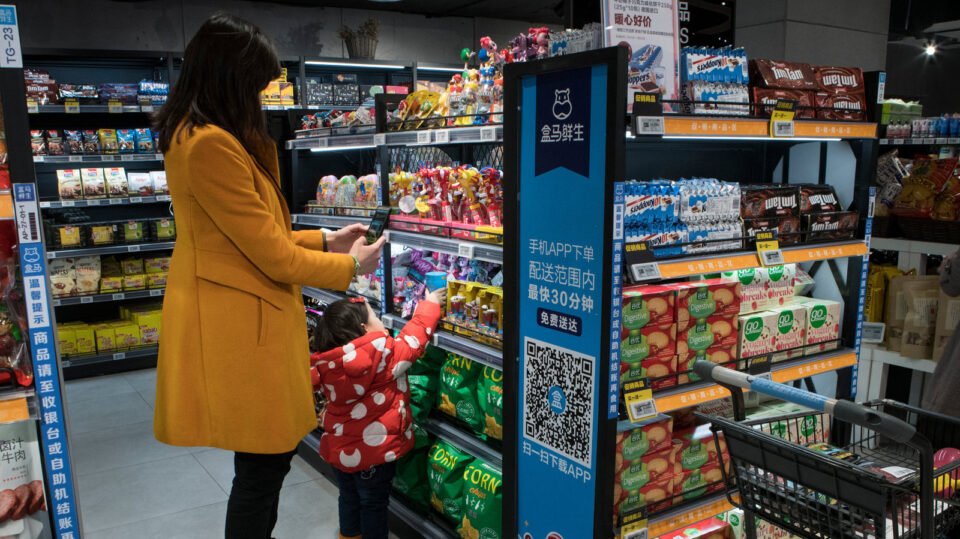
The global supermarket industry is entering a decisive phase of technological transformation. What was once a gradual evolution in retail operations has now accelerated into a full-scale race toward automation, artificial intelligence and digital store infrastructure. From the United States to Europe, major grocery chains are investing heavily in smart shelves, electronic price labels, robotics and AI-driven data systems.
For retailers, the motivation is clear: improve efficiency, reduce operational costs and adapt to a consumer environment where expectations are increasingly shaped by digital convenience.
Recent developments illustrate how quickly the sector is moving. Walmart, the world’s largest retailer, has begun deploying electronic shelf labels across thousands of stores in the United States. The technology allows prices to be updated instantly across entire store networks, replacing the labour-intensive process of manually changing paper labels.
While the move may appear simple on the surface, its implications are profound. Real-time pricing creates the possibility for retailers to respond instantly to supply chain changes, competitor pricing or promotional campaigns. In theory, a retailer could adjust thousands of prices within minutes.
At the same time, French retail giant Carrefour has been accelerating its own digital transformation. Through partnerships with technology providers, the company has been rolling out connected shelf systems, smart price tags and AI-supported inventory tools across stores in Europe.
These initiatives signal a clear direction for the grocery industry: the supermarket of the future will be as much a technology platform as it is a physical store.
Yet the enthusiasm surrounding these innovations also raises several questions. From the perspective of analysts and industry observers, including those following developments at International Supermarket News, the technological shift brings both opportunities and risks.
One of the most immediate benefits of smart shelf technology is operational efficiency. Electronic labels drastically reduce the time employees spend updating prices, freeing staff to focus on customer service and stock management. In large supermarkets where tens of thousands of items must be priced correctly, the reduction in labour can be substantial.
Automation is also extending beyond store shelves. Walmart’s investment in robotic supply chain systems demonstrates how retailers are transforming logistics networks. Automated distribution centres can process goods faster, reduce human error and increase the speed at which products reach store shelves.
For a sector that operates on extremely thin margins, these efficiency gains are critical.
However, the technology race also exposes the structural challenges facing modern retail. Implementing smart store infrastructure requires massive investment. Installing electronic labels across thousands of stores is not a minor expense; it involves hardware installation, software integration and continuous data management.
Large global chains may have the capital to undertake such transformations, but smaller retailers could struggle to keep pace. This raises the possibility that technological modernisation could widen the gap between major multinational retailers and independent grocery operators.
Another critical issue concerns pricing transparency. Electronic labels enable real-time price adjustments, but some critics worry that the technology could make it easier for retailers to alter prices frequently without consumers fully noticing the changes.
Retailers insist the technology simply improves operational efficiency, yet consumer advocates may increasingly scrutinise how dynamic pricing is used in supermarkets.
From the industry’s perspective, the transformation is also about data. Modern supermarkets are becoming sophisticated information systems. Every product movement, every purchase and every interaction can generate valuable data that helps retailers optimise assortments, forecast demand and personalise promotions.
Carrefour’s digital strategy reflects this shift toward data-driven retailing. By integrating store technology with online platforms, the company aims to create a seamless ecosystem where customer behaviour across physical and digital channels can be analysed and understood.
This approach mirrors a broader trend across the grocery sector. Retailers are no longer simply selling food; they are building digital retail ecosystems designed to capture and analyse consumer behaviour.
But technological progress does not automatically guarantee commercial success. Supermarkets ultimately remain places where customers expect competitive prices, fresh products and a pleasant shopping experience.
If digital transformation becomes too complex or expensive, retailers risk losing focus on the fundamental purpose of a grocery store.
There is also a human dimension that cannot be ignored. As automation increases, concerns about employment naturally emerge. While retailers argue that technology allows employees to focus on higher-value tasks, the long-term impact on supermarket jobs remains uncertain.
Historically, the grocery sector has been a major employer, particularly for entry-level workers. The introduction of robotics, automated checkout systems and AI-driven operations could reshape the labour structure of retail over the next decade.
From a journalistic standpoint, it is important to recognise that technological innovation in retail is neither inherently positive nor negative. It is a tool, and like any tool its impact depends on how it is used.
The supermarket industry is under intense pressure from multiple directions: discount chains expanding across Europe, online retailers reshaping consumer habits and economic uncertainty influencing purchasing behaviour.
In this environment, technology is becoming a strategic necessity rather than a luxury.
The question facing the industry is not whether supermarkets will become more digital, but how quickly and how effectively they can manage the transition.
For now, the evidence suggests that the race has begun in earnest. Retail giants such as Walmart and Carrefour are investing billions to redefine the supermarket model. Competitors across Europe and North America are watching closely.
What emerges over the next few years may well determine the shape of grocery retail for decades to come.