

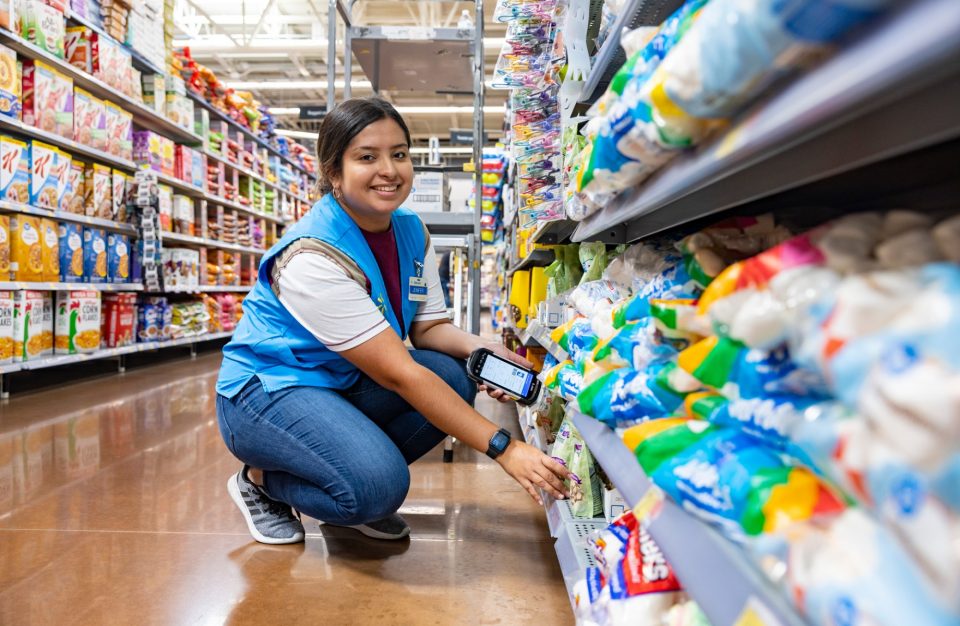
Few companies influence global retail and food distribution as profoundly as Walmart. As the world’s largest retailer, the company sits at the centre of an enormous commercial ecosystem that connects farmers, manufacturers, logistics networks and millions of consumers. When Walmart adjusts its pricing strategies or supply chain policies, the ripple effects can reach far beyond the shelves of its stores.
Yet the current economic environment raises an important question: can even a giant like Walmart shield consumers from the persistent pressure of food inflation?
For years, Walmart built its reputation around a simple promise—everyday low prices. This philosophy helped the company dominate the American retail landscape and expand internationally. By leveraging its massive purchasing power, Walmart was able to negotiate aggressive prices from suppliers and pass many of those savings to customers.
However, the global inflation wave that began earlier in the decade tested the limits of that strategy. Food prices increased across multiple categories, driven by rising energy costs, transportation disruptions, climate-related agricultural challenges and geopolitical instability. Even the most powerful retailers found it difficult to completely offset these pressures.
Walmart’s response has been multifaceted. On one hand, the company has continued to emphasise price leadership, aggressively promoting discounts and private label products. On the other hand, it has invested heavily in technology, logistics and data analytics to improve efficiency throughout its supply chain.
The scale of Walmart’s operations provides both advantages and complications. The company operates thousands of stores and distribution centres across the United States and several international markets. This vast infrastructure allows Walmart to move enormous volumes of goods, but it also requires sophisticated management systems to maintain efficiency.
In theory, Walmart’s size should allow it to stabilise prices more effectively than smaller competitors. By purchasing goods in massive quantities, the retailer can negotiate favourable contracts with suppliers. Yet this very scale also creates intense pressure on those suppliers.
Manufacturers often depend heavily on Walmart’s shelf space to reach consumers. Losing a contract with the retailer can significantly impact a producer’s business. As a result, suppliers frequently accept strict pricing terms in order to maintain their relationship with Walmart.
This dynamic has long been controversial within the food industry. Critics argue that the relentless drive for lower prices can squeeze suppliers and reduce profit margins for food producers. In extreme cases, it may even encourage cost-cutting measures that affect product quality or working conditions within the supply chain.
Walmart, for its part, maintains that its efficiency ultimately benefits consumers. In a country where millions of households struggle with rising living costs, affordable food prices are a crucial issue. From this perspective, the company’s ability to keep grocery prices competitive plays an important social role.
The retailer has also expanded its private label portfolio to maintain price competitiveness. By selling store-branded goods instead of relying solely on major food manufacturers, Walmart can control pricing more directly. Private label products have become increasingly popular among consumers seeking lower-cost alternatives during periods of economic uncertainty.
Another major area of investment has been technology. Walmart has introduced advanced automation systems in distribution centres, artificial intelligence tools for demand forecasting and sophisticated inventory management systems. These technologies aim to reduce waste, optimise logistics and ensure that shelves remain stocked with the right products at the right time.
Automation is particularly important in the context of labour shortages and rising wage costs. Retailers across the United States have struggled to recruit and retain staff in recent years. By automating repetitive tasks such as sorting and packaging, Walmart hopes to maintain efficiency while reducing operational costs.
Yet technological investment alone cannot eliminate the broader economic forces affecting food prices. Agriculture remains vulnerable to unpredictable weather patterns, global commodity fluctuations and transportation challenges. When the cost of raw materials rises significantly, retailers have limited options.
Another important factor shaping Walmart’s strategy is the rapid growth of e-commerce. Online grocery shopping has become an essential part of modern retail. Walmart has expanded its delivery services and pickup options in order to compete with digital competitors and maintain convenience for customers.
However, online grocery retail presents its own financial challenges. Home delivery involves higher logistical costs than traditional in-store shopping. Balancing convenience with profitability remains one of the most complex issues facing the industry.
Despite these challenges, Walmart continues to exert enormous influence over the global food supply chain. Few companies possess the scale, infrastructure and market reach necessary to shape retail pricing on such a large scale.
But the belief that any single retailer can fully control food inflation may be unrealistic. The supermarket sector operates within a vast economic system influenced by agriculture, energy markets, transportation networks and international trade.
Walmart can mitigate price increases through efficiency and purchasing power, but it cannot completely escape the economic realities affecting the food industry.
What the company can do—and what it continues to attempt—is to manage these pressures better than its competitors. In a retail environment where consumers are increasingly price-sensitive, that ability may determine which companies dominate the next phase of the global supermarket industry.
In the end, Walmart’s real challenge is not simply maintaining low prices. It is proving that a retail giant of its size can remain flexible enough to navigate a rapidly changing economic landscape while continuing to deliver value to millions of customers.