
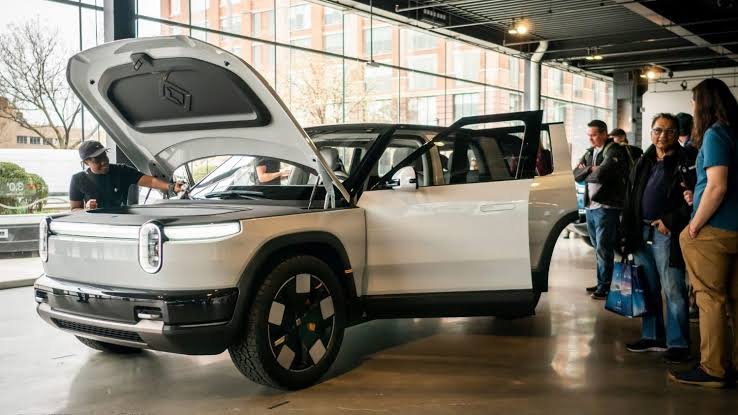
The growing demand for Rivian’s upcoming R2 electric sport utility vehicle is creating an unexpected challenge for the American automaker, as supply chain constraints threaten to slow production during one of the company’s most important product launches.
The R2 is widely viewed as Rivian’s most significant vehicle to date. Unlike the premium R1T pickup and R1S SUV, the new model is designed for a much broader audience, offering a lower price point while retaining the company’s focus on technology, performance and adventure-oriented design. Industry analysts believe the vehicle could transform Rivian from a niche electric vehicle manufacturer into a mainstream automotive brand.
However, increasing demand is placing pressure on the company’s ability to secure enough electronic components needed for production. Semiconductor and memory chip availability remains a concern for parts of the automotive industry, particularly as modern vehicles become increasingly dependent on sophisticated computing systems.
Today’s vehicles require hundreds of electronic components to manage everything from battery performance and navigation to advanced driver assistance systems, entertainment and connectivity. Even minor shortages can delay production schedules and affect delivery times for customers.
For Rivian, the timing is particularly important. Competition within the electric vehicle market has intensified dramatically over the past two years. Tesla continues to dominate global EV sales, while traditional manufacturers including Ford, General Motors, Hyundai, Kia and Volkswagen are investing billions of dollars in expanding their own electric vehicle portfolios. Chinese manufacturers are also increasing their presence in international markets, creating further pressure on established producers.
The R2 represents Rivian’s opportunity to compete in one of the fastest-growing segments of the automotive industry. Early interest from consumers has been strong, with many potential buyers attracted by the vehicle’s combination of affordability, technology and outdoor lifestyle positioning.
To support future growth, Rivian has continued investing in manufacturing capacity while working closely with suppliers to improve component availability. Diversifying the supplier base and strengthening long-term purchasing agreements have become increasingly important strategies as manufacturers seek to reduce dependence on individual suppliers.
Supply chain resilience has become one of the automotive industry’s highest priorities since the global semiconductor shortages experienced earlier in the decade. Manufacturers across the world have redesigned procurement strategies, increased inventory levels for critical components and invested in closer relationships with technology partners.
Despite the current production challenges, Rivian remains optimistic about the long-term outlook for the R2 programme. Company executives continue to view the vehicle as a cornerstone of future expansion, with production expected to play a major role in increasing sales volumes and improving financial performance over the coming years.
Investors are also closely watching the progress of the R2. Successful production and delivery of the new model could significantly strengthen Rivian’s competitive position while demonstrating the company’s ability to scale operations in an increasingly crowded electric vehicle market.
As consumer demand for electric vehicles continues to grow, manufacturers are discovering that success depends not only on innovative products but also on resilient supply chains capable of supporting large-scale production. For Rivian, overcoming these supply challenges will be critical to ensuring that the highly anticipated R2 reaches customers on schedule and fulfils its potential as the company’s next major growth engine.