
By International Supermarket News
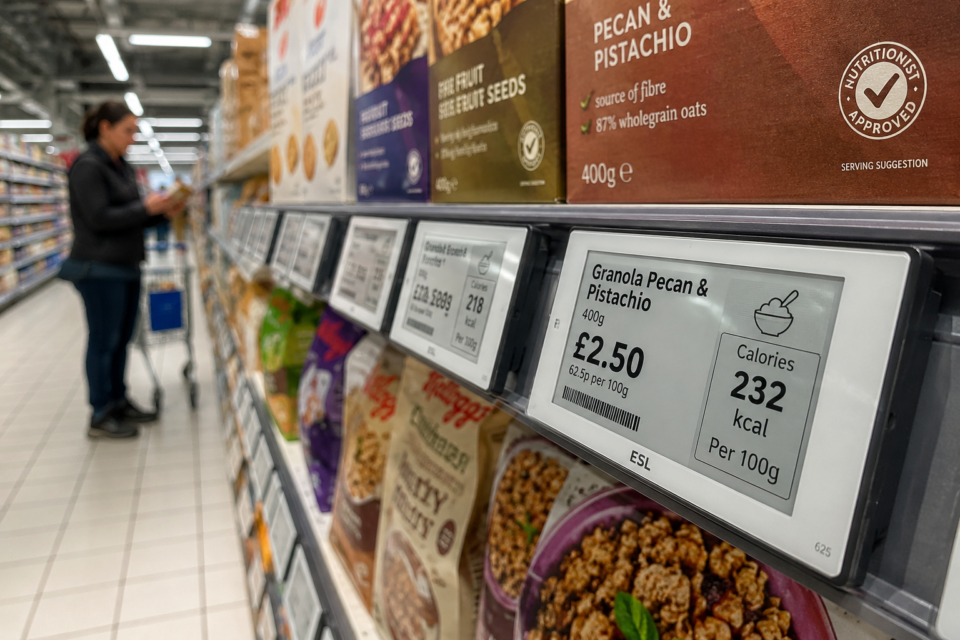
For decades, the supermarket shelf label had one primary purpose: displaying the price. Today, however, electronic shelf labels (ESLs) are rapidly transforming into digital information hubs, offering consumers far more than the cost of a product.
As shoppers become increasingly health-conscious, many retailers are exploring ways to display nutritional information directly on the shelf edge. Calories, sugar content, protein, fat, salt and even front-of-pack nutrition scores are beginning to appear alongside prices, helping consumers make informed decisions without having to pick up every product.
It marks the next stage in the digital transformation of supermarkets.
A New Generation of Health-Conscious Consumers
Consumer expectations have changed dramatically over the past decade. Younger generations, particularly Millennials and Generation Z, are paying far closer attention to what they eat than previous generations. High-protein foods, reduced sugar, plant-based products and healthier snacks have become mainstream purchasing decisions.
Many shoppers now check calories before placing a product into their trolley. Although European legislation already requires nutritional information, including energy (kcal), to appear on food packaging, reading the small print can be inconvenient during a busy shopping trip.
Electronic shelf labels solve that problem by making key nutritional information visible before a customer even picks up the product.
From Price Labels to Information Centres
The first generation of electronic shelf labels focused almost entirely on replacing paper price tickets. Retailers adopted the technology primarily to improve price accuracy, reduce labour costs and eliminate millions of printed paper labels every year.
Belgium’s Colruyt was among Europe’s early large-scale adopters, rolling out electronic shelf labels across its stores while also preparing the technology to communicate much richer product information in the future.
Similarly, Migros in Switzerland has expanded electronic shelf labels throughout its stores as part of its digital transformation, enabling instant price updates and opening the door to additional customer information beyond pricing.
Today, the latest generation of ESLs can display multiple lines of information, QR codes, promotional messages, stock status, sustainability icons and nutritional indicators.
Calories Become a Shopping Tool
Displaying calorie information directly on shelf labels offers several advantages.
Consumers trying to lose weight can compare products without turning over every package.
Parents can quickly evaluate snacks for children.
Athletes can identify higher-protein products.
Older consumers managing diabetes or heart disease can more easily compare nutritional values.
For supermarkets, the technology enhances transparency and builds consumer trust while encouraging healthier purchasing decisions.
Instead of comparing two breakfast cereals by price alone, shoppers can immediately see which product contains fewer calories or less sugar before making a purchase.
Beyond Calories
The future extends far beyond displaying calories.
Modern electronic shelf labels are capable of presenting:
- Calories per serving or per 100g
- Protein content
- Sugar levels
- Salt content
- Fibre
- Nutri-Score
- Organic certification
- Country of origin
- Carbon footprint
- Allergens
- Vegan or vegetarian symbols
- QR codes linking to recipes, sourcing information and full nutritional profiles
Some retailers are already combining QR codes with electronic shelf labels, allowing shoppers to access extensive product information, ingredient sourcing, sustainability credentials and even supplier stories using their smartphones.
Artificial Intelligence Will Personalise Shopping
The next phase may be even more revolutionary.
As supermarkets integrate AI with loyalty programmes and mobile applications, electronic shelf labels could eventually personalise the shopping experience.
Imagine a customer following a low-calorie diet. Through the retailer’s app, products matching their dietary preferences could be highlighted automatically as they walk through the store.
Similarly, shoppers with allergies could receive warnings, while athletes might see products rich in protein and consumers managing diabetes could be guided towards lower-sugar alternatives.
Although privacy and data protection will remain essential considerations, the technology already exists to make this possible.
Better Decisions, Not Just Better Prices
Electronic shelf labels are evolving from pricing tools into consumer information platforms.
While retailers initially invested in ESLs to improve operational efficiency and reduce paper waste, the technology is increasingly becoming part of the customer experience. Consumers now expect transparency, and nutritional information displayed at the point of purchase helps them make faster and better-informed decisions.
As more supermarkets embrace digital retailing, displaying calories and other nutritional information on electronic shelf labels could become as commonplace as displaying the price itself.
For retailers, it represents an opportunity to strengthen customer trust, promote healthier lifestyles and differentiate themselves in an increasingly competitive market. In the coming years, the supermarket shelf may no longer simply tell shoppers how much a product costs—it may also help them decide whether it is the right choice for their health.