


Walmart is making another change to the carts used by employees preparing online orders while simultaneously undertaking one of the biggest store renovation programmes in US retail, with more than 650 Supercenters and Neighborhood Markets scheduled for remodelling.
The latest cart change was confirmed by Walmart after concerns were raised about the safety and manoeuvrability of fulfilment carts used inside stores.
The carts are not the traditional shopping trolleys used by customers. They are larger units carrying bins of products picked for online grocery orders, including orders for pickup and delivery.
Walmart has started distributing new wheels for the fulfilment carts nationwide, with the aim of making them easier to manoeuvre through busy store aisles. Employees have also received updated instructions on when the carts should be pushed or pulled.
The latest guidance says employees should push the carts when they have a clear view of the path ahead and pull them when visibility is restricted. This follows an earlier policy change that reduced the number of containers carried by a fulfilment cart from eight to six.
The changes followed reports of incidents involving fulfilment carts, including an incident in which a child was reportedly struck inside a Walmart store. Workers had also raised concerns about the safety implications of pulling heavily loaded carts.
MORE THAN 650 STORES TO BE TRANSFORMED
At the same time, Walmart is accelerating a major physical transformation of its US store estate.
The retailer announced in April that more than 650 Supercenters and Neighborhood Markets would be remodelled during 2026, alongside approximately 20 new store openings scheduled for 2026 and early 2027.
The programme covers stores across the United States rather than being concentrated in one region.
Walmart has already identified locations in several states. In Pennsylvania, for example, 32 stores are included in the programme, with four in the Philadelphia region, according to the latest report. In Texas, the retailer has also identified dozens of stores for upgrades.
The scale is significant. Walmart operates more than 4,600 stores in the US, meaning the programme represents a substantial proportion of its physical retail network.
WHAT WILL CHANGE INSIDE WALMART STORES?
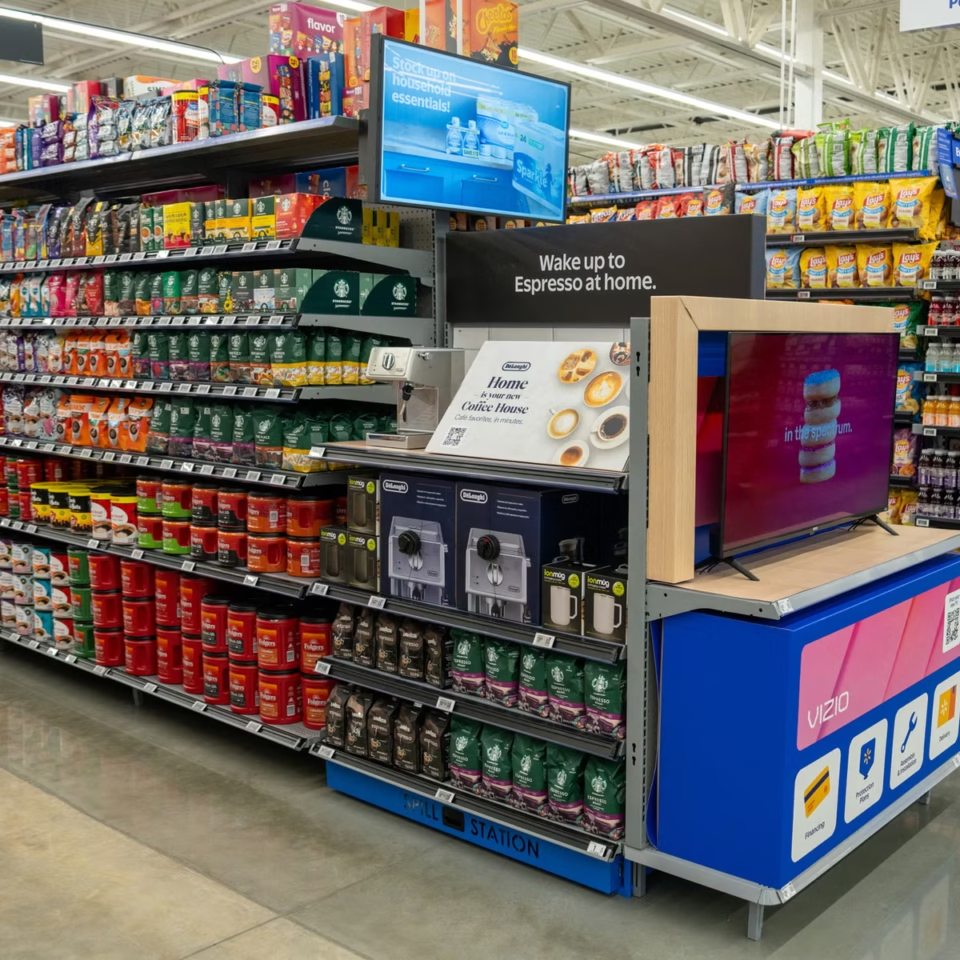
The remodels are designed to make stores easier to navigate while integrating the physical shop more closely with Walmart’s online operation.
Customers can expect changes including:
- Wider aisles and redesigned store layouts
- Updated technology and digital touchpoints
- Expanded pickup and delivery services
- Faster delivery options, including delivery in as little as one hour in some markets
- Updated pharmacies and Vision Centers
- Private pharmacy consultation rooms in some locations
- Refreshed interiors and exteriors
- Improved parking and landscaping
- Expanded deli and hot-bar selections in some Neighborhood Markets
- Upgraded space for online grocery fulfilment
Walmart is also increasing the role of its app inside the physical store. Customers can use it to locate products and navigate aisles, check prices and offers, reorder products, arrange services and choose pickup or delivery.
THE STORE IS BECOMING A FULFILMENT CENTRE
The most important change may be less visible to shoppers.
Walmart’s stores are increasingly being designed to serve two purposes simultaneously: a supermarket for customers and a fulfilment operation for online orders.
That means the layout of aisles, backroom space, technology and employee equipment increasingly has to accommodate both traditional shoppers and workers picking thousands of online orders.
Walmart says its store network gives it the ability to reach 95% of US households with delivery in three hours or less. The retailer is therefore investing heavily in the stores that support this online infrastructure.
The latest fulfilment-cart changes show one of the challenges created by this strategy.
As online grocery volumes grow, more employees are moving through stores with large carts loaded with customer orders. Safety, visibility and manoeuvrability therefore become increasingly important operational issues.
FEWER SELF-CHECKOUTS IN SOME STORES
The renovation programme is also taking place as Walmart continues to rethink the checkout experience.
The latest renovation details indicate that some remodelled stores will have fewer self-checkout lanes, alongside greater use of technology designed to make the overall shopping journey faster and more integrated.
This suggests Walmart’s store strategy is not simply about adding technology. It is about deciding which technology genuinely improves the shopping experience while making the physical store more efficient.
A MAJOR RESET FOR AMERICA’S BIGGEST RETAILER
Walmart’s 2026 investment programme shows that the world’s largest retailer is not abandoning physical stores in favour of online shopping.
It is doing almost the opposite.
The company is turning its stores into increasingly sophisticated retail hubs where customers shop, collect orders, receive deliveries, access pharmacy services and interact with Walmart’s digital ecosystem.
The 650-plus remodels, new stores and continuing investment in fulfilment infrastructure represent a major attempt to make the traditional Walmart superstore work for a retail market in which customers increasingly move between physical and digital shopping.
And while customers may notice wider aisles, new displays and refreshed stores, some of the most important changes are happening behind the scenes — including the latest attempt to make Walmart’s online-order fulfilment carts safer and easier for employees to operate.