
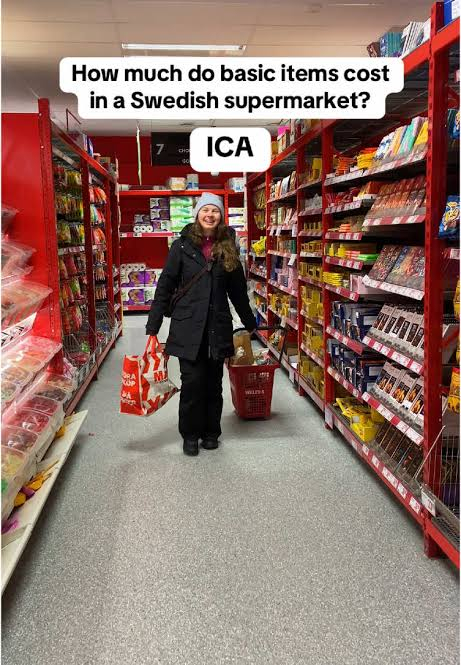
ICA FIGHTS BACK: SWEDEN’S SUPERMARKET PRICE WAR INTENSIFIES
Sweden’s grocery battle is entering a new phase. For years, Willys and Lidl have put relentless pressure on the country’s traditional supermarket operators with their low-price positioning. Now ICA is fighting back — and it is using price as one of its biggest weapons.
The shift is significant because ICA has long been Sweden’s dominant grocery retailer, but the rise of discount shopping has changed consumer behaviour. Willys in particular has built its reputation around value for money, while Lidl has continued to strengthen its position with a combination of low prices, private label and a tightly controlled store format.
Now ICA is narrowing the gap.
The retailer has been cutting prices on basic products, increasing promotional activity and strengthening its private-label offer. Its focus for 2026 is explicitly centred on value for money, while investment is also continuing in stores, logistics and e-commerce.
And the strategy appears to be working.
During the first four months of 2026, ICA Sweden’s sales increased 5.5%, while the Swedish grocery market grew 3.7%. ICA stores recorded 5.1% growth, helped by more customer visits and larger baskets. Online sales were even stronger, increasing 12.6%.
THE DISCOUNTERS ARE NO LONGER RUNNING ALONE
The interesting part of the Swedish market is that the discount advantage is beginning to face resistance.
Willys remains a formidable competitor. Discount grocery has been the fastest-growing part of Sweden’s food retail market for several years, with Willys leading the segment. Across 2019–2024, the discount sector grew at roughly 10% a year, compared with around 5% for the overall market.
But falling food-price inflation and stronger price competition are changing the equation.
According to IGD, ICA has been narrowing the price gap with the discounters, while Willys’ low-price advantage has consequently been eroded. Willys is still growing its customer base, but its sales momentum has slowed sharply compared with previous periods.
That makes the battle much more interesting.
ICA HAS THE SCALE — BUT IT NEEDS THE CUSTOMER
ICA has almost 1,300 stores across Sweden and remains the country’s leading grocery retailer. Its strength is not simply size. Its network combines nationally coordinated purchasing, logistics and marketing with independently operated stores that can respond to local customers.
That gives ICA something Lidl and Willys cannot easily replicate: scale combined with local presence.
But scale alone is no longer enough.
Swedish shoppers have become much more price conscious after years of food inflation. The discounters have taught consumers to question supermarket prices and look harder for value.
ICA therefore has little choice but to compete directly.
THE REAL BATTLE IS FOR THE SHOPPING BASKET
This is no longer simply a battle between a traditional supermarket and discount chains.
It is a battle for the entire shopping basket.
ICA wants customers to believe they can obtain competitive prices without giving up the range, fresh food, convenience and local shopping experience associated with its stores.
Willys wants to remain the price benchmark.
Lidl wants to convince more Swedish shoppers that discount does not mean limited choice.
And the result is good news for consumers: the supermarkets are being forced to fight harder for every krona.
Sweden’s grocery market is already one of Europe’s most concentrated, with ICA, Axfood and Coop together accounting for more than 90% of sales.