

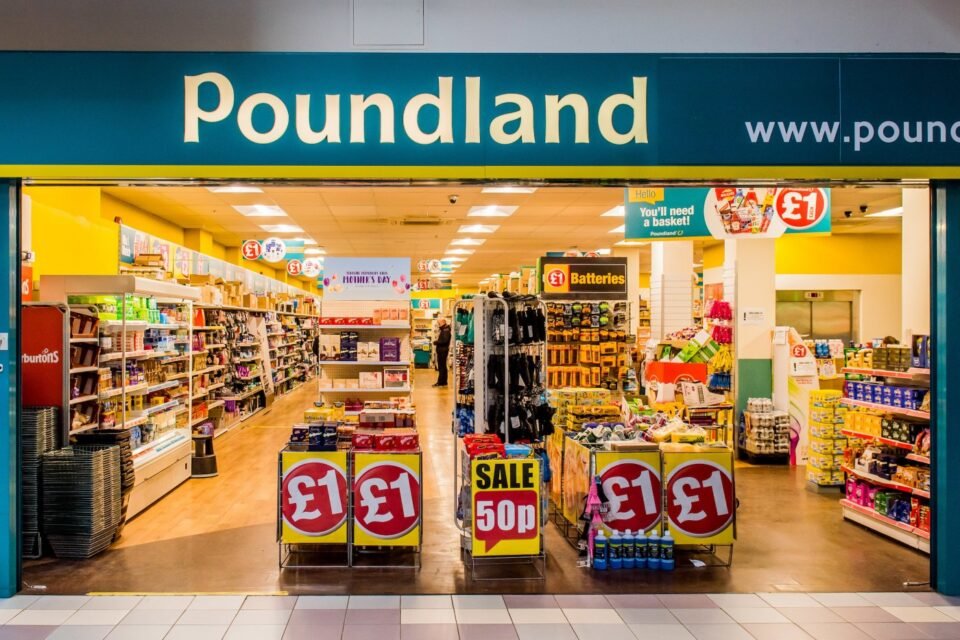

Poundland could be heading for another change of ownership only a year after Gordon Brothers acquired the troubled discount retailer from Pepco Group for a nominal £1, raising fresh questions about the future of one of Britain’s best-known value retail brands. Reports that Gordon Brothers is considering a sale have emerged as the business continues a major restructuring programme designed to reduce costs, close underperforming stores and return Poundland to the straightforward value proposition that originally made the chain successful. No final decision to sell has been made, but advisers are reportedly being considered for a possible sale process.
The £1 price attached to the takeover attracted considerable attention when the deal was completed in June 2025, but the headline figure did not tell the full story. Gordon Brothers was taking control of a business facing significant operational and financial challenges, rather than simply acquiring a successful retailer for a bargain price. Poundland had more than 800 stores and around 16,000 employees before the takeover, and the new owner quickly began looking at the size and structure of the business as part of an attempt to create a more sustainable operation.
The restructuring has been substantial. Poundland has closed a large number of stores and reduced its workforce, with reports indicating that around 149 stores had closed and approximately 2,200 jobs had been lost by the beginning of 2026. The company also closed two warehouses and changed aspects of its product strategy as it attempted to address problems that had developed under its previous ownership. Rather than trying to protect every store and every part of the existing operation, Gordon Brothers has taken a much harder look at where Poundland can realistically make money and where the business needs to change.
One of the most interesting parts of the turnaround has been the decision to put greater emphasis back on the core Poundland proposition. The name itself carries a very clear promise to consumers, and over the years the retailer had expanded beyond its original £1 concept by introducing products at higher price points and developing a much wider range. That expansion created more choice, but it also created a potential problem for a retailer whose greatest strength has always been its simple value message. Bringing more products back towards the £1 price point is therefore not simply a pricing decision; it is an attempt to reconnect the business with what customers understand Poundland to represent.
This matters because the discount retail market has become much more competitive. Poundland is no longer operating in a world where simply offering cheaper products than the traditional high street is enough to guarantee success. B&M, Home Bargains, The Range, supermarkets and other value retailers are all competing for consumers who are increasingly careful about what they spend. Aldi and Lidl have also transformed the meaning of discount retail by demonstrating that shoppers can buy a large proportion of their weekly groceries from businesses built around low prices and efficient operations.
That puts Poundland in an interesting position. It still has one of the most recognisable discount retail names in Britain, a substantial store network and a customer base that understands the brand, but it has to convince shoppers that visiting a Poundland store offers something they cannot easily find elsewhere. The answer may be a combination of clear pricing, carefully selected products, convenient locations and a stronger focus on the categories where the company can genuinely compete.
The possibility of a sale so soon after the £1 takeover does not necessarily mean that the turnaround has failed. Gordon Brothers is an investment company with experience in restructuring businesses, and one possible strategy is to acquire a troubled retailer, simplify its operations, reduce unnecessary costs, stabilise the business and then consider whether another owner could take it forward. If Poundland is now a smaller and more focused operation than it was when Gordon Brothers took control, the business could potentially be more attractive to another buyer than it was twelve months ago.
There is also a much bigger question about what kind of owner Poundland needs for its next stage. A financial investor may see an opportunity to create value through further restructuring, while a retail operator might be more interested in rebuilding the brand, investing in stores and developing the product range. The right strategy will depend on whether Poundland’s greatest problem is its cost base, its store estate, its product proposition or the way consumers perceive the brand. In reality, all four issues are connected, and solving one without addressing the others is unlikely to produce a lasting recovery.
The possible sale also highlights the difficult economics of the modern British high street. Discount retailers benefit when households are under financial pressure because consumers become more interested in value, but they also face intense competition from businesses that are aggressively targeting the same customers. A retailer cannot simply cut prices indefinitely because low prices only work when the underlying business can operate efficiently enough to support them. Poundland therefore has to find the balance between offering prices that attract customers and generating enough margin to keep its stores, employees and supply chain commercially viable.
At ISN, we believe the most important part of the Poundland story is not that a business bought for £1 could be sold again. The more interesting question is whether a famous retail brand can be rebuilt by returning to the principles that made it successful in the first place. Poundland does not necessarily need to return to having more than 800 stores, nor does it need to copy Aldi, Lidl or the traditional supermarkets. It needs to establish a clear proposition that customers understand and trust, while operating a store network that is financially sustainable.
The next five years could therefore be more important for Poundland than the previous year. The restructuring has created a smaller business, but the real test is whether that smaller business can grow again without repeating the mistakes that contributed to its earlier difficulties. If a new owner eventually takes control, it will inherit a brand with enormous recognition but also a clear challenge: turning that recognition into profitable customer visits at a time when British shoppers have more choice than ever.
Poundland’s story is ultimately a reminder that buying a famous retail name for £1 does not make the problems disappear. The hard work begins after the acquisition, when stores have to be made profitable, customers have to be persuaded to return and the brand has to remain relevant in a rapidly changing market. Gordon Brothers has spent the past year restructuring the business, and if a sale now takes place, the next owner will have to demonstrate that the changes have created the foundation for a genuine recovery rather than simply another stage in Poundland’s long-running struggle to find the right formula.
For ISN, the key question is whether Poundland can once again make value its strongest competitive advantage. The brand still has the name, the recognition and the history, but today’s discount shoppers are more demanding than ever. They want low prices, but they also expect quality, convenience and a shopping experience that gives them a reason to come back. If Poundland can combine those elements with a leaner and more efficient business, the next owner could have a genuine opportunity to rebuild the retailer rather than simply manage its decline.