
Scandinavia remains one of the world’s most established coffee markets, with Sweden, Norway and Denmark combining strong per-capita consumption with deeply rooted coffee cultures. Coffee is not simply a beverage in the region; it is part of the daily routine, workplace culture and social life, creating a market in which consumers are highly familiar with coffee and increasingly interested in quality, provenance and sustainability. The three countries together represent a population of more than 17 million people, while their exceptionally high consumption levels make Scandinavia an important market for coffee roasters, retailers and international suppliers.
The scale of consumption is particularly significant when measured per person. Denmark’s coffee industry association reports that Danes consumed around 18,869 tonnes of coffee through retail channels in 2025, equivalent to approximately 3.68 billion cups, while the average Danish consumer drinks around 4.2 cups a day. The figure excludes coffee consumed in cafés, restaurants and workplaces, meaning total consumption is higher. Denmark’s 2025 retail volume alone demonstrates the strength of the underlying market.
Sweden is equally important. A 2026 coffee consumption survey conducted by Kantar Media for Löfbergs found that eight in ten Swedes drink coffee regularly. Filter coffee remains by far the dominant format, with 85% of respondents having consumed it during the previous month and 70% identifying brewed coffee as their regular choice. Morning coffee is particularly important, with 68% describing it as their most important coffee occasion. Even after significant price increases, 79% of Swedish coffee drinkers said they consume as much coffee as before or more.
Norway also has a long-established coffee culture and ranks among the world’s high-consumption countries. International Coffee Organization data has consistently placed Norway, Sweden and Denmark among the leading coffee-consuming markets on a per-capita basis. This makes the Scandinavian market different from many emerging coffee markets: growth is less about persuading consumers to drink coffee and more about encouraging them to trade up, explore different formats, choose sustainable products and consume coffee across more occasions.
For suppliers, this creates an attractive but sophisticated market. Traditional filter coffee remains central to Scandinavian consumption, particularly in the home, but espresso-based drinks, speciality coffee, whole beans, capsules and café-style beverages provide additional opportunities. Consumers are also becoming more attentive to the story behind the product. Sustainability certification, responsible sourcing, organic production, packaging and climate impact have moved beyond niche considerations and are increasingly part of the purchasing decision.
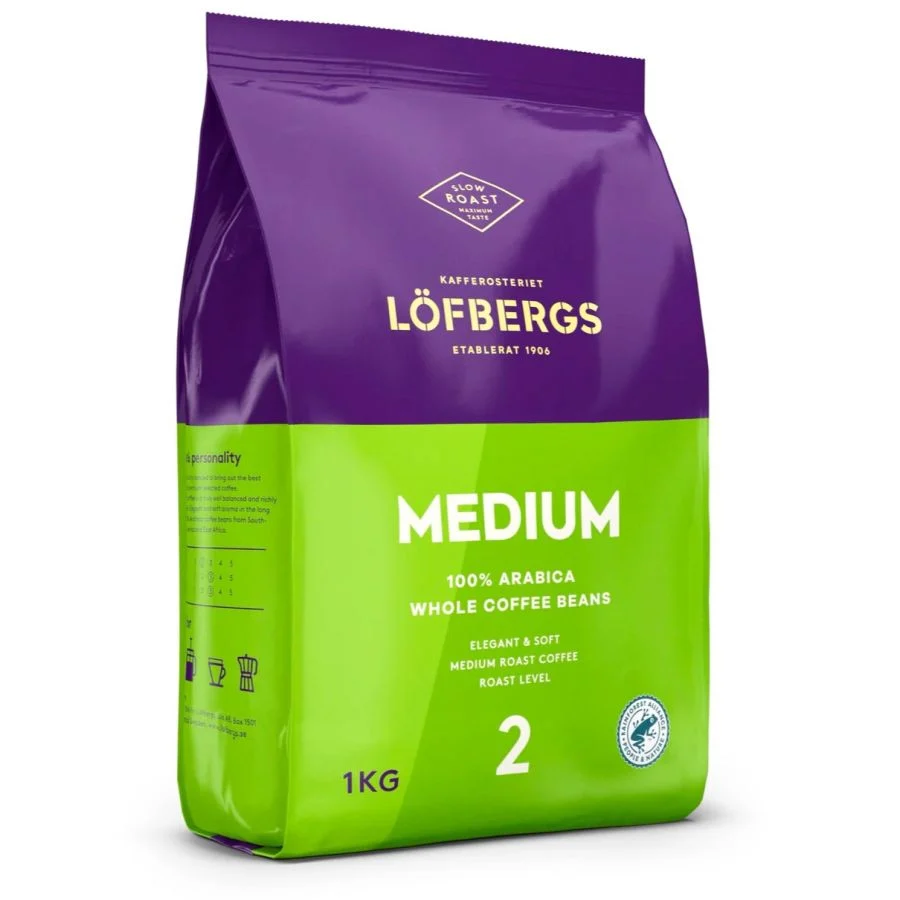
One of the companies that illustrates the development of the Scandinavian coffee industry is Löfbergs, a major family-owned Swedish food and beverage company founded in 1906 and based in Karlstad. The company began by importing and selling coffee before starting its own roasting operation in 1911 and has subsequently developed into one of the largest coffee roasters in the Nordic countries. Löfbergs operates across Northern Europe and has built its coffee business around taste, sustainability and long-term relationships with coffee producers.
Löfbergs has also positioned organic and Fairtrade coffee at the centre of its business. The company says its range is 100% sustainability certified and that it is one of the world’s largest buyers of organic and Fairtrade coffee. Its history in sustainable coffee stretches back decades, including the introduction of organic coffee to Sweden in the 1990s. The company has also invested in modern roasting capacity in Karlstad, demonstrating how established Scandinavian roasters are combining traditional coffee culture with investment in production and sustainability.
Another important supplier is Arvid Nordquist, a Swedish family-owned company founded in 1884 and a major coffee player in the Swedish market. Euromonitor identified Arvid Nordquist as Sweden’s leading coffee company in retail volume terms in 2025, including leadership in fresh coffee beans and standard fresh ground coffee. The company has built its coffee proposition around 100% Arabica beans and certified sourcing, with coffee certified through Rainforest Alliance or Fairtrade schemes.
Arvid Nordquist also provides an example of how sustainability is becoming part of coffee production rather than simply a marketing message. The company says it has roasted coffee using biogas since 2017 and opened a new wooden-built coffee roastery in Sweden in 2025. Its approach includes certified sourcing, renewable energy, packaging initiatives and efforts to reduce emissions throughout the coffee value chain.
The competitive environment is therefore changing even though the basic coffee habit remains remarkably stable. Retailers are dealing with higher coffee prices and changing household budgets, while consumers continue to regard coffee as an important everyday purchase. In Sweden, 61% of coffee drinkers surveyed by Löfbergs in 2026 considered the current retail price either low or good value, while coffee was the beverage consumers were most willing to pay for compared with juice, milk, soft drinks and energy drinks.
Private label is another factor that suppliers and retailers cannot ignore. As coffee prices rise, retailers have opportunities to strengthen their own brands, particularly among consumers who are looking for value without abandoning their daily coffee habit. Euromonitor reported that Lidl Sweden was one of the more dynamic coffee companies in the Swedish market in 2025, while established branded roasters continue to compete through quality, sustainability and brand loyalty.
For Scandinavian consumers, however, price is only part of the equation. Coffee is deeply connected with routine and social occasions, from Sweden’s fika culture to the workplace coffee break and the growing café and speciality-coffee scene. The opportunity for suppliers is therefore not simply to sell more coffee but to offer different levels of quality, formats and occasions while maintaining credibility around sourcing and environmental responsibility.
The combined Scandinavian coffee market of Sweden, Norway and Denmark can consequently be viewed as a high-value, mature consumption market rather than a volume-growth market in the traditional sense. Its strength comes from exceptionally high consumption, a large installed base of regular coffee drinkers and consumers who are willing to pay for products that deliver quality and, increasingly, responsible sourcing. For international coffee suppliers looking to enter the Nordic region, Scandinavia offers a demanding market, but one where strong products, transparent sourcing and a clear understanding of local coffee habits can create significant opportunities.
The direction of travel is clear: Scandinavian consumers are unlikely to abandon their coffee habit, but the way they buy and consume coffee will continue to evolve. Traditional brewed coffee will remain fundamental, while speciality beans, premium blends, convenient formats, café beverages, organic products and certified sustainable coffee will compete for a greater share of consumer spending. For roasters such as Löfbergs and Arvid Nordquist, and for suppliers seeking entry into the region, the challenge is to combine the familiarity of Scandinavian coffee culture with the quality, sustainability and innovation that increasingly define the next generation of the market