

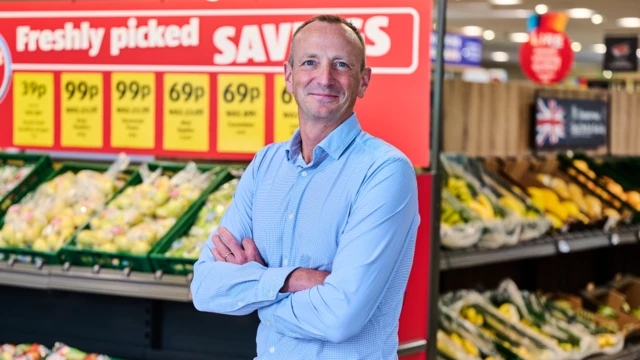
Aldi has reinforced its position as the UK’s cheapest supermarket with a fresh wave of price reductions across hundreds of everyday items, ranging from fresh and frozen food to household essentials and personal care products. The latest cuts, representing an investment of more than £22 million, aim to ease the pressure on shoppers’ weekly bills while maintaining the retailer’s reputation for quality at low cost.
Highlights of the reductions include Red Lentils down to 99p from £1.39, Porridge Sachets to 79p from 99p, Organic Steel Cut Oats to £1.99 from £2.19, and No Beef Flank Steak reduced to £6.99 from £7.49. Other popular items such as Vegetable Pieces & Meatballs, Beef & Pork Bolognese Mince, and Six Large Free Range Eggs have also seen meaningful savings.
The move is consistent with Aldi’s long-standing strategy of positioning itself as the price leader in the UK market. Consumer group Which? has now named Aldi the UK’s cheapest supermarket for five consecutive years, while The Grocer’s ‘Super Grocer 33’ price comparison has ranked it top for seven straight years. Analysis shows that families in over 200 UK towns are paying up to £2,437 more per year simply because they lack access to an Aldi store.
The latest reductions underline a challenge for the wider supermarket sector. Traditional grocers such as Tesco, Sainsbury’s, Asda, Morrisons and Waitrose face intensifying pressure to match or mitigate Aldi’s value positioning without undermining margins. Many of these retailers have begun implementing selective price cuts on key lines and promoting multi-buy offers, but analysts note that their higher cost bases and broader store estates make it difficult to sustain the same level of price competition as Aldi.
This dynamic has contributed to a growing segmentation in UK grocery. Aldi and Lidl continue to define value-led shopping, capturing price-sensitive households, while Tesco and Sainsbury’s increasingly rely on loyalty programmes, brand differentiation and convenience formats to retain market share. Meanwhile, Asda’s own pricing strategy has struggled to counter both discounters and market leader Tesco, highlighting the structural challenge facing mid-tier supermarkets in the current environment.
Aldi’s approach demonstrates that consistent investment in price, combined with a lean operating model, remains a decisive advantage. As the UK supermarket market continues to polarise between low-cost discounters and full-service operators, the question facing other grocers is whether they can compete on price, focus on differentiation, or find a hybrid strategy that protects both shopper loyalty and profitability.
For now, Aldi’s latest price cuts signal that the race for the cheapest weekly shop shows no signs of slowing, and the wider sector will need to respond strategically or risk further erosion of market share