


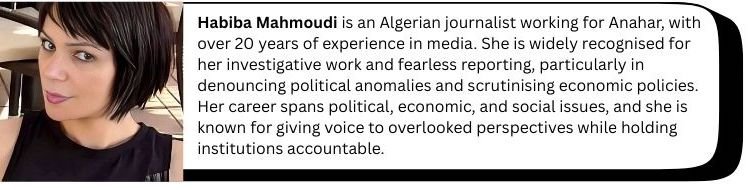
BY Habiba Mahmoudi
Algiers — Algeria is positioning itself as a fiercely independent actor on the global stage, advancing a foreign policy doctrine built on sovereignty, diversified partnerships, and non-alignment in an increasingly polarized world.
In recent months, Algiers has sharpened its diplomatic messaging: Algeria will maintain constructive relations with all nations but will not tolerate interference in its internal affairs. President Abdelmadjid Tebboune, speaking in a recent meeting with journalists, reiterated that Algeria’s decisions are made independently and reflect national interests above all else. He stressed that the country “does not accept dictates” from any foreign power, underscoring a political philosophy rooted in self-determination.
A Doctrine of Non-Alignment, Revisited
Algeria’s current posture echoes its historic role in the Non-Aligned Movement, yet officials argue that today’s strategy is adapted to modern geopolitical realities. Rather than leaning toward any single bloc, Algiers has expanded its network of economic and strategic partners across Europe, Asia, Africa, and the Americas.
Diplomatic engagement with major global players — including the European Union, China, Russia, Turkey, and Gulf states — reflects what analysts describe as “multi-vector diplomacy.” The objective is clear: avoid overdependence on any one partner while maximizing economic and strategic flexibility.
This diversified approach has become especially visible in energy policy. As a major gas supplier, Algeria has reinforced ties with European customers while simultaneously deepening cooperation with emerging economies. Officials frame this balancing act as proof that Algeria can engage globally without aligning exclusively with any power center.
Economic Sovereignty as Strategic Priority
Parallel to its diplomatic recalibration, Algeria is accelerating efforts to strengthen domestic production and reduce reliance on imports. The government has placed industry, mining, and agriculture at the center of its economic reform agenda.
New legislation aimed at attracting foreign investment while preserving national control over key sectors signals a deliberate shift toward industrial development. Authorities have emphasized local manufacturing, mineral resource extraction, and agricultural expansion as pillars of long-term economic resilience.
In mining, Algeria is seeking to unlock untapped reserves of iron ore, phosphates, and rare minerals. In agriculture, expanded irrigation projects and incentives for domestic producers aim to enhance food security. Industrial zones under development are intended to stimulate job creation and reduce the country’s exposure to global supply chain disruptions.
Officials argue that true political independence requires economic strength. By building internal capacity, Algeria seeks to insulate itself from external pressure and fluctuations in global markets.
Tensions With France Reflect Broader Reset
Algeria’s assertive tone has been particularly evident in its relationship with France, its former colonial power. While economic and cultural ties remain significant, diplomatic relations have experienced recurring friction in recent years.
Algerian policymakers have openly criticized what they view as outdated attitudes in French foreign policy. Some officials contend that Paris has not fully adjusted its approach toward former colonies, describing lingering tensions as a reflection of unresolved historical dynamics.
Observers note that the global context has shifted dramatically since the 1960s and 1970s, when many post-colonial relationships were first defined. Today’s Algeria appears intent on renegotiating the terms of engagement — demanding what it sees as mutual respect rather than hierarchical partnership.
The message from Algiers is unmistakable: cooperation is welcome, but sovereignty is non-negotiable.
A Calculated Show of Confidence
Recent international decisions taken by Algeria — including positions in regional and multilateral forums — have reinforced the perception of a government willing to withstand external pressure. While not seeking confrontation, Algerian leaders have projected confidence in defending national interests, even when doing so risks diplomatic strain.
President Tebboune’s remarks to journalists emphasised that Algeria is not intimidated by geopolitical power plays. According to participants in the meeting, he underscored that the country’s foreign policy is guided by principle rather than fear.
That posture resonates domestically, where independence remains a central element of national identity. The legacy of the war of liberation continues to shape public expectations that the state must guard sovereignty vigorously.
Balancing Principle and Pragmatism
Despite strong rhetoric, Algeria’s strategy is not isolationist. On the contrary, it relies on active global engagement. Trade agreements, energy partnerships, security cooperation in the Sahel, and participation in international institutions illustrate a pragmatic recognition of interdependence.
The difference, officials argue, lies in the terms of that interdependence. Algeria seeks relationships built on parity and shared benefit, not dependency.
Analysts suggest that this approach reflects a broader trend among middle powers navigating a fragmented international system. As competition intensifies between major blocs, countries like Algeria are attempting to preserve room for maneuver.
A Model or a Work in Progress?
Whether Algeria’s model of strategic autonomy can deliver sustained economic transformation remains an open question. Diversifying the economy beyond hydrocarbons has long been a policy goal, and tangible results will depend on implementation, regulatory reform, and investor confidence.
Still, the direction is clear. Algeria is crafting an identity as a state that welcomes cooperation but rejects coercion, promotes diversified alliances, and invests in domestic capacity as the foundation of sovereignty.
In a world marked by shifting alliances and sharpened rivalries, Algiers appears determined to chart its own course — flexible in partnerships, firm in principle, and unapologetic about defending its independence.