

From Price Champion to Strategic Question Mark
Asda once stood as Britain’s undisputed champion of low prices. Founded on the principle of offering affordable groceries to every household, Asda dominated UK retail for decades, challenging rivals such as Sainsbury’s and Tesco.
However, the supermarket landscape has evolved dramatically. Discounters like Aldi and Lidl have steadily eroded Asda’s price leadership, while premium and convenience-focused retailers have captured market share in urban centres.
Now, Asda faces a fundamental question: what is its identity in a market that no longer rewards simple low-cost positioning?
The Price Pressure Paradox
Asda’s historical strength in price competitiveness is now both a blessing and a curse. The supermarket has built consumer expectations around affordability, yet maintaining razor-thin margins in a climate of rising inflation, energy costs, and labour expenses is increasingly difficult.
Discount chains operate leaner, with fewer SKUs and more streamlined supply chains, making it challenging for Asda to compete on price alone. Attempting to match them directly risks eroding profitability, while failing to compete may alienate core customers.
This paradox underpins the strategic identity crisis facing the retailer.
Ownership and Strategic Shifts
Recent years have seen Asda undergo multiple ownership changes, including acquisitions by Walmart and, more recently, a consortium of investors led by the Issa brothers and TDR Capital. Each transition brought strategic realignment, yet the core brand promise has remained tied to price leadership.
The challenge is reconciling historic brand expectations with new corporate visions emphasizing technology, convenience, and operational efficiency.
Evolving Consumer Expectations
Modern UK shoppers increasingly demand more than low prices. Convenience, quality, sustainability, and digital accessibility now influence purchasing decisions.
Asda has responded with several initiatives:
-
Digital investment: mobile apps, click-and-collect, and online grocery delivery.
-
Convenience formats: smaller stores and express locations in urban areas.
-
Sustainability: efforts to reduce waste and promote ethically sourced products.
However, these initiatives risk confusing consumers if they appear inconsistent with Asda’s traditional low-price identity.
The Competitive Landscape
Asda operates in a crowded and complex market:
-
Discounters: Aldi and Lidl, gaining market share through low-cost, high-efficiency models.
-
Premium supermarkets: Waitrose and Marks & Spencer, appealing to quality-conscious shoppers.
-
Hybrid formats: Tesco and Sainsbury’s balancing affordability with loyalty programs, digital innovation, and convenience.
In this context, Asda’s traditional positioning is under intense pressure. It must differentiate itself without abandoning its price-conscious heritage.
Private Label and Product Strategy
Private-label offerings have become central to Asda’s strategy. Its Smart Price, Just Essentials, and Extra Special ranges aim to balance affordability with quality.
Yet the challenge lies in clarity and consistency. Consumers must understand which ranges satisfy low-cost needs and which offer premium appeal. Confusing product hierarchies risk diluting brand perception.
Store Experience and Modernisation
Modern retail also depends heavily on in-store experience. While Asda maintains large-format hypermarkets, these stores increasingly compete with smaller, more agile discounters and online-first models.
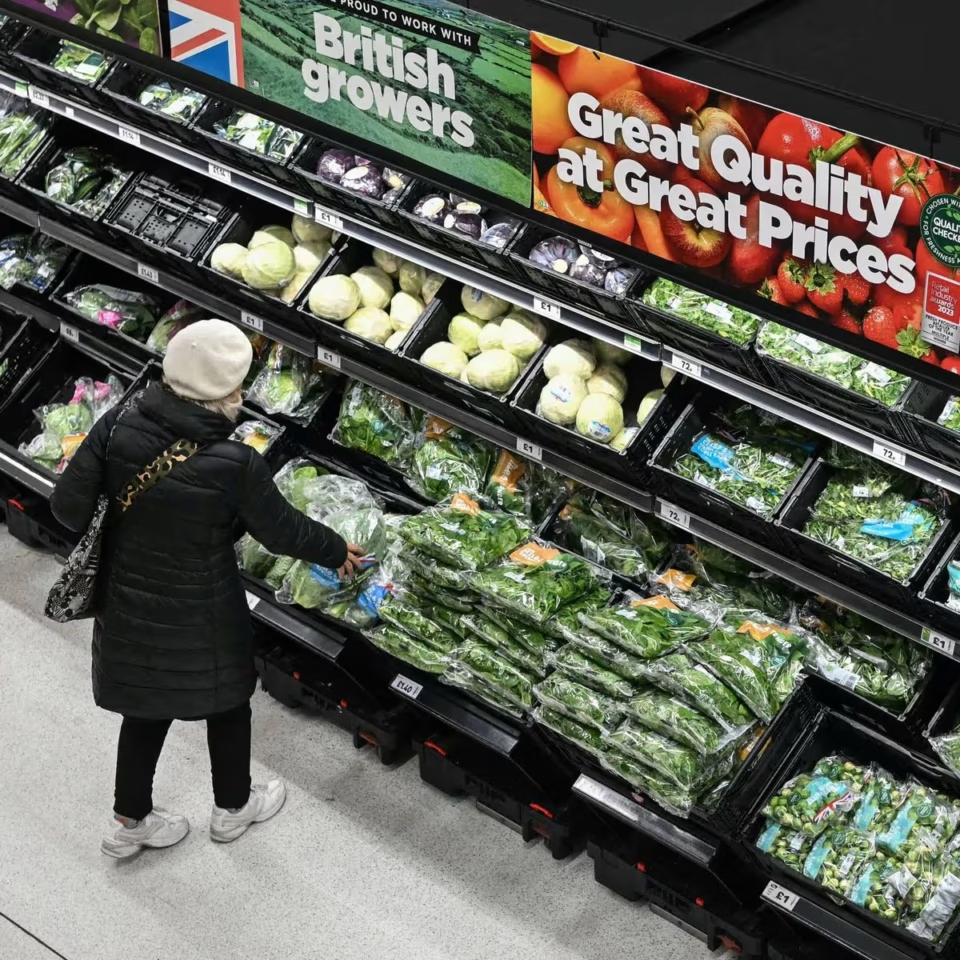
Investment in store layout, fresh produce quality, and digital integration is essential, yet these upgrades carry costs that strain the price-competitive model.
Workforce and Morale
Asda employs tens of thousands of staff across the UK. Maintaining morale, training, and engagement is critical, particularly amid strategic uncertainty. Employees often serve as the front line communicating brand identity to consumers.
Any perceived disconnect between corporate strategy and employee engagement can affect customer experience, compounding challenges in an already competitive environment.
Digital Transformation as Lifeline
Asda has accelerated digital adoption to stay relevant. Online grocery delivery, same-day click-and-collect, and personalised loyalty campaigns are part of its push to combine convenience with value.
Yet the digital transition is capital-intensive. Competing against Tesco’s established ecosystem and Sainsbury’s growing online presence requires sustained investment and execution precision.
Balancing Heritage and Innovation
The central tension for Asda lies in balancing heritage and innovation.
-
Heritage: affordability, everyday reliability, and household accessibility.
-
Innovation: digital convenience, store modernisation, sustainability, and brand diversification.
Misalignment risks alienating long-time shoppers while failing to attract new audiences, creating a precarious strategic position.
The Road Ahead
Asda’s path forward will require:
-
Clear brand messaging: defining what Asda stands for beyond price.
-
Operational efficiency: reducing costs without undermining the shopping experience.
-
Digital investment: leveraging technology to enhance convenience and loyalty.
-
Strategic differentiation: balancing affordability with selective premium offerings.
The UK supermarket market rewards clarity, efficiency, and customer trust. Asda’s survival will depend on aligning these elements while adapting to a rapidly evolving competitive landscape.
Conclusion: Reinvention or Risk
Britain’s former price leader is at a pivotal moment. Asda must navigate market disruption, rising consumer expectations, and competitive pressure from both discounters and premium supermarkets.
The challenge is not simply about lowering prices but redefining identity for a market that prizes choice, convenience, and experience as much as affordability.
Failure to clarify its strategic position risks continued erosion of market share, while successful reinvention could reestablish Asda as a resilient, adaptive player in the UK grocery sector.
The supermarket’s story is a cautionary tale and a test case for how legacy retailers can survive in a world increasingly dominated by agility, technology, and consumer-driven expectations.